Buying Guide
Choosing the best infrared security cameras starts with the scene you need to monitor, not with resolution alone. A driveway, warehouse entrance, nursery, and backyard outbuilding place different demands on night vision, power, storage, and coverage. The products in this comparison include complete DVR kits, PoE network cameras, indoor pan-and-tilt units, solar cameras, and battery models. Their common thread is documented infrared operation or a night-vision system that includes infrared as a darker-condition mode.
Match the camera type to the installation
A wired DVR system is useful when you want several fixed outdoor viewpoints and continuous recording. The ANNKE 8CH 3K Lite system includes eight cameras, an 8-channel recorder, a 1TB hard drive, and support for additional hard-drive capacity. Its cameras also use IP67-rated housings. This approach requires cable runs and a central recorder, but it avoids depending on individual camera batteries.
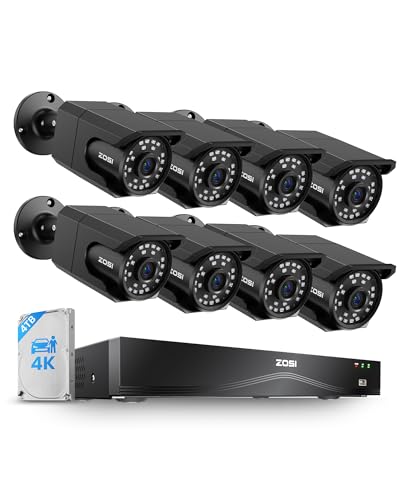
PoE is a useful option for networked installations. The REOLINK RLC-520A sends power and data through one Ethernet cable, while the REVODATA mini camera supports PoE or a separate 12V DC connection. Before choosing either, confirm that your network switch, NVR, or power arrangement matches the camera. The ZOSI bullet camera is different: it is designed for compatible analog DVRs and needs separate power and CCTV cabling.
Wireless battery cameras are easier to place where wiring is inconvenient. Blink Outdoor 2K+ lists up to two years of battery life, while the SEHMUA and GMK systems use solar panels with batteries. Solar models still need an installation position that receives useful sunlight. A camera that is technically wire-free may therefore require more careful placement than a wired model.
Compare infrared and color night vision
Infrared night vision generally produces black-and-white footage in darkness, while spotlight or ambient-light systems may provide color at low light levels. The best infrared security cameras for a dark property should state an IR range or clearly explain how the night mode works. ANNKE lists IR capture up to 100 feet, ZOSI lists up to 80 feet, and TP-Link Tapo C200 lists up to 30 feet. These figures are useful for comparison, but actual scene visibility can depend on placement, obstructions, and available ambient light.
Some selected cameras combine modes rather than relying on IR alone. The eufy E30 can switch between spotlight color night vision and infrared night vision. The eufy C31 emphasizes full-color low-light video but also documents infrared night vision. Blink Outdoor 2K+ uses color vision in low light before switching to infrared in darker conditions. These designs may show more color when light is available, while conventional IR modes remain useful when the scene is very dark.
The REVODATA camera is notable for its 940nm infrared LEDs, described as invisible night vision. That may suit locations where visible red IR emitters are undesirable. However, the supplied listing does not state a distance, so buyers should not assume it matches the long-range figures documented by ANNKE or ZOSI.
Consider resolution and viewing coverage together
Resolution affects the amount of recorded detail, but a higher number of pixels does not automatically provide a wider view. The eufy E30 documents 4K recording and 360-degree panoramic viewing, making it a strong indoor detail option. The REOLINK RLC-520A records at 5MP, and REVODATA lists 5MP video in a compact form. Blink Outdoor 2K+ and the solar systems provide 2K video, while the Tapo C200 and ZOSI models use 1080p.
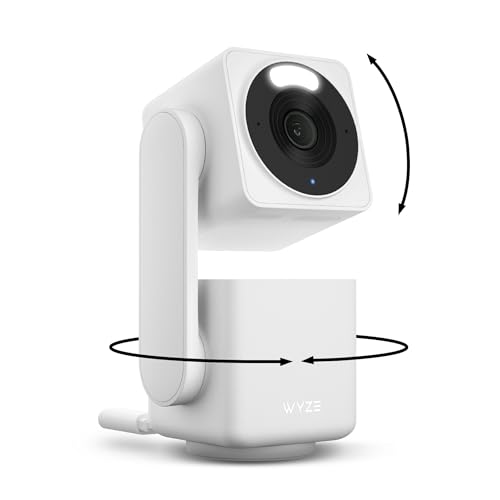
Movement can matter as much as resolution. The eufy C31, eufy E30, and Tapo C200 use pan-and-tilt designs to cover more of a room or yard. The SEHMUA system also documents pan and tilt. Fixed bullet and dome cameras are more limited in their physical viewing direction, but they can be easier to aim at a gate, doorway, or driveway. For a broad property, multiple fixed cameras may provide more predictable coverage than one moving camera.
Check recording and storage before buying
Storage determines how useful a camera is after an event. ANNKE includes a hard drive and supports larger storage, making it suitable for a dedicated continuous-recording system. REOLINK supports microSD, NVR, and FTP destinations. Eufy C31 and E30 support local storage through compatible cards or base stations. Tapo C200 lists microSD support up to 512GB.
Wireless products often divide features between local storage, cloud storage, and optional subscriptions. Blink Outdoor 2K+ documents optional smart detection plans, while the GMK solar system notes that AI notification features require a subscription. The selected products with local card options can reduce dependence on cloud storage, but cards are generally not included where the listing says so. Confirm whether 24/7 recording, event clips, or advanced alerts require different hardware or a paid plan.
Verify outdoor protection and power
For outdoor placement, look for an explicit IP rating. ANNKE and ZOSI list IP67 protection; eufy C31 lists IP66; Blink Outdoor 2K+, SEHMUA, REVODATA, and GMK list IP65. These ratings describe protection against dust and water exposure, but they do not remove the need for correct mounting, sealed connections, or suitable power routing.
Power is equally important. Wired cameras can support continuous operation but require cable planning. PoE reduces the number of cables at the camera, while battery cameras simplify placement but need charging or battery replacement. Solar models may reduce routine charging when their panels receive sufficient sunlight. Choose the power design that fits the physical location rather than treating wireless installation as universally better.
Final recommendation
ANNKE 8CH 3K Lite Wired Security Camera System ranks first overall in this specification-based comparison under the published weighted criteria.
ANNKE 8CH 3K Lite Wired Security Camera System is the first overall specification-based choice in this comparison.
The final choice among the best infrared security cameras depends on the documented features that match your intended use.
The ANNKE 8CH 3K Lite Wired Security Camera System is a strong choice for buyers needing broad, continuous outdoor coverage. Its eight cameras, 100-foot stated IR capability, included 1TB hard drive, and IP67 housings make it a well-equipped system in this comparison.
Among the top infrared security cameras for a single networked viewpoint, the REOLINK RLC-520A is a strong PoE choice because it combines 5MP video, multiple detection types, audio, and several storage destinations. For indoor detail, the eufy E30 has the clearest 4K specification and 360-degree movement. The eufy C31 is better suited to buyers who want a powered indoor/outdoor pan-and-tilt camera with local storage and IP66 protection.
Choose Blink Outdoor 2K+ when wire-free installation and 2K detail are priorities. Choose SEHMUA or GMK when solar power and multiple outdoor cameras are more useful than a central DVR. For compact infrared illumination, REVODATA’s 940nm design is distinctive. Tapo C200 remains a practical indoor pan-and-tilt option, while ZOSI is the logical fit for a compatible analog DVR rather than a new standalone installation.
Frequently Asked Questions
Do infrared security cameras record in color at night?
Not always. Traditional infrared night vision generally produces black-and-white footage. Some selected models combine infrared with color modes: eufy E30 uses a spotlight for color night vision and can switch to infrared, while Blink Outdoor 2K+ uses color vision in low light before switching to infrared in darker conditions. Check the specific camera’s documented night modes if color identification is important.
What are the best infrared security cameras for a completely dark driveway?
For a dark driveway, compare the stated IR range and weather rating first. ANNKE lists IR capture up to 100 feet, and ZOSI lists up to 80 feet. Both are outdoor-capable, but ANNKE is part of a complete wired system whereas ZOSI requires a compatible DVR, power, and CCTV cable. Actual results depend on mounting position and the scene layout.
Is PoE better than Wi-Fi for an infrared camera?
PoE can provide a structured installation because one Ethernet cable carries power and network data. REOLINK RLC-520A and REVODATA document PoE support. Wi-Fi and battery models can be easier to install in places where Ethernet is impractical. The better choice depends on cable access, network equipment, and whether continuous power or simple placement is the priority.
Do these cameras need a subscription for recording?
Not necessarily. ANNKE includes a DVR and hard drive, while REOLINK supports microSD, NVR, and FTP recording. Eufy E30, eufy C31, and Tapo C200 document local storage options. Some smart detection or cloud features on Blink Outdoor 2K+ and GMK may require an optional subscription. Review the specific storage and alert requirements before selecting a plan.
Can a battery or solar camera record continuously?
The supplied listings emphasize battery life, motion recording, or solar operation rather than guaranteeing continuous recording for every wireless model. Wired systems such as ANNKE are a suitable fit for continuous recording. Battery and solar cameras can be more convenient for remote placement, but recording duration and charging needs depend on motion activity, wireless conditions, and available sunlight.