Buying Guide
The best 5-disc cd players are not all the same type of component. The supplied candidates include dedicated carousel changers, integrated shelf systems, and DVD/CD players that also handle five-disc audio playback. Start by deciding whether you need a component for an existing amplifier, a complete speaker system, or a media player that can also connect to a television.
This comparison uses listing descriptions and specification fields rather than hands-on testing. Scores reflect only documented capabilities: disc-changing design, supported media, audio processing, connection and control choices, and system features. Missing information was not treated as proof that a feature exists.
Choose the right player design
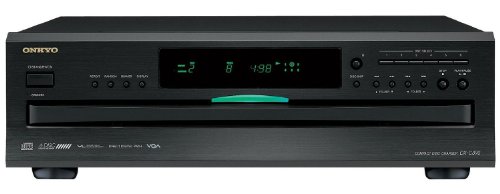
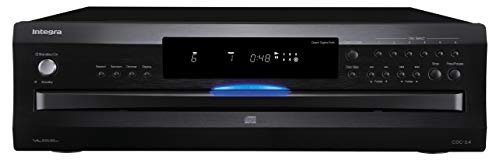
A dedicated changer is usually the cleanest match for a separate stereo. The Yamaha CD-C603, TEAC PD-D2610, and Technics SL-PD688 are centered on CD playback, while the Onkyo DX-C390 and Integra CDC-3.4 use broader carousel capacities but document the ability to replace five discs during operation. These models make sense when your amplifier, receiver, and speakers already form the rest of the system.
An integrated system reduces the number of components. The Bose Acoustic Wave with 5-CD Changer II combines the changer with radio and other documented sources. The Sharp CD-BH950 adds speakers, a cassette deck, Bluetooth, radio, USB, line-in, and a headphone output. Choose this design when source variety matters more than matching a separate stack of components.
DVD/CD changers are appropriate when the player will serve a television or media room as well as a stereo. The Sony DVP-NC800H/B supplies HDMI and 1080p upscaling, while the Sony DVP-NC665P/B and Panasonic DVD-F65K document progressive-scan video features. These models can play CDs, but their feature emphasis is broader than that of a dedicated audio changer.
Check disc and file compatibility
Standard audio CD support is the baseline, but the candidates differ in compressed and recordable-media handling. Yamaha lists MP3, WMA, AAC, WAV, and FLAC through its front USB port, including WAV and FLAC up to 96kHz/24-bit. That makes it the most clearly documented choice for combining physical discs with stored digital files.
TEAC lists CD, CD-R/RW, and MP3 playback. Onkyo lists audio CDs, MP3-encoded CDs, and CD-R/RWs. Sharp lists CD-RW, CD-R, WMA, and MP3. The Sony DVP-NC665P/B supports MP3, CD-R, and CD-RW in addition to several DVD formats. Panasonic lists CD-R, CD-RW, and MP3/WMA CDs.
If your collection is mostly factory-pressed CDs, these differences may be less important than the changer mechanism and connections. If you use recorded discs or compressed files, verify the exact format before choosing. Do not assume that one model’s MP3 support implies USB playback; the supplied listings document those functions separately.
Consider connections and system matching
Connection details are especially important for component changers. Yamaha lists RCA and optical outputs, giving it a clear path to both conventional stereo inputs and compatible digital equipment. The Onkyo DX-C390 lists a direct digital path, a 192kHz/24-bit DAC, and an RI remote-control connection. Integra adds RS232 and IR control, which may suit a programmed home-automation or custom-installation setup.
The Sony DVP-NC665P/B lists analog audio, optical digital, and coaxial digital outputs, along with component, S-video, and composite video. The Sony DVP-NC800H/B uses HDMI for video and includes BRAVIA Sync. Panasonic is also video-oriented, with progressive-scan features documented, but the supplied listing does not describe its audio output set in the same detail.
For an integrated unit, inspect the source and speaker arrangement instead of looking only for line outputs. Sharp documents built-in woofers and tweeters, while Bose is described as an all-in-one music system. These designs may be simpler to deploy, but they are less interchangeable with an existing receiver than a standalone changer.
Read the audio specifications carefully
Published audio figures can help separate a straightforward transport from a model with more detailed digital architecture, but they do not replace listening tests. Technics lists 92dB dynamic range, 100dB signal-to-noise ratio, and 0.007% total harmonic distortion. Yamaha lists sophisticated circuitry, an intelligent digital servo, and a floating laser-pickup mechanism. Onkyo lists a 192kHz/24-bit DAC and 352.8kHz digital filter, while Integra lists dual Wolfson 192kHz/24-bit DACs and VLSC circuitry.
Treat these details as specification clues rather than guarantees of audible results. A model with fewer published figures may still be suitable, but its score reflects the evidence available in the supplied listing. Also separate file-resolution support from disc playback: Yamaha’s high-resolution figures apply to the documented USB WAV/FLAC function, not necessarily to a standard audio CD.
Compare control and playback behavior
A changer is most useful when its controls fit the way you listen. Yamaha’s PlayXchange lets four discs be changed while the fifth keeps playing. Bose documents continuous play of five CDs, normal, random, and repeat modes. Onkyo lists 40-track programming and six repeat modes, and TEAC provides a 32-selection random memory program with direct-access keys on both the player and remote.
For mixed media, Sharp’s Bluetooth, cassette, radio, USB, and line-in options are more important than advanced CD programming. For video use, Sony’s multi-disc resume and HDMI features may matter more than audio-specific controls. Check whether the supplied evidence matches your preferred workflow instead of assuming every five-disc mechanism offers the same queueing functions.
Plan the physical setup
Measure the shelf before selecting a component. The Yamaha listing gives dimensions of 22 inches long, 20.2 inches wide, and 8.82 inches high; the Sony DVP-NC800H/B is listed at 17 inches long, 16.2 inches wide, and 4 inches high. Panasonic’s 2.38-inch height is notably slim on paper. The Sharp system lists a larger 27.6-inch length and 13.5-inch height, reflecting its speaker-system format.
These dimensions come directly from the supplied specification fields and may use different orientation labels across listings, so confirm how the manufacturer defines width, length, and depth before installation. Allow room for tray movement, ventilation, cables, and remote access.
Final Recommendation
Yamaha CD-C603 5-Disc CD Changer ranks first overall in this specification-based comparison under the published weighted criteria.
Yamaha CD-C603 is the highest-scoring returned product and the first overall specification-based choice among the best 5-disc cd players. Its five-disc PlayXchange design, USB support for several formats, documented WAV/FLAC resolution, and RCA plus optical outputs give it the broadest dedicated-player specification profile in this comparison.
Choose the Onkyo DX-C390 if five-disc replacement behavior, MP3/CD-RW support, programming, and repeat modes are more important than a strict five-disc capacity label. The Integra CDC-3.4 is the more system-integration-focused alternative, with RS232, IR, dual Wolfson DACs, and VLSC circuitry.
For a traditional five-disc component, the TEAC PD-D2610 keeps the feature set focused and adds direct-access programming. Technics is the simpler specification-led option when published audio figures are a priority. Bose and Sharp are better matched to listeners seeking an all-in-one system, with Bose emphasizing multiple listening sources and Sharp adding cassette, Bluetooth, radio, and built-in speakers.
The top 5-disc cd players for a media room may instead be the Sony DVP-NC800H/B, Sony DVP-NC665P/B, or Panasonic DVD-F65K. Select among them by checking HDMI or legacy video outputs, supported recordable media, and available shelf space. The final choice should follow the documented connection and format requirements of your system.
Frequently Asked Questions
What should I look for in the best 5-disc cd players?
Begin with the changer behavior and the media formats you actually use. Then check outputs, programming, file playback, and chassis dimensions. Yamaha documents USB playback for MP3, WMA, AAC, WAV, and FLAC, while TEAC and Onkyo document MP3-capable disc playback. Those are different capabilities, so read the format description closely.
Are six-disc changers suitable for a five-disc comparison?
The Onkyo DX-C390 and Integra CDC-3.4 are listed as six-disc models, but the Onkyo description specifically says five CDs can be removed and replaced while one continues playing. They are included as adjacent carousel designs that support the documented five-disc use case, not as strict five-slot products. If exact capacity is essential, choose Yamaha, TEAC, Technics, Bose, Sharp, Sony, or Panasonic models whose listings explicitly identify five-disc operation.
Should I choose a dedicated CD changer or an all-in-one system?
Choose a dedicated changer when you already have an amplifier or receiver and want a component that fits into that system. Choose Bose or Sharp when built-in or integrated sources are useful. Sharp documents speakers, cassette, Bluetooth, radio, USB, line-in, and headphone output; Bose documents a five-CD changer alongside radio and streaming-related functions.
Are DVD/CD changers good for music?
They can be useful when the same component must play DVDs and CDs. The Sony DVP-NC800H/B documents five-disc DVD/CD operation and HDMI with 1080p upscaling. The Sony DVP-NC665P/B and Panasonic DVD-F65K also document CD and recordable-media support. Their listings emphasize video functions, so a dedicated audio changer may be a better match when television playback is unnecessary.
Does USB support mean high-resolution audio support?
Not automatically. The Yamaha CD-C603 specifically documents USB playback for WAV and FLAC up to 96kHz/24-bit, along with several other file types. Other selected models may list USB as a source or connection without documenting the same file-resolution capability. Confirm both the connection and the supported file formats before relying on USB playback.