Buying Guide
Choosing among the best 6-inch door knockers starts with a practical question: does “6-inch” describe the height, the length, or the product’s marketing category? The listings in this comparison use all three conventions. Warwick, Renovators Supply Manufacturing, Delaney, and the HOJLKLD viewer model explicitly identify a 6-inch size or height. Richelieu is 6 1/4 inches long, Everbilt is 6 5/16 inches high, SaKeGa is approximately 6.6 inches long, and ExcelMark is 6.75 inches overall. That small spread may be acceptable for a visual replacement, but it matters if you are matching an existing hole pattern or trying to keep the knocker within a particular panel.
Start with the mounting location
Measure the flat area available on the door before comparing styles. Record the vertical and horizontal space, then note whether the surface is wood, metal, composite, or another material. Also check whether an existing knocker uses through-bolts, surface screws, or a particular hole spacing. Warwick documents 3 3/4-inch screw spacing, ExcelMark lists a 4.25-inch vertical hole distance, and MOLIGOU specifies a 1.97-inch distance between mounting holes. Those details are more useful than a general statement that a product is easy to install.
If you are replacing hardware, do not assume that similar-looking knockers share the same mounting pattern. A new unit may cover the old marks but still require new holes. If the door is hollow, thin, or heavily glazed, review the supplied fasteners and consider whether the listed installation approach is appropriate. The product listings do not provide a universal installation method for every door construction, so the door itself remains an important part of the decision.
Compare material and finish
Material affects the visual character and the type of maintenance a buyer may expect. Solid brass appears in the Renovators Supply Manufacturing, Delaney, and ExcelMark listings. Warwick is described as brass plated, while Everbilt is identified as metal with a bright brass finish. The Richelieu listing identifies metal without specifying the exact alloy. Zinc alloy appears on the QWORK, MOLIGOU, and HOJLKLD products, and SaKeGa uses cast iron.
Finish is equally important because it determines how the piece works with hinges, locks, lighting, and the rest of the entry hardware. Bright or polished brass creates a traditional focal point. Oil-rubbed bronze and dark bronze are better suited to warmer, older-looking doors. Matte black and black finishes generally create stronger contrast, while chrome or nickel-style finishes coordinate with cooler hardware. These are style considerations rather than claims about long-term performance.
Some listings make weather-related finish claims. Renovators Supply Manufacturing describes a tarnish-resistant lacquer, and SaKeGa describes its black finish as rust resistant. The MOLIGOU listing says its zinc alloy is not easy to rust or fade. Treat these as documented product claims, not as guarantees for every climate. Exposure, cleaning products, installation quality, and the underlying door environment can all affect appearance.
Decide whether decoration or function leads
A plain traditional knocker is often easier to coordinate with a wide range of entry doors. Warwick has a classic profile, while Delaney offers a darker oil-rubbed bronze version. Everbilt and ExcelMark provide bright brass alternatives. These designs are appropriate when the knocker should complement the door rather than dominate it.
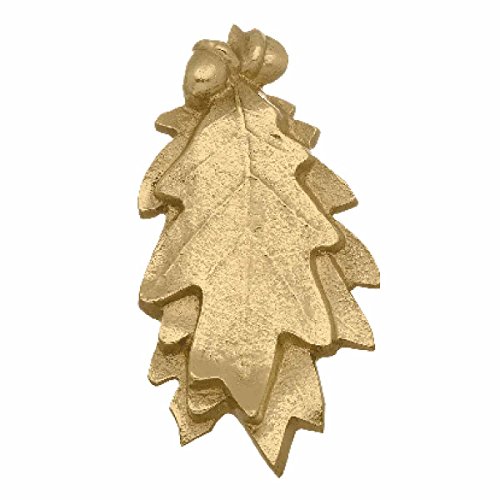
Decorative models take a different approach. Renovators Supply Manufacturing uses an oak-leaf form, QWORK and MOLIGOU use lion-head designs, and SaKeGa adds Georgian twist and leaf detailing. These products are useful when the hardware is intended to act as an architectural accent. Check the width as well as the length: MOLIGOU is listed at 4.5 inches wide, and decorative shapes can occupy more visual and physical space than a conventional bar.
The HOJLKLD viewer model is the functional outlier. It combines a knocker with a 180-degree peephole and is listed for doors between 1 3/8 and 2 1/4 inches thick. Its viewer requires a 14 mm hole. That may simplify the choice if you specifically need both functions, but it also makes accurate drilling and door-thickness measurement more important.
Check the supplied hardware
Included hardware is common across the selected listings, but the details vary. Warwick, Renovators Supply Manufacturing, Everbilt, Richelieu, and SaKeGa explicitly mention mounting hardware or screws. MOLIGOU gives screw dimensions, and HOJLKLD includes the components for its knocker-and-viewer setup. ExcelMark also identifies screws and provides hole-spacing guidance.
A hardware kit is not the same as a guarantee that installation will suit every door. Compare screw length with the door construction, check whether the mounting holes pass through the door, and confirm that the knocker will clear trim or a storm door. For a gate or a heavy wooden door, the mounting surface may need different preparation than a standard residential entry. SaKeGa is specifically positioned for heavy wooden or metal doors, while QWORK is described for wooden or metal doors and provides a 20–40 mm recommendation.
Use measurements to narrow the shortlist
For an exact-size search, prioritize products whose listings state 6 inches directly: Warwick, Renovators Supply Manufacturing, Delaney, MOLIGOU, and the HOJLKLD viewer. For a near-six-inch replacement, consider Everbilt at 6 5/16 inches, Richelieu at 6 1/4 inches, or SaKeGa at approximately 6.6 inches. ExcelMark at 6.75 inches is a larger near-category option. QWORK lists a 6-inch length but also gives an approximately 4.25-inch height, so verify which direction will be vertical on your door.
Look beyond the headline size. Projection affects clearance from the door, and width affects how much trim or panel the knocker covers. Richelieu supplies a 11/16-inch projection, while several decorative models provide width measurements. If the door has raised panels, molding, or a narrow stile, those secondary dimensions may determine whether the hardware sits flat.
Balance appearance with installation confidence
The best 6-inch door knockers are not necessarily the most ornate. A product with a less elaborate design may be preferable when its size, hole spacing, and mounting information closely match the existing door. Conversely, a lion-head or oak-leaf model may be the right choice when the entrance needs a strong decorative focal point.
For a traditional brass look, start with Warwick, Renovators Supply Manufacturing, Delaney, or ExcelMark. For darker finishes, compare Delaney, Richelieu, QWORK, and SaKeGa. For a black functional combination, the HOJLKLD viewer provides the most specific compatibility information. Always verify the current listing and the physical door measurements before ordering, since public product information can change.
Final Recommendation
HOJLKLD 6-inch Knocker with 180-Degree Viewer ranks first overall in this specification-based comparison under the published weighted criteria.
Warwick Classic Traditional Standard 6-inch is the first overall specification-based choice among the best 6-inch door knockers because it combines an explicit 6-inch size, brass-plated finish, included mounting hardware, and documented screw spacing. It is the most balanced option when you want a traditional appearance and useful installation information without adding a viewer or highly sculptural ornament.
Choose Renovators Supply Manufacturing Oak Leaf if solid brass, a lacquer-described finish, and decorative detailing matter most. Delaney is a logical alternative for a darker bronze appearance, while Everbilt suits shoppers who prefer surface mounting and bright brass. Richelieu is a compact bronze choice with unusually clear projection measurements. ExcelMark works for buyers who accept a 6.75-inch profile and want solid brass with documented hole spacing.
For decorative character, QWORK, SaKeGa, and MOLIGOU cover different interpretations of the lion or period-metal look. QWORK provides a door-thickness recommendation, SaKeGa is positioned for substantial wood or metal doors, and MOLIGOU supplies detailed screw measurements. If the project also needs a peephole, the HOJLKLD knocker-viewer combination is the most function-led of these top 6-inch door knockers.
Frequently Asked Questions
What should I measure before buying the best 6-inch door knockers?
Measure the available height and width, the door thickness, the distance between existing mounting holes, and the clearance from trim or a storm door. Also identify whether the old unit uses surface screws or through-door mounting. Exact measurements are especially important when replacing an existing knocker rather than installing one on a blank door.
Is a 6 1/4-inch or 6.6-inch knocker still suitable for this category?
It can be, if you accept a near-six-inch size. Richelieu is listed at 6 1/4 inches, Everbilt at 6 5/16 inches, and SaKeGa at approximately 6.6 inches. These models may work for visual matching, but compare their dimensions with the available door area before choosing them as a direct replacement.
Which selected model includes a door viewer?
The HOJLKLD 6-inch knocker includes a 180-degree viewer. The listing states compatibility with doors from 1 3/8 to 2 1/4 inches thick and specifies a 14 mm installation hole. That combination makes it distinct from the other selected products, which are presented as knockers without an integrated viewer.
Are solid brass knockers better for every door?
Solid brass is a material choice, not a universal installation solution. Renovators Supply Manufacturing, Delaney, and ExcelMark are identified as solid brass, while other selected models use brass plating, zinc alloy, metal, or cast iron. Consider the finish, weight, mounting surface, door thickness, and existing hardware before deciding which construction best suits the project.
Do decorative lion-head knockers fit the same way as traditional knockers?
Not necessarily. QWORK, MOLIGOU, and the HOJLKLD lion model use different dimensions and mounting details. MOLIGOU lists 1.97-inch hole spacing, while QWORK supplies a 20–40 mm door recommendation. Confirm each product’s hole pattern and overall width rather than assuming that a similar six-inch length means interchangeable installation.