Buying Guide
Choosing among the best antique door knockers starts with the door itself. A knocker is both a decorative fitting and mounted hardware, so the finish and motif matter, but so do the material, dimensions, hole layout, and supplied fasteners. The listings describe traditional ring knockers, sculptural animal forms, geometric accents, and cast-iron country hardware. They do not establish real-world longevity through independent testing, so durability comments should be treated as specification-based indications rather than guarantees.
Match the material to the setting
Solid brass is represented by the Anatolica lion, QCAA model, and Renovators Supply woodpecker. Brass gives these products a formal hardware profile, and each listing identifies a brass body rather than merely a brass-colored finish. QCAA specifically describes its construction as corrosion resistant, while the woodpecker listing identifies an antique-brass finish intended to protect against tarnish and weather elements. Anatolica uses solid brass with an unlacquered antique-bronze appearance.
Cast iron is the dominant alternative. Sungmor, Shimeyao, Bolifish, SaKeGa, Zeckos, and Esschert Design all document cast-iron construction. This material supports the old-world, rustic, Gothic, and garden-oriented styles found across the selection. QWORK uses zinc alloy with a dark bronze finish, which offers a different material profile from solid brass and cast iron. Do not treat a finish name such as antique bronze or antique brown as proof of the underlying metal.
Choose a design language
Lion-head knockers create a traditional entrance focal point. Anatolica offers the larger Regency-period interpretation, while QWORK uses a classic vintage lion-head form with a dark bronze finish. For a less heraldic look, the Renovators Supply woodpecker and Esschert Design bird silhouette bring nature-inspired decoration to the door.
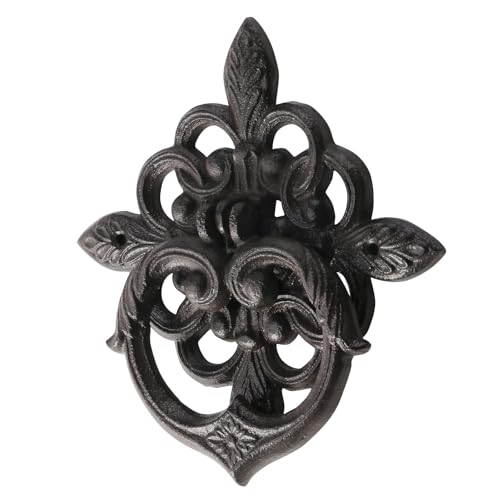
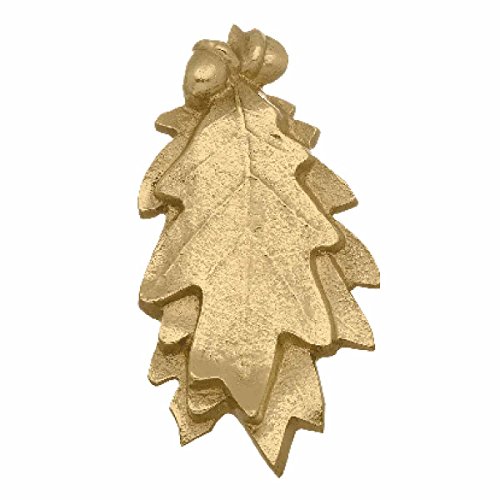
Sculptural cast iron is useful for rustic or themed homes. Shimeyao documents Gothic Victorian scrollwork, SaKeGa uses medieval-inspired styling, and Sungmor combines scrollwork with a trophy-shaped body. Bolifish takes the country approach with a petal-leaf design and black antique appearance. Zeckos is the more geometric choice, using an antiqued-gold starburst. These are different visual statements, so compare the door color, surrounding trim, lighting, and nearby hardware before selecting a motif.
Measure the door and clearance
Size varies considerably. SaKeGa is listed at about 4.5 inches, while the selected models extend to Sungmor’s stated 9.3 inches and Bolifish’s 7.8-by-7.8-inch footprint. A large plate can dominate a narrow door stile or interfere with trim, wreaths, mail slots, or storm-door clearance. Measure the available flat area, then compare it with the product’s height and width. Projection is also relevant: the woodpecker listing gives a 3.5-inch projection, while several other listings do not provide one.
The ring needs room to move and the striker needs a suitable contact point. A knocker with a movable ring, such as Shimeyao, should be positioned so the ring can lift without striking nearby glass or molding. Designs described as door handles may have a different practical role from a conventional knocker. Bolifish specifically presents its product as both a knocker and handle, so verify whether that dual use fits the door’s construction.
Verify mounting compatibility
Installation information ranges from basic to unusually specific. QCAA is the easiest model to plan around because it states a 1.4-to-2.1-inch door range, 4.2-inch screw-hole spacing, long screws, and an extension stud. QWORK recommends 20-to-40-millimeter doors and includes screws and instructions. These measurements are more useful than a general easy-installation claim.
Other products document the presence of screws or predrilled holes without providing a complete fit range. Anatolica includes fixing screws for surface mounting. Renovators Supply includes matching mounting hardware. Shimeyao identifies two mounting holes and matching screws, while Zeckos gives approximate 1-inch hole spacing. Esschert Design also identifies two predrilled holes. Before drilling, compare the hole pattern, door thickness, backing access, and screw length. If replacing an existing knocker, do not assume the new holes will align.
Consider finish and placement
An antique finish is a visual treatment, not a uniform technical standard. The listings mention dark bronze, antique bronze, antique brass, antique brown, black, and antiqued gold. Some describe tarnish, rust, or wear protection, but the evidence does not establish identical outdoor performance for every finish. For an exposed gate or exterior door, follow the manufacturer’s care guidance when available and consider how moisture, salt air, and direct sun may affect the finish.
Placement also influences the practical choice. The selected products are described for front doors, and several also mention wood, metal, gates, barns, gardens, patios, sheds, garages, or indoor use. Use those statements as compatibility clues, not as permission to install on every surface. Glass compatibility is specifically excluded for QWORK, and other listings may not address glass at all.
How this comparison was scored
The editorial scores use only public listing evidence. Material and finish durability receive 25 percent, antique design character 20 percent, installation and door fit 20 percent, size and visual presence 15 percent, documented use versatility 10 percent, and specification completeness 10 percent. No score uses customer sentiment, marketplace labels, popularity, or review information. The ranking favors products whose listings provide actionable details while preserving variety in motif, material, and scale.
Final recommendation
Shimeyao 7.2-Inch Gothic Victorian Knocker ranks first overall in this specification-based comparison under the published weighted criteria.
Shimeyao 7.2-Inch Gothic Victorian Knocker is the first overall specification-based choice in this comparison. Its cast-iron construction, aged black finish, Victorian scrollwork, movable ring, stated dimensions, and supplied mounting hardware create the most specification-aligned combined specification profile under the published criteria.
For an installation-focused decision, choose the QCAA 7-Inch Solid Brass Door Knocker because its door-thickness range and hardware details are unusually clear. Anatolica’s Regency Lion Head Door Knocker is a strong choice when solid brass and a formal lion motif matter more than detailed fit measurements.
Among the best antique door knockers for distinctive character, the Renovators Supply Woodpecker and Esschert Design BR15 offer bird motifs, while Shimeyao and SaKeGa suit Gothic or medieval settings. Sungmor fits a large scrollwork statement, and Bolifish is the broad-use rustic option. These top antique door knockers still require a measurement check before purchase, especially around hole spacing, projection, and door thickness.
Frequently Asked Questions
What should I measure before buying one of the best antique door knockers?
Measure the flat mounting area, door thickness, available projection clearance, and the distance between any existing holes. Also check nearby trim, glass, wreaths, storm doors, and mail slots. QCAA publishes a 1.4-to-2.1-inch door range, while several other models provide only general mounting information.
Are solid brass or cast iron better for an antique-style knocker?
Neither is universally better from the supplied evidence. Solid brass models such as Anatolica, QCAA, and the Renovators Supply woodpecker offer a formal metal profile. Cast-iron models such as Sungmor, Shimeyao, SaKeGa, and Esschert Design support rustic, Gothic, or garden styling. Choose based on the documented material, finish, placement, and visual scale.
Can these knockers be installed on glass doors?
Do not assume so. QWORK is specifically described as not designed for glass, and the other listings do not establish glass compatibility. Confirm the product’s mounting instructions and the door manufacturer’s requirements before selecting a glass installation.
Which selected model is best for a narrow door?
SaKeGa’s stated 4.5-inch size is the most compact among the selected products, making it a logical starting point for a smaller panel. Zeckos is also relatively narrow, but its approximate mounting-hole spacing should be compared with the available door area. Always verify clearance and hole placement before drilling.
Do antique finishes mean the product is antique?
No. In this comparison, antique usually describes the styling or finish of a newly listed door knocker. The evidence identifies materials, colors, motifs, and dimensions, but it does not establish that any selected product is an authentic historical artifact.