Buying Guide
The best adhesive decorative tiles are not one uniform product type. The supplied listings cover modular felt and cork display tiles, decorative mirror stickers, and peel-and-stick vinyl flooring. Start by deciding whether the tile is primarily decorative, organizational, reflective, or floor-oriented. That choice determines which specifications matter most.
Match the tile to the surface
Surface compatibility is the first practical filter. Several felt products specify smooth, clean, and dry walls. Facilife explicitly says its cork tiles are not suitable for textured walls. The mirror listings also caution that flatter surfaces improve appearance and reflection. Nexus describes installation on a flat, dry surface, which is especially important for floor tiles.
Prepare the area before mounting. Clean away dust and residue, allow the surface to dry, and plan the arrangement before removing protective films or exposing adhesive. Fynnsilas describes compatibility with smooth materials including marble, ceramic tile, glass, finished wood, metal, and plastic. That is useful evidence, but it does not remove the need to check the condition of a particular wall.
Choose felt or cork for display use
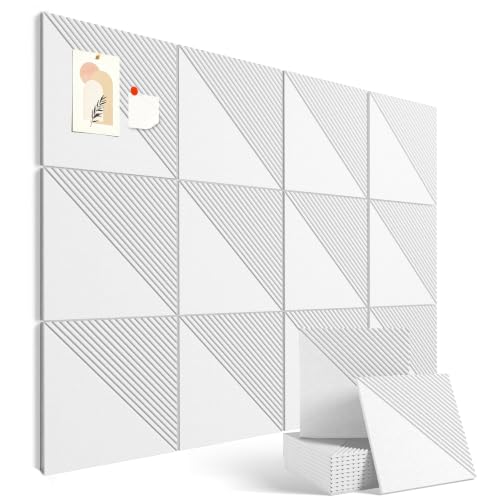
Felt and cork tiles are the most functional choices when the wall must hold notes, photos, schedules, or artwork. Fynnsilas includes 50 pins and uses 9mm-thick felt. Ekkogo lists 0.36-inch felt, 72 removable adhesive tabs, and a pin-friendly surface. Chicplaid includes 100 push pins with 12 multicolor tiles, making it suitable for a display-heavy layout.
Felt also provides more visual variety than a conventional bulletin board. Fynnsilas has a hollowed wave pattern, Fluxynara uses a hexagon format, and Chicplaid documents a raised stripe texture. AkuDecor and Daepuwi use more restrained square formats. Choose a patterned or multicolor set when the wall itself is part of the room design; choose white, tan, or soft neutrals when the display should blend into the background.
Cork remains a useful alternative for buyers who prefer a natural material and traditional pin-board appearance. Facilife adds wood clips and colorful pins, but its four-pack is more suited to a compact arrangement than a complete feature wall. The listing also makes the textured-wall limitation explicit, so that restriction should be treated as a purchase requirement rather than a minor detail.
Compare layout and coverage
Tile count alone does not tell you how large a finished installation will be. Ekkogo states a 47.24-by-35.43-inch arrangement, AkuDecor states 48 by 36 inches, and Daepuwi states 48 by 24 inches. These figures make large-format planning easier. Smaller sets such as lightomorrow’s six tiles or Facilife’s four tiles are better for focused displays, narrow areas, or staggered layouts.
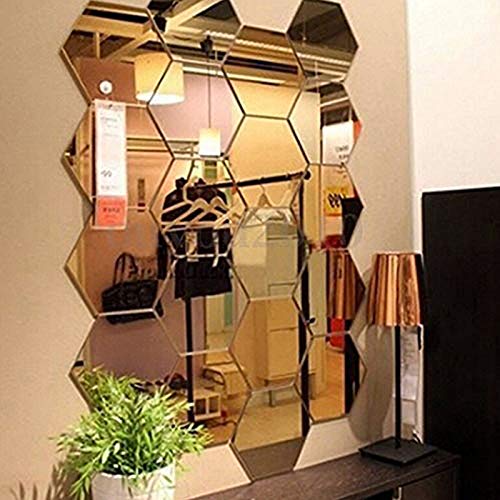
Hexagon tiles create a different visual rhythm from squares. Fluxynara documents 12 hex tiles, while Fynnsilas combines hexagons with a wave pattern. MCLEULLA’s small gold hexagons are intended for decorative mirror arrangements and can be spaced or grouped to create an accent. Before installation, sketch the shape and measure the wall so the intended gaps, edges, and furniture clearances are accounted for.
Mirror tiles can add reflection without the weight of conventional glass. The selected mirror option from MCLEULLA is a thin gold PVC hexagon sticker intended for smooth surfaces. The listing recommends removing its protective film before use and describes applications on walls, doors, windows, closets, and tiles. Because these are small accent pieces, they are better for a decorative pattern than for creating a continuous full-size mirror.
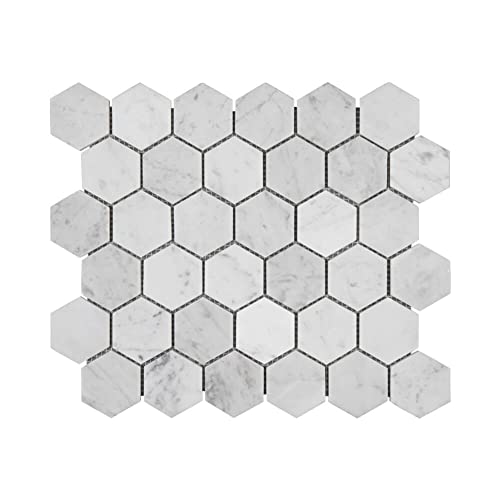
Floor tiles require a different decision process. Nexus is the selected floor-specific product and lists 20 12-by-12-inch tiles covering 20 square feet. Its peel-and-stick construction is designed for flat, dry surfaces and is offered in multiple patterns. Do not treat wall-tile installation guidance as interchangeable with floor preparation; the intended surface, traffic, and layout are different.
Review adhesive and removal details
Adhesive systems vary. Fynnsilas and Fluxynara describe nano-adhesive solutions, while several felt sets include removable tabs. MCLEULLA describes adhesive backing and removable use. AkuDecor says removal should be assisted with a hair dryer, and the listing advises avoiding heavy objects. These details matter for renters or anyone planning a temporary display.
A removable label is not a guarantee that every wall finish will respond identically. Test an inconspicuous area when possible, follow the supplied removal instructions, and avoid hanging loads that the listing does not support. For all products, the adhesive is part of the installation system, not a reason to skip surface preparation.
Use the scoring criteria sensibly
This comparison weights adhesive installation, layout flexibility, decorative finish, functional utility, and kit coverage. The scores reflect supplied specifications only. They do not represent hands-on durability testing, customer sentiment, or marketplace popularity. A high score means the listing provides a strong specification profile for this category, not that the product is appropriate for every wall or room.
Final Recommendation
Ekkogo X-Large Felt Bulletin Board Tiles ranks first overall in this specification-based comparison under the published weighted criteria.
Ekkogo X-Large Felt Bulletin Board Tiles is the first overall specification-based choice among these best adhesive decorative tiles. Its combination of 12 thick tiles, a stated 47.24-by-35.43-inch layout, 72 removable adhesive tabs, beveled edges, pin use, and a listed sound-absorption feature gives it an unusually complete specification profile.
Fynnsilas is the better pick when a patterned hexagon design is more important than stated coverage. Chicplaid is compelling for multicolor walls and a large pin supply, while AkuDecor suits a clean white arrangement. Fluxynara and lightomorrow provide softer decorative alternatives for smaller or more coordinated spaces. Facilife is the natural-material option, MCLEULLA is the mirror-accent choice, and Nexus is the floor-specific selection.
Together, these top adhesive decorative tiles cover the main use cases documented in the pool: display organization, accent decoration, reflective wall treatment, and patterned floor renewal. Check the surface requirements and planned coverage before choosing a finish.
Frequently Asked Questions
What are the best adhesive decorative tiles for a memo wall?
Ekkogo, Chicplaid, Fynnsilas, and AkuDecor are strong specification-based choices for memo or photo walls. Each listing documents felt tiles and adhesive mounting, while the sets vary in size, color, layout, and included tabs or pins. Choose by the finished dimensions you need rather than by tile count alone.
Are adhesive felt tiles suitable for textured walls?
The selected listings generally describe smooth or clean wall installation. Facilife specifically excludes textured walls, and Fynnsilas lists several smooth materials as compatible. For any textured surface, verify the product instructions and consider a small test area before committing to a full layout.
Which selected product is designed for floors?
Nexus Self-Adhesive Vinyl Floor Tiles is the floor-specific selection. It lists 12-by-12-inch tiles, 20 tiles per box, and 20 square feet of coverage. Its instructions call for a flat, dry surface, so floor preparation should follow the product’s stated use rather than general wall-tile guidance.
Do mirror stickers provide the same use as a full mirror?
Not necessarily. MCLEULLA’s selected product consists of small gold hexagon PVC mirror stickers intended for decorative arrangements. The listing documents wall, door, window, closet, and tile applications, but its small format is better understood as an accent treatment than as a continuous full-size mirror.
What should renters check before installing adhesive tiles?
Look for documented removable backing or tabs and review removal instructions. Ekkogo, Chicplaid, Fluxynara, and AkuDecor describe removable adhesive systems or tabs, while AkuDecor specifically recommends heating the adhesive for removal. Even with removable products, surface condition and finish can affect results, so follow the supplied directions carefully.