Buying Guide
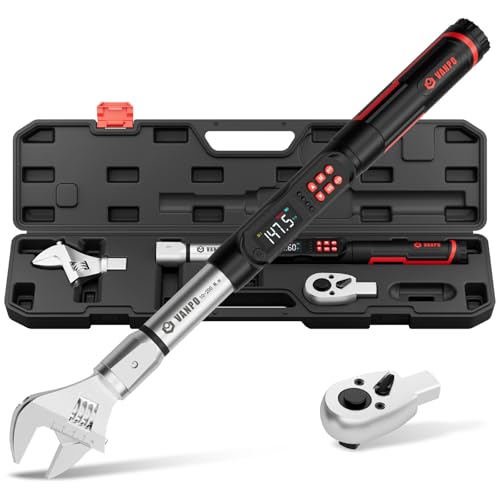
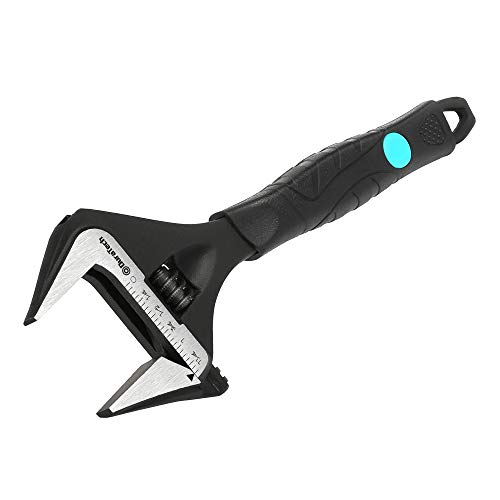
Choosing among the best adjustable torque wrenches starts with the connection between the wrench head and the fastener. An adjustable open-end jaw is useful for flare nuts, fittings, and locations where a socket cannot pass over tubing. A ratchet head is more familiar for automotive fasteners and socket-based work. Interchangeable-head designs attempt to cover both situations, but the included jaw size and drive size still determine what the tool can handle.
Match the range to the job
Torque range is not simply a matter of choosing the largest number. The lower end matters when working on smaller fasteners, while the upper end matters for larger fittings, suspension hardware, or other demanding applications. The selected products span compact HVAC-oriented ranges such as 10-60 Nm through broad digital ranges reaching 200 Nm. ANPUDS and VANPO are the broadest documented digital choices, while LEXIVON offers a wide mechanical range.
A range should overlap the torque specifications you expect to use. If a manual calls for a setting below the wrench’s stated minimum, the tool is not an appropriate match even if its maximum capacity looks impressive. Conversely, a wrench should not be operated beyond its documented maximum. The evidence supplied here supports comparing published ranges, not assuming that a wider range is automatically more accurate throughout its scale.
Consider accuracy claims carefully
The listings state accuracy figures from ±1% to ±4%. SQFOR, LPABY, and LEXIVON list ±3% or ±4% figures. These are manufacturer-provided specifications rather than results from an independent test, so they should be treated as comparison data rather than verified performance.
A calibration or inspection certificate can add useful traceability. VEVOR, ANPUDS, KTTOOL, and LEXIVON explicitly mention certificates or inspection documentation in the supplied evidence. That does not replace checking the tool against the requirements of a regulated or safety-critical workflow, but it is a relevant purchasing detail when documented torque matters.
Choose digital or mechanical operation
Digital models may provide direct readouts, peak or track modes, presets, data memory, and combinations of vibration, buzzer, and LED alerts. These features can help when a user needs repeat settings or wants more than the audible click of a mechanical wrench.
Mechanical models such as SQFOR, LPABY, and LEXIVON use a scale and click-style feedback. They do not depend on batteries or a screen, and their controls are comparatively direct. That simplicity can be useful for occasional work, but the supplied evidence does not show the same memory or multi-alert functions available on the digital options. CPS occupies an electronic middle ground, with documented presets, a large display, peak and track views, and three alert types, although the supplied listing does not state its range or accuracy percentage.
Examine head compatibility
Head versatility is particularly important for HVAC and plumbing. ANPUDS, VANPO, and LLAVETOR document combinations that include open-end and ratchet configurations. VEVOR documents a jaw opening from 0 to 1.5 inches. These figures help indicate the size of fittings each design is intended to accommodate, but they do not identify every compatible fastener.
A fixed drive size also affects socket compatibility. The selected listings include 1/2-inch and 3/8-inch ratchet heads, as well as interchangeable interfaces. Confirm the required drive size and whether the head can reach the fastener without interfering with tubing, panels, or surrounding hardware. A large jaw is useful only when it fits the particular connection and working space.
Look at readability and handling
A clear scale is important on mechanical tools. LEXIVON documents a high-contrast dual-range scale, while SQFOR and LPABY describe clear or laser-engraved scales.
Grip and leverage also affect the buying decision. SQFOR lists an extended 16.14-inch length, and several products document non-slip or rubberized handles. Storage is another practical distinction: VEVOR, LPABY, and LLAVETOR explicitly include a toolbox or protective case in the supplied evidence. Do not assume that an unlisted case, battery, adapter, or accessory is included.
Final recommendation
ANPUDS AP4-200 Adjustable Digital Torque Wrench ranks first overall in this specification-based comparison under the published weighted criteria.
ANPUDS AP4-200 Adjustable Digital Torque Wrench ranks first in this specification-based comparison under the published weighted criteria.
ANPUDS AP4-200 Adjustable Digital Torque Wrench is the first specification-based choice among these best adjustable torque wrenches. Its ±1% stated accuracy, 3-200 Nm range, interchangeable 45 mm jaw and 1/2-inch ratchet head, digital alerts, presets, and data memory give it a particularly complete combination of documented capabilities.
KTTOOL is a precision-focused alternative, especially for users who value ±1% stated accuracy and a 38 mm open-end head. VANPO is suited to mixed HVAC and automotive work because it combines a 10-200 Nm range with three alert types and 500-group memory.
For users who want top adjustable torque wrenches without digital electronics, SQFOR and LPABY offer broad mechanical functionality, including large open-end jaws and pipe-related features. LEXIVON is the simpler traditional ratchet choice for automotive maintenance. CPS is worth considering when presets, display visibility, and tactile alerts matter, although its supplied specifications leave the range and accuracy unanswered. LLAVETOR is the most flexible head-format kit in this selection, with flexible, static, and ratcheting heads in one documented package.
Frequently Asked Questions
What should I check first when comparing the best adjustable torque wrenches?
Check the required torque specification, then compare the wrench’s published minimum and maximum range. Next, confirm the head type, jaw opening, drive size, and whether the tool fits the available working space. Accuracy documentation and included calibration paperwork are useful secondary checks.
Are digital adjustable torque wrenches better than click-style models?
Neither design is automatically better for every task. Digital models may offer direct readouts, presets, stored data, peak or track modes, and multiple alerts. Click-style models such as SQFOR, LPABY, and LEXIVON use mechanical feedback and do not require batteries. Choose based on the workflow, required features, and documented specifications.
Which selected models have open-end jaws?
LLAVETOR documents interchangeable head formats, including flexible and ratcheting heads, but the supplied evidence does not identify its jaw opening. Always compare the stated jaw size with the fitting before purchase.
Do all of these wrenches include calibration documentation?
No. The supplied evidence explicitly mentions a calibration or inspection certificate for several models, including ANPUDS, KTTOOL, VEVOR, and LEXIVON. Other listings provide accuracy claims without clearly documenting a certificate. Treat any stated accuracy as listing information unless independently verified.
What are the top adjustable torque wrenches for HVAC work?
The right choice depends on the required torque range, jaw opening, and whether digital alerts or mechanical click feedback better suits the work.