Buying Guide
Large adjustable wrenches are defined by more than overall length. A useful choice depends on the maximum jaw opening, available working room, handle leverage, adjustment control, and storage. The best large adjustable wrenches in this comparison range from compact 10-inch wide-jaw designs to a 24-inch long-handle model.
Start with jaw capacity
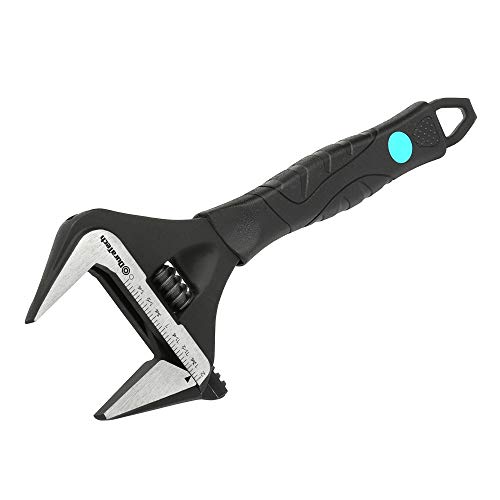
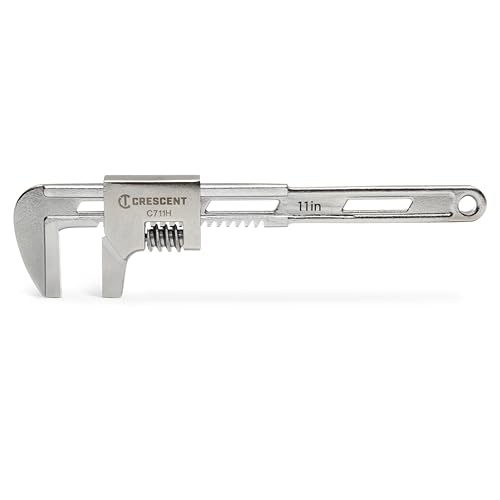
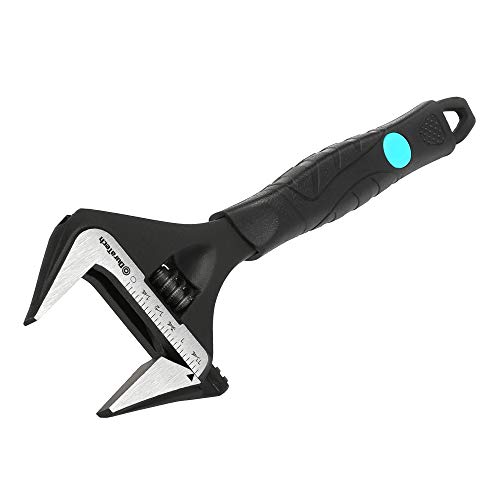
Jaw capacity is the clearest specification for matching a wrench to a fastener. Crescent C711H lists a 3-inch opening, the largest stated figure here. MAXPOWER 12-inch wide jaw follows with a 2.4-inch opening, while DURATECH 10-inch reaches 2-1/32 inches. These wide-jaw tools may suit larger nuts, bolts, or pipes without requiring a much longer handle.
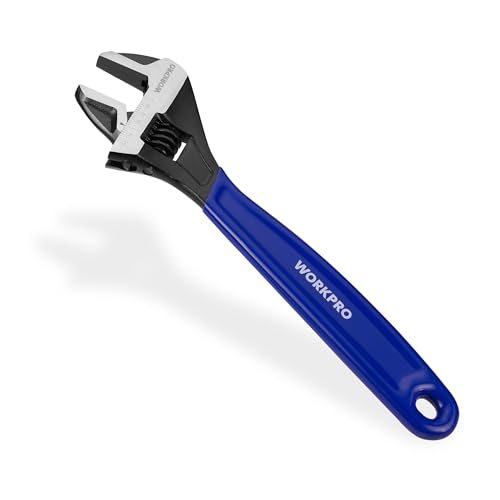
Several conventional designs document openings around 1-1/2 inches. WORKPRO lists 1-1/2 inches, SK lists 1-9/16 inches, and KARRYTON lists 1-3/4 inches. For CRAFTSMAN CMMT81627, Klein Tools O50712, and Olympia Tools, the supplied listings describe wide or extra-capacity designs without providing a numeric maximum opening. Verify those dimensions against the intended fastener before purchase.
Choose length for access or leverage
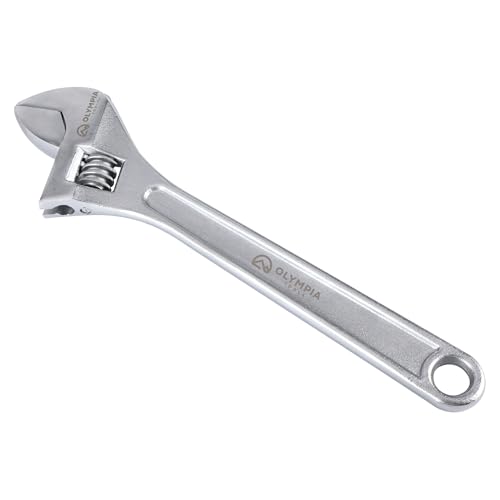
A longer handle can improve reach and provide more leverage, but it also needs more clearance and storage room. CRAFTSMAN CMMT81627 is 24 inches, making it the reach-focused option. KARRYTON and Olympia Tools are 15 inches, while the SEDY set includes a 16-inch wrench alongside 10- and 12-inch sizes.
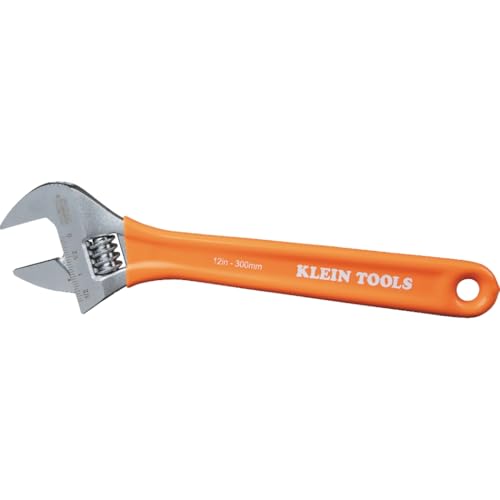
A 10- or 12-inch tool is easier to carry and maneuver. DURATECH uses a 10-inch format with a thin, long jaw, and Klein Tools describes its 12-inch model as compact while intended for larger tasks. MAXPOWER and WORKPRO sit between compact access and extended reach. Consider the surrounding clearance before choosing the longest tool available.
Compare construction and finish
Construction details help distinguish a general-purpose wrench from one intended for heavier service. WORKPRO, MAXPOWER, DURATECH, and SEDY specify heat-treated or drop-forged Cr-V steel. KARRYTON and Olympia Tools specify drop-forged alloy steel, while Klein Tools lists heat-treated alloy steel. These details document material and manufacturing approach, but they are not a substitute for hands-on strength testing.
Chrome plating appears on SK, Klein Tools, Crescent, KARRYTON, Olympia Tools, and CRAFTSMAN listings. WORKPRO and DURATECH use black oxide finishes, and SEDY also lists black oxide. The supplied descriptions associate these finishes with corrosion or rust resistance. A wrench used around grease, moisture, or outdoor equipment may benefit from a finish that is easier to wipe clean and maintain.
Look for adjustment and marking features
A smooth knurl or worm gear helps position the movable jaw. WORKPRO describes a flexible knurl and hex jaw, MAXPOWER describes smooth adjustment, and Klein Tools lists a smooth turning knurl.
SAE and metric scales are useful when working across hardware standards. WORKPRO, MAXPOWER, SK, Klein Tools, CRAFTSMAN, KARRYTON, DURATECH, and SEDY document both systems. SK lists scales on the front and back, while Klein Tools lists laser markings on both sides. Scale markings can speed initial jaw positioning, but the final fit should still be checked on the fastener.
Match handle design to the job
Grip and access features matter when a wrench will be used repeatedly. MAXPOWER, DURATECH, and WORKPRO list rubber or textured grips. Klein Tools specifies a dipped and contoured handle, while KARRYTON lists an ergonomic I-beam handle. These features may affect handling, but the supplied data does not establish comfort through testing.
For overhead or elevated work, tether and storage holes may be useful. WORKPRO, MAXPOWER, Klein Tools, KARRYTON, and SEDY identify a hole or tethering feature. Klein Tools O50712 specifically lists a large loop hole. Spud-wrench designs such as the SEDY set add a tapered alignment handle, which may help with appropriate maintenance tasks but may be unnecessary for ordinary household repairs.
How to use this ranking
This is a specification-based comparison, not a hands-on test. The editorial criteria weigh jaw capacity, length and leverage, construction and finish, adjustment control, and usability or access. Products were selected from eligible adjustable-wrench listings and grouped by distinct parent product. Volatile marketplace information and customer sentiment were not used in the public scores. Check the current listing for dimensions, included pieces, and any variation before ordering.
Final Recommendation
MAXPOWER 12-Inch Wide Jaw Adjustable Wrench ranks first overall in this specification-based comparison under the published weighted criteria.
MAXPOWER 12-Inch Wide Jaw Adjustable Wrench is the first overall specification-based choice under the published weighted criteria.
The final choice among the best large adjustable wrenches depends on the documented features that match your intended use.
MAXPOWER 12-Inch Wide Jaw Adjustable Wrench suits users who want a broad 2.4-inch opening, thin head, dual scales, and rubber grip in a manageable 12-inch format. Crescent C711H may suit buyers who need its stated 3-inch automotive jaw. Choose CRAFTSMAN CMMT81627 when handle reach matters more than compact storage, or KARRYTON 15-Inch when you want a long handle with a documented 1-3/4-inch opening.
Among the top large adjustable wrenches, DURATECH is a compact wide-jaw option, while WORKPRO and SK provide balanced 12-inch designs with useful scales and corrosion-conscious finishes. Klein Tools O50712 emphasizes extra capacity and access, Olympia Tools provides a longer general-purpose format, and SEDY supplies three adjustable spud-wrench sizes. Match the final choice to the measured fastener and available clearance rather than relying on length alone.
Frequently Asked Questions
What makes the best large adjustable wrenches different from standard models?
They generally emphasize a larger jaw opening, longer handle, or both. In this comparison, Crescent C711H lists a 3-inch opening, while CRAFTSMAN CMMT81627 offers a 24-inch handle. A larger tool is not automatically better if the work area is confined.
Is a 10-inch or 12-inch adjustable wrench better for tight spaces?
A 10-inch model may be easier to position, especially when it has a thin head. DURATECH documents a 10-inch thin, long jaw, while the 12-inch Klein Tools model is described as compact for larger tasks. Compare the head profile and jaw opening with the actual clearance around the fastener.
Are metric and SAE scales important?
They are useful when working with both measurement systems because they help identify approximate fastener size before adjusting the jaw. Selected products including WORKPRO, SK, MAXPOWER, KARRYTON, and CRAFTSMAN document dual scales. The scale is a positioning aid, not a replacement for checking fit.
When should I choose a wide-jaw design?
Choose one when the required fastener is larger than the opening of a conventional adjustable wrench or when you want one tool to cover a broader range. MAXPOWER and DURATECH state numerical openings above two inches, while Crescent C711H lists three inches. Confirm the actual requirement before buying.
What is the benefit of a 15-inch or longer wrench?
A longer handle can provide additional reach and leverage, but it needs more room to swing and takes more storage space. KARRYTON and Olympia Tools are 15-inch options, SEDY includes a 16-inch wrench, and CRAFTSMAN reaches 24 inches. Longer length should be matched to the work area and fastener size.