Buying Guide
The best aggressive car exhaust mufflers are not interchangeable simply because they share a sound description. Inlet position, outlet position, connection diameter, case dimensions, and internal construction determine whether a muffler can sensibly fit a particular exhaust system. This comparison uses supplied listing specifications and feature statements rather than hands-on testing. The editorial scores emphasize documented sound character, performance-related claims, internal design, construction, and configuration detail.
Start with the inlet and outlet layout
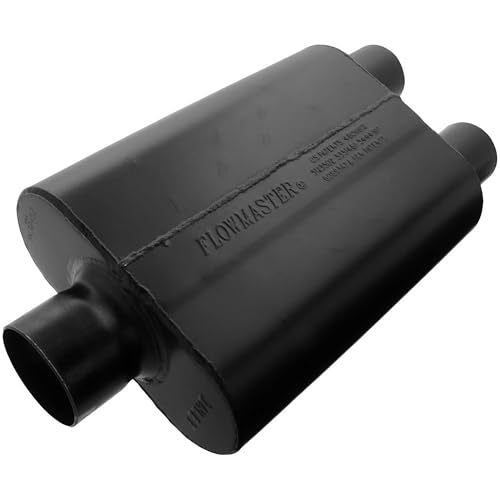
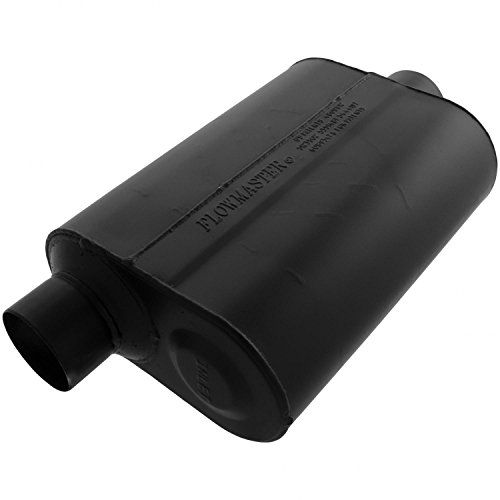
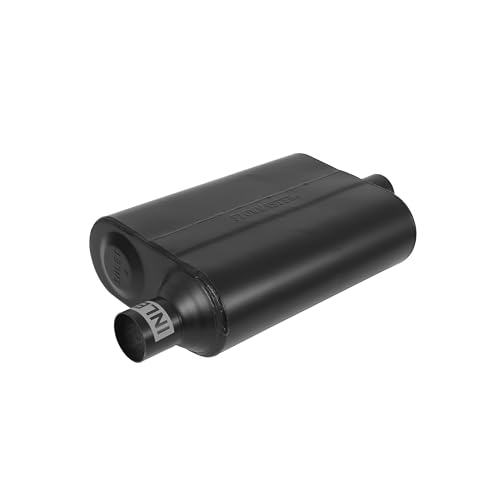
The first fitment check is the direction of gas flow through the muffler. Center-in/center-out models, such as the Flowmaster Super 40 3.00 Center In/Center Out, suit systems where the pipe approaches and leaves along the central axis. An offset inlet with a center outlet, represented by the Flowmaster 40 Series 2.50 Offset In/Center Out and the Flowmaster Super 40 3.00 Offset In/Center Out, changes how the muffler sits in the pipe run.
Offset-in/offset-out designs place both connections away from the centerline. The Flowmaster Super 44 2.50 Offset In/Offset Out is therefore a better conceptual match for a pipe path that already uses offset routing. A dual-outlet model requires still more planning. The Flowmaster 40 Series 3.00 Center In/Dual Out and Flowmaster Super 44 3.00 Center In/Dual Out are intended for systems that split toward two tailpipes. Verify the pipe path, hanger locations, and outlet direction before selecting a configuration.
Match connection diameter carefully
The selected models cover 2.00-inch, 2.25-inch, 2.50-inch, and 3.00-inch connections. The Flowmaster 40 Delta Flow 2.00 Offset In/Center Out is specifically listed with 2.00-inch connections, while the Flowmaster 40 Series 2.25 Offset In/Center Out serves a smaller but different tubing size. The 2.50-inch Super 44 and 40 Series models occupy a common middle range, and the Super 40 3.00-inch variants target larger tubing.
A diameter match helps avoid an installation that needs unnecessary transitions. It also makes the published configuration easier to interpret. Do not assume that a muffler described as universal automatically matches every vehicle without adaptation. Measure the existing pipe outside diameter, identify the available straight length, and compare those findings with the listed inlet and outlet sizes.
Choose the internal design for the intended character
Chambered construction is a recurring feature in this selection. The Super 44 models use a two-chamber Delta Flow design, and the classic 40 Series models also document a two-chamber internal layout. These designs are associated in the supplied evidence with deep or bold aggressive sound, airflow management, and throttle-response or performance claims.
The Flowmaster 15430 Outlaw Race Muffler takes a different approach in the supplied description: it has no internal packing and minimal decibel reduction for race applications where muffler rules apply. That makes its documentation especially direct for a highly aggressive sound profile, but its race-oriented positioning deserves attention before using it in a street-focused system.
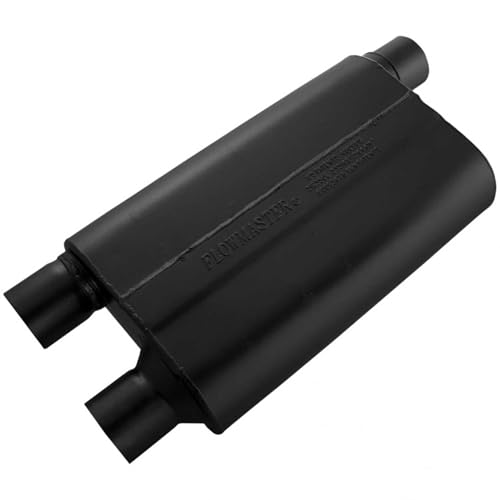
The Flowmaster 80 Series 2.50 Offset In/Dual Out is also distinct. Its transverse crossflow layout is described for rear-mounted systems and tight-clearance performance cars, including GM F-body applications. This is not merely a sound choice; it is a packaging choice. A transverse case can be useful where a conventional longitudinal muffler does not suit the space.
Consider interior resonance separately from exterior sound
Several listings distinguish exterior sound from interior resonance. The Super 40 3.00 Center In/Center Out lists moderate interior resonance, while the Super 40 3.00 Offset In/Center Out lists noticeable interior resonance. The 80 Series similarly documents aggressive exterior sound with moderate interior resonance. These terms describe the intended sound balance in the listing, not an independent cabin-noise measurement.
If the vehicle is driven regularly, treat resonance language as a meaningful specification. A muffler can be aggressive outside while still being described as moderate inside, or it can openly indicate noticeable interior resonance. The supplied evidence does not establish a universal cabin result for every vehicle, so use these descriptions as comparative guidance rather than a guarantee.
Inspect case size and available clearance
Case dimensions matter as much as pipe diameter. The Super 44 models are described as having a compact 4-inch case for tighter clearances. The Outlaw uses a round case intended for limited-space applications. By contrast, the 80 Series is a longer transverse design, listed at 24.9 inches in length, and should be evaluated against the rear-mounted space available on the vehicle.
The smaller 2.00-inch Flowmaster 40 Delta Flow lists a 20.3-inch length, while the 2.25-inch 40 Series lists a 20.3-inch length and the 2.50-inch version lists 20.25 inches. Compare overall length, height, and width with nearby driveshafts, suspension components, heat-sensitive areas, and body panels. The listing data can identify the envelope, but it cannot confirm clearance on a specific chassis.
Weigh construction against the installation environment
Many selected Flowmaster models document fully welded 16-gauge aluminized steel. The Super 44, classic 40 Series, Outlaw, and 80 Series listings also mention MIG-welded construction or resistance to heat and vibration. The no-packing statements on the Outlaw and classic 40 Series models describe a design that does not rely on internal packing material that can blow out or wear down.
Those details are useful when comparing designs, but they do not replace vehicle-specific inspection. Exhaust systems experience heat, vibration, moisture, and road exposure. Confirm that the case can be supported correctly and that the connection method suits the project. The product evidence supports construction comparisons, not a predicted service life.
The editorial criteria deliberately focus on category-specific evidence. Aggressive sound documentation carries the highest weight because the requested category is defined by sound character. Flow and performance claims, internal design, and construction follow. Fitment and configuration detail also matter because a well-described muffler is more useful when its connection layout and case information are clear.
A high score means the supplied listing provides strong evidence across those areas. It does not mean the muffler is confirmed for a particular vehicle or that the sound will be identical in every exhaust system. Check the chosen product’s ASIN, model, inlet, outlet, and dimensions against the intended installation.
Final Recommendation
Flowmaster Super 44 3.00 Center In/Dual Out ranks first overall in this specification-based comparison under the published weighted criteria.
The Flowmaster Super 44 3.00 Center In/Dual Out is the highest-scoring returned product and the best aggressive car exhaust mufflers choice when its center-in/dual-out layout matches the system. Its two-chamber Delta Flow design, documented deep aggressive sound, stated airflow and throttle-response benefits, compact case, and welded 16-gauge construction give it the most complete specification profile in this comparison.
For a compact offset route, the Flowmaster Super 44 2.50 Offset In/Offset Out is the closest alternative. The Flowmaster 15430 Outlaw Race Muffler is more specialized, with minimal decibel reduction and race-application positioning. Buyers comparing the top aggressive car exhaust mufflers should then choose among the classic 40 Series, Super 40, and 80 Series according to diameter, outlet pattern, resonance description, and available space rather than sound wording alone.
Frequently Asked Questions
What makes the best aggressive car exhaust mufflers different from ordinary mufflers?
The selected products document aggressive or deep exterior sound through chambered, Delta Flow, crossflow, or race-oriented designs. Their listings also provide connection layouts and construction details, allowing sound character to be considered alongside installation requirements.
Are chambered mufflers suitable for custom exhaust systems?
Several selected chambered mufflers are explicitly positioned for custom or modified systems. The Flowmaster Super 44, classic 40 Series, Super 40, and 80 Series listings describe configurations for custom builds or specific performance applications. Suitability still depends on diameter, inlet and outlet direction, case dimensions, and available clearance.
How should I select between center and offset connections?
Match the muffler’s connection positions to the existing pipe route. Center-in/center-out models follow a central path, offset-in/center-out models shift the inlet, and offset-in/offset-out models shift both connections. Dual-outlet models require a system designed to split toward two tailpipes.
Which selected muffler is aimed at race applications?
The Flowmaster 15430 Outlaw Race Muffler is the clearest race-oriented option in the supplied evidence. It lists minimal decibel reduction, no internal packing, and use where muffler rules apply. Those characteristics should be considered before selecting it for a street-driven vehicle.
Why do case dimensions matter when choosing a muffler?
The case must fit between the vehicle’s surrounding components and leave room for proper pipe routing and support. Compact Super 44 and round Outlaw designs address limited-space considerations differently, while the longer transverse Flowmaster 80 Series is intended for a particular rear-mounted layout.