Buying Guide
The best 3-inch car exhaust pipes are not all the same type of component. Some listings are long straight tubes, while others are bend sections, flexible connectors, branch pipes, or multi-piece kits. Start by deciding whether the project needs one replacement section, a routing component, or enough tubing to construct a larger system.
Confirm diameter terminology
A 3-inch label does not always describe the same measurement. The STMGW straight pipe lists a 3-inch inlet and outlet, while the Walker and TORDXICS flexible products specify 3-inch inside diameters. Several rigid fabrication pieces, including the FGJQEFG tube and the Piclafe bend, use a 3-inch outside diameter. The distinction affects whether one section fits inside, over, or against another section.
Before selecting a pipe, measure the mating component and identify whether its dimension is inside diameter or outside diameter. The TORDXICS flex pipe is especially important to check because its 3-inch ID may not mate directly with a rigid tube described as 3-inch OD without the appropriate joining method. The X AUTOHAUX elbow gives a 3-inch OD and a 1.5 mm wall thickness, providing more information for fabrication planning.
Choose the correct material
Material affects the type of construction and corrosion considerations involved. T304 or SS304 stainless steel appears on the FGJQEFG straight tube, TORDXICS flex pipe, XinDeLeiHuan tube, Piclafe bend, X AUTOHAUX elbow, and Vurkcy Y pipe. Their listings describe stainless construction in terms of corrosion resistance, high-temperature use, or oxidation resistance.
The YOLANDO kits use 16-gauge mild steel, and the STMGW pipe uses galvanized steel. Those materials can still serve custom exhaust projects, but they represent a different specification choice from stainless steel. The Walker flex pipe uses aluminized steel. Compare the documented material with the vehicle’s environment, fabrication plan, and maintenance expectations rather than assuming that every 3-inch pipe has the same construction.
Match the shape to the route
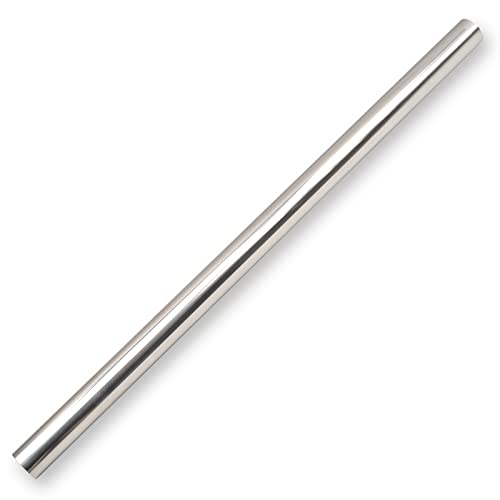
Straight tubing is useful for longer runs. The FGJQEFG piece is listed at 35 inches, and the STMGW pipe at 48 inches, giving them different roles from short connectors. A straight tube may need to be cut and joined with bends when the exhaust route changes direction.
For a single directional change, the Piclafe and X AUTOHAUX products both document 90-degree bends. The Piclafe listing emphasizes cutting, welding, and flared ends, while the X AUTOHAUX listing supplies back-arc and wall-thickness information. Use those details to estimate clearance and connection placement before cutting.
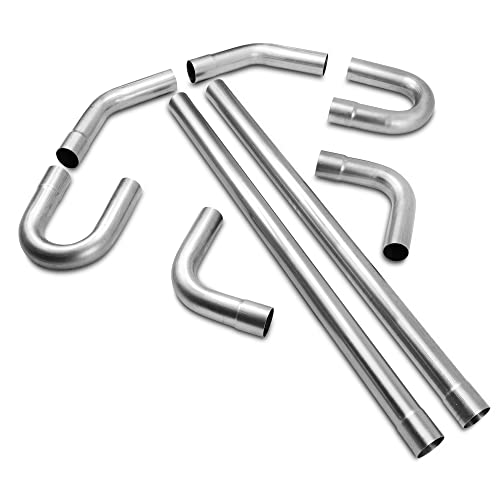
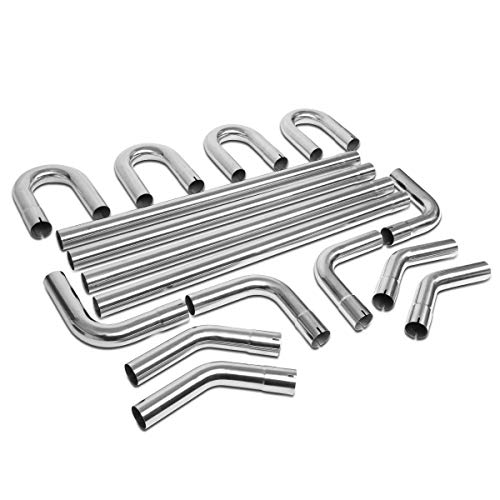
For broader fabrication, the YOLANDO 16-piece kit includes straight sections plus 45-degree, 90-degree, and 180-degree shapes. The 8-piece YOLANDO kit supplies the same general bend families in smaller quantities. These kits are more suitable when the route is not yet finalized or several bends are needed. A Y pipe serves a different purpose: the Vurkcy component is intended for a dual-outlet layout rather than a single continuous route.
Consider flexible sections separately
A flex pipe is not simply a shorter version of rigid tubing. The Walker 36541 and TORDXICS products are designed to connect exhaust sections while accommodating movement or misalignment. Walker documents flex-lock construction for vibration and movement, while TORDXICS specifically describes connecting misaligned pipes and includes two U-bolt clamps.
Check the connection dimensions, available length, and attachment method. The Walker listing identifies a burr-free finish and universal fitment, but it does not list included clamps. TORDXICS includes clamps, but its listed dimension is inside diameter. Neither detail removes the need to compare the existing vehicle sections before installation.
Review installation requirements
Installation methods vary across this category. The XinDeLeiHuan tube supports weld-on or clamp-on setups, the Piclafe bend has flared ends for slip-on installation, and the YOLANDO pieces use expanded ends for slip-fit assembly. The Vurkcy Y pipe is identified as weld-on, while the universal STMGW pipe requires adaptation rather than direct fitment.
A professional installer may be appropriate for cutting, welding, alignment, and exhaust-leak inspection. If the listing says instructions are not included, treat the product as a fabrication component rather than a vehicle-specific replacement. Also account for clearance around the body, suspension, heat-sensitive components, and other exhaust hardware; the supplied listings do not establish vehicle-specific compatibility.
Compare kit size and handling
The two YOLANDO kits differ mainly in the number of supplied pieces. The 16-piece package offers four of each listed shape, while the 8-piece package offers two of each. The larger kit provides more layout flexibility, but its listed 78-pound package weight can affect handling and workspace planning. The smaller kit lists a 30-pound package weight.
A single tube or elbow may be easier to plan around an existing system, while a kit can reduce the need to source multiple bend angles separately. Select based on the route and documented dimensions, not simply on the number of parts.
Final Recommendation
YOLANDO 3-inch Mild Steel Exhaust Kit, 16-Piece ranks first overall in this specification-based comparison under the published weighted criteria.
The YOLANDO 3-inch Mild Steel Exhaust Kit, 16-Piece is the highest-scoring returned product and the first overall specification-based choice. It combines 3-inch tubing, 16-gauge walls, several mandrel-bent angles, straight sections, and expanded slip-fit ends. For a long straight run, the FGJQEFG T304 stainless tube and STMGW galvanized pipe provide clearly stated lengths. For alignment, consider Walker or TORDXICS flex sections; for directional fabrication, Piclafe and X AUTOHAUX offer documented 90-degree bends.
Among the top 3-inch car exhaust pipes, the right selection depends on whether the job requires a complete layout, a single route change, flexible movement control, or a branch to dual outlets. Verify inside-versus-outside diameter, length, wall details, and the intended weld, clamp, or slip-fit method before installation. The best 3-inch car exhaust pipes should be chosen by matching those specifications to the existing exhaust route.
Frequently Asked Questions
What should I measure before choosing the best 3-inch car exhaust pipes?
Measure the mating pipe’s inside or outside diameter, the available straight length, and the clearance around the proposed route. Also identify whether the connection will be welded, clamped, or slip-fit. This is particularly important because some products list 3-inch OD while Walker and TORDXICS list 3-inch ID.
Are the YOLANDO kits suitable for a complete custom exhaust layout?
They provide several components for layout work. The 16-piece kit includes four straight pipes, four 45-degree bends, four 90-degree bends, and four 180-degree U-bends. The 8-piece kit includes two of each listed shape. Both use 16-gauge mild steel and expanded ends, but neither listing establishes vehicle-specific fitment.
When is a flexible pipe more appropriate than a straight tube?
A flexible pipe is intended for movement, alignment changes, or connections between sections. Walker documents flex-lock construction for damping vibration and movement, while TORDXICS describes its product as a misalignment solution. A straight tube such as the FGJQEFG model is better suited to a rigid straight run and may need separate bends around obstacles.
Do 90-degree bends fit every 3-inch exhaust system?
Not automatically. Piclafe and X AUTOHAUX both document 3-inch bends, but their dimensions and connection details differ. Compare the relevant ID or OD, wall thickness, arc length, and end design with the surrounding components. The X AUTOHAUX elbow lists a 3-inch OD and 1.5 mm wall thickness, while Piclafe emphasizes flared ends and cut-or-weld fabrication.
What is a 3-inch Y pipe used for?
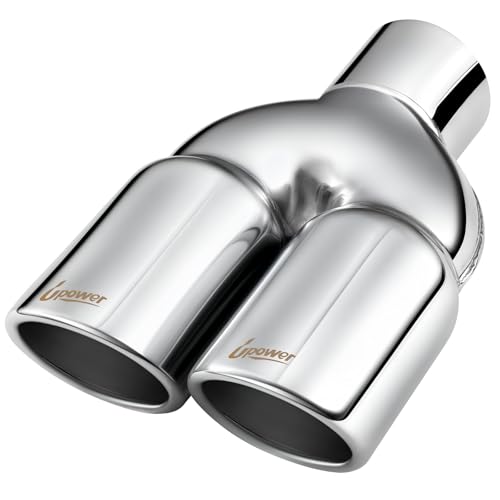
A Y pipe changes a single route into a branched exhaust layout or combines routes at a crossover point, depending on its configuration. The Vurkcy listing describes a 3-inch Y-shaped component for dual exhaust and states that it uses weld-on installation. Confirm the inlet, outlet, branch direction, and available space before selecting one.