Buying Guide
The best aluminum baseball bats combine alloy engineering, barrel design, and league-appropriate sizing. Because aluminum baseball bats span youth, USA, USSSA, and BBCOR categories, comparing specifications side by side is the clearest way to match a player to a bat.
Understanding League Certifications
League certification sets the legal rules of play for any aluminum baseball bat. USA Baseball certification governs youth play in the United States and limits bats to a 2 1/4" or 2 5/8" barrel with a specific performance standard. USSSA 1.15 BPF certification covers travel ball and allows larger 2 3/4" barrels. BBCOR certification governs high school and collegiate play, requiring a -3 drop and a 2 5/8" barrel. Always match the bat to the league’s standard before narrowing further.
Alloy Types and Barrel Engineering
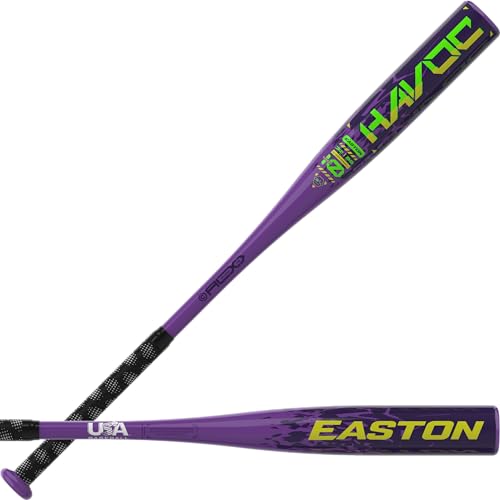
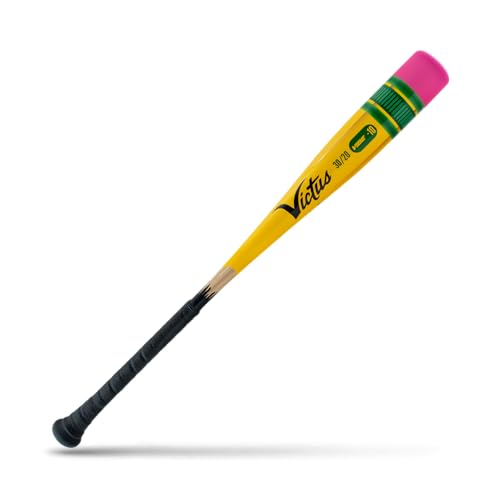
Aluminum baseball bats use different alloy formulations, and the supplied evidence highlights several. Marucci’s AZR alloy appears in the CATX RCKLESS, CATX Connect, and CAT9 America, and uses a thermal treatment process for a more responsive microstructure. Easton’s ALX50 alloy appears in the Havoc and Speed models and is framed as a lightweight, durable performance alloy. Victus uses VXP alloy in the Vibe Pencil. Rawlings uses aerospace-grade alloy in the Raptor and a durable alloy in the Remix. Barrel engineering also varies, with multi-variable wall designs and ring-free barrel technology appearing in several Marucci models to expand the sweet spot and remove dead spots.
Length-to-Weight Drop and Swing Feel
The length-to-weight drop is the difference between a bat’s length in inches and its weight in ounces. A -12 drop is light and easy to swing, suiting youth players such as the Easton Moxie profile. A -10 drop, found on the Rawlings Raptor, Easton Havoc, Victus Vibe Pencil, and Marucci CAT9 America, fits developing USA and USSSA hitters. A -3 drop, used on the Easton Speed and Marucci F5 BBCOR, is the BBCOR standard. Balanced one-piece alloy builds offer a smooth, traditional swing, while two-piece hybrids with a composite handle and an outer-locking system can stiffen the connection and reduce vibration.
Grip, Knob, and Vibration Control
Grip and knob design influence comfort and feedback. Cushioned 2.2mm flex grips appear on Easton’s Havoc, Moxie, and Typhoon models, while a thinner 1.8mm perforated flex grip appears on the Easton Speed. Marucci documents the AV2 anti-vibration knob on the CAT9 America and the AV3 vibration dampener on the CATX RCKLESS. Victus documents a vibration-reducing knob on the Vibe Pencil. These features are framed as tools to reduce sting on mishits, not as guarantees of any specific feel.
Size Coverage and Player Fit
Size coverage is a practical buying consideration. The Victus Vibe Pencil lists six youth sizes from 26"/16 oz up to 31"/21 oz, while the Easton Speed and Marucci F5 BBCOR focus on the 33" and 34" BBCOR range. The Marucci CATX Connect documents a 32"/27 oz senior league configuration, and the Easton Havoc and Rawlings Raptor document youth USA sizes. Selecting a size within the player’s league standard and physical profile keeps the bat legal and easier to control.
Matching a Bat to a Player
For entry-level youth players in USA leagues, the Rawlings Remix and Rawlings Raptor offer lightweight alloy frames designed for quick bat speed and a forgiving barrel. For developing USA-league players who want a more engineered barrel and vibration control, the Marucci CATX RCKLESS, Victus Vibe Pencil, and Marucci F5 SL are strong specification-based options. For USSSA senior league play with a larger 2 3/4" barrel, the Marucci CATX Connect and Marucci CAT9 America document hybrid engineering and AZR alloy barrels. For BBCOR high school and collegiate play, the Marucci F5 BBCOR and Easton Speed offer one-piece alloy builds with BBCOR certification.
Final Recommendation
Marucci CATX RCKLESS Alloy USA Baseball Bat ranks first overall in this specification-based comparison under the published weighted criteria.
The Marucci CATX RCKLESS Alloy USA Baseball Bat is the first overall specification-based choice in this comparison of the best aluminum baseball bats, combining an AZR alloy barrel, multi-variable wall design, ring-free barrel construction, and the AV3 vibration dampener in a USA-certified balanced build. For hitters who prefer a stiffer hybrid connection, the Marucci CATX Connect is a strong USSSA senior league alternative, and the Marucci F5 BBCOR is the BBCOR-ready choice. Together, these three options represent the top aluminum baseball bats documented in this category guide, with the remaining selections covering youth, USSSA, and entry-level needs across the list.
Frequently Asked Questions
What makes the best aluminum baseball bats different from composite bats?
Aluminum baseball bats use alloy barrels that are ready for play right out of the wrapper and tend to perform in a wider temperature range, while composite bats often require a break-in period. The best aluminum baseball bats in this guide rely on alloy formulations such as AZR, ALX50, VXP, and aerospace-grade alloy rather than composite layering.
How important is league certification when choosing aluminum baseball bats?
League certification is essential. USA Baseball, USSSA, and BBCOR each set different standards for barrel diameter, length-to-weight drop, and performance. A bat that meets USA standards may not be legal for BBCOR play, and a BBCOR bat may be too heavy for a youth player. Always confirm that any bat you consider is approved for the league in which it will be used.
What length-to-weight drop should a youth player choose for aluminum baseball bats?
Lighter drops make aluminum baseball bats easier to swing. A -12 drop suits younger players who need faster bat speed, while a -10 drop fits developing players who can handle a slightly heavier barrel. Senior league and BBCOR players move toward -3 and -8 drops as they progress. Sizing within the player’s league rules is the most suitable specification-based approach.
Do one-piece alloy and two-piece hybrid aluminum baseball bats swing differently?
One-piece alloy aluminum baseball bats, such as the Marucci F5 BBCOR and Easton Havoc, typically offer a balanced swing with a traditional feel and more direct feedback on contact. Two-piece hybrid designs, such as the Marucci CATX Connect, add a composite handle and a stiff connection system that can reduce vibration and create a slightly different flex profile. Both designs can perform well depending on the player’s preference.
Are anti-vibration knobs and cushioned grips necessary on aluminum baseball bats?
They are not required, but they are common features on many aluminum baseball bats. Cushioned flex grips appear on Easton’s Havoc, Moxie, and Typhoon models, while anti-vibration knob systems such as Marucci’s AV2 and AV3 appear on the CAT9 America and CATX RCKLESS. These features are framed as tools to reduce sting on mishits, and may be especially useful for players who tend to mishit toward the handle or knob.
How do I match an aluminum baseball bat to a player’s size?
Start with the player’s league standard, then select a length that the player can control comfortably at the plate. The Victus Vibe Pencil documents a six-size youth range, while senior league and BBCOR bats focus on longer lengths. A bat that is too long or too heavy may slow swing speed, while a properly sized bat typically supports better contact and confidence.