Buying Guide
The best men’s ankle rain boots should be chosen by matching the boot’s documented construction to the conditions you expect to face. A short rubber boot can work well for puddles, gardens, and errands, while a neoprene-lined deck boot may be better suited to fishing or repeated exposure to wet surfaces. This is a specification-based comparison, not a hands-on test, so the guidance below stays within the features supplied in the product listings.
Start with the type of wet-weather boot
Short garden and mud boots prioritize easy cleaning, ankle coverage, and quick entry. HISEA uses sealed TPU, front and rear pull tabs, and a 6-inch slip-on height. LHG adds seamless rubber, a 5mm neoprene lining, and a kick-off heel tab. These designs make sense for gardening, yard work, muddy paths, and rainy errands where you want a boot that can be rinsed after use.
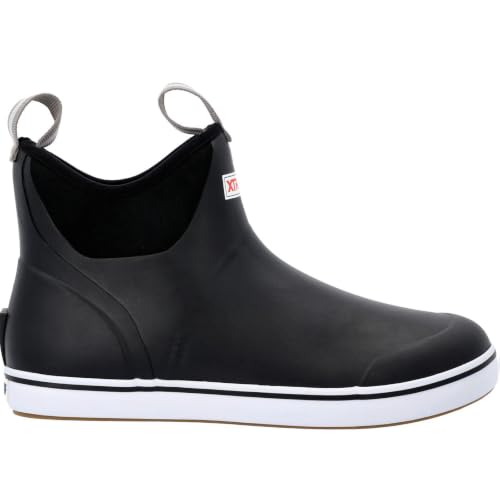
Deck boots are more specialized. XTRATUF, TIDEWE, Furuian, and the other deck-oriented selections describe features for fishing, boating, or wet recreational settings. TIDEWE lists a non-marking outsole with drainage channels, while XTRATUF identifies waterproof construction and front and rear pull tabs. If protecting a boat deck is important, look for a listing that specifically mentions non-marking construction rather than assuming every rubber outsole has that property.
Chelsea-inspired boots offer a different balance. The totes model has an ankle-high profile and Chelsea styling, making it a reasonable option for casual wear, errands, and light outdoor tasks. Style does not replace technical information, however, so confirm that the listing also documents waterproofing and traction before treating a fashion-led boot as a work boot.
Check waterproof construction and lining
Look for explicit construction language such as seamless rubber, sealed TPU, waterproof rubber, or a stated waterproof rating. The selected listings use several approaches. LHG describes seamless waterproof rubber, HISEA describes fully sealed TPU, and Kalkal describes a sealed rubber shell with 5mm neoprene. These statements provide stronger buying evidence than a title that merely says “rain boot.”
Lining affects how the boot may suit the season. Neoprene appears in several selected models and is described as insulating or helping regulate foot temperature. Kalkal and LHG specify 5mm neoprene, while TIDEWE specifies 3.5mm neoprene. Showave lists stretched neoprene with breathable mesh. Thicker or insulated lining may be useful in cold, damp conditions, but it can feel warmer than an unlined boot. For mild rain or indoor-outdoor errands, a breathable mesh lining or lighter construction may be more comfortable.
Waterproof protection also depends on the opening. An ankle boot can block puddles and rain around the foot, but the supplied listings do not establish protection above the stated shaft or opening. Consider the depth of water you normally encounter and avoid assuming that ankle height provides the coverage of a tall wellington boot.
Compare tread and surface compatibility
Wet-weather traction is not one universal feature. Listings use terms such as slip-resistant, deep-lug, self-cleaning, drainage-channel, and anti-slip. Kalkal’s listing describes deep lugs and micro-channel drainage. HISEA describes an irregular deep-convex lug outsole with a self-cleaning pattern. LHG and Showave also describe self-cleaning tread features. These details are useful when mud or debris is part of the environment.
For boats and decks, surface compatibility matters. TIDEWE specifically lists a non-marking sole and drainage channels. Furuian describes a slip-resistant tread for wet decks, and XTRATUF is explicitly positioned as a deck boot. These statements support a deck-use comparison, but they do not amount to independent traction testing. The actual grip can also depend on the surface, debris, and walking conditions.
Prioritize the comfort details you need
Comfort claims should be tied to specific construction details. Kalkal lists a removable memory foam insole, arch support, and a breathable mesh lining. HISEA lists a 4mm memory foam insole, built-in arch support, and a wide round toe box. 8 Fans lists removable memory foam insoles and breathable air-mesh lining. Furuian lists a dual-density comfort insole, while TIDEWE lists a removable EVA insole.
These features can help you compare interior design, but they do not prove how a boot will feel on your feet. Check the manufacturer’s size chart, foot length guidance, and return terms before ordering. Pay particular attention to instep and toe-room notes: Kalkal’s listing says wide feet or high insteps may require a half-size adjustment, and TIDEWE recommends sizing up for half sizes.
Look for practical entry and care features
Pull tabs, heel loops, elastic openings, and kick-off tabs can make wet boots easier to put on and remove. XTRATUF and TIDEWE list pull tabs or heel loops, Furuian uses an elastic neoprene opening and pull-on tab, and HISEA has front and rear pull tabs. LHG adds an integrated kick-off heel tab. These features are especially useful when removing boots after muddy work.
Smooth outer surfaces simplify care. Even when a listing says a boot is easy to clean, allow the interior to dry as directed by the manufacturer. The supplied evidence does not establish drying time or odor performance.
Match the boot to the task
For boat decks, XTRATUF and TIDEWE have the clearest specialized evidence. For cold, muddy chores, LHG and Kalkal document neoprene-lined construction, while MUCK lists extra rubber layers and double heel and toe reinforcement. For garden comfort, HISEA and 8 Fans provide the most detailed cushioning and lining information. For casual rainy-day wear, totes offers an ankle-high Chelsea profile.
Final Recommendation
Kalkal Men’s Ankle Rain Boots ranks first overall in this specification-based comparison under the published weighted criteria.
The final choice among the best men’s ankle rain boots depends on the documented features that match your intended use.
XTRATUF Men’s Ankle Deck Boot is the highest-scoring returned product and the first overall specification-based choice. Its documented waterproof construction, front and rear pull tabs, shaft circumference specification, and direct deck-boot positioning make it a focused pick for boating and fishing. The top men’s ankle rain boots are not interchangeable: Kalkal is the more detailed cushioning choice, HISEA is a strong lightweight garden option, and TIDEWE is well matched to non-marking deck use.
For outdoor chores, LHG offers a useful combination of seamless rubber, neoprene lining, mud-shedding grooves, and a kick-off tab. MUCK is the more protection-oriented listing because it specifies extra rubber layers, double heel and toe reinforcement, and an ASTM rating. The totes Chelsea boot is the most style-conscious selection, while Furuian, Showave, and 8 Fans add different combinations of neoprene, lining, cushioning, and pull-on convenience.
Before ordering, confirm the US size conversion and review the manufacturer’s fit guidance. Several listings provide size-specific or half-size advice, and ankle boots can feel different depending on toe shape, instep height, socks, and lining thickness. Choose the construction that fits your conditions rather than relying only on the product title.
Frequently Asked Questions
What are the best men’s ankle rain boots for fishing?
XTRATUF Men’s Ankle Deck Boot and TIDEWE Men’s Waterproof Deck Boots are the clearest fishing-oriented choices in this comparison. XTRATUF lists waterproof construction and front and rear pull tabs. TIDEWE lists waterproof neoprene and rubber, a non-marking sole with drainage channels, a removable EVA insole, and reinforced toe and heel. Furuian is another option because its listing names fishing, boating, and wet-deck use and documents slip-resistant tread.
Are ankle rain boots suitable for gardening?
Yes, several selected models are specifically described for gardening or yard work. HISEA lists gardening, yard work, and wet grass among its uses. LHG describes gardening, farming, and outdoor chores, while 8 Fans is positioned as a garden shoe with natural rubber, neoprene, memory foam insoles, and pull tabs. Select a boot with a tread suited to mud and an opening that is easy to remove after working outside.
Which best men’s ankle rain boots have insulation?
Kalkal and LHG both list 5mm neoprene lining. TIDEWE lists 3.5mm neoprene, and Showave describes stretched neoprene with breathable mesh. Neoprene may provide a warmer, more structured interior than a basic unlined rubber boot, but the supplied information does not establish a universal comfort temperature or guarantee warmth. Consider your climate, socks, and activity level when choosing an insulated style.
How should men’s ankle rain boots fit?
Use the manufacturer’s size chart and compare it with your foot length. TIDEWE recommends sizing up for half sizes, and Kalkal notes that wide feet or high insteps may need a half-size adjustment. Also consider whether you will wear thick socks. A boot should allow normal toe movement without making the heel feel excessively loose, but the supplied listings do not provide a universal fit standard.
What should I look for in top men’s ankle rain boots for slippery ground?
Look for documented tread details rather than relying on a generic anti-slip phrase. Deep lugs, self-cleaning grooves, drainage channels, and slip-resistant outsoles are all useful specifications. HISEA and LHG describe self-cleaning or mud-shedding tread, Kalkal lists deep lugs and drainage channels, and TIDEWE lists drainage channels on a non-marking deck sole. These features support comparison, but they are not a substitute for careful movement on wet or uneven surfaces.