Buying Guide
Choosing among the best anti-aging facial scrubs starts with identifying how the product exfoliates. A traditional particle scrub physically buffs the surface. A chemical exfoliant uses acids such as glycolic, lactic, or salicylic acid. Some formulas combine both approaches, while a peeling gel uses a soft rolling action. The supplied listings show meaningful differences in these designs, so the right choice depends on your routine, tolerance, and main skin-care goal.
Match the exfoliation method to your routine
Physical exfoliation is represented by products such as DRMTLGY, Era Organics, and Skin 2.0. DRMTLGY lists pumice granules, Era Organics lists natural particles, and Skin 2.0 describes physical exfoliation without naming the particle. These options can suit shoppers who prefer a tactile scrub, but pressure and frequency matter because the evidence does not establish that more abrasion is better.
Acid-based options provide a different approach. NAELI lists glycolic, lactic, and salicylic acids, while DERMA E combines glycolic acid with apricot seed powder and papaya. BODY FIRM identifies AHA and BHA exfoliators, but does not name the specific acids. These products may appeal to shoppers focused on surface renewal, pore care, or dullness. NAELI’s stated 10% glycolic-acid claim is especially important because a stronger listed concentration may call for a more cautious introduction.
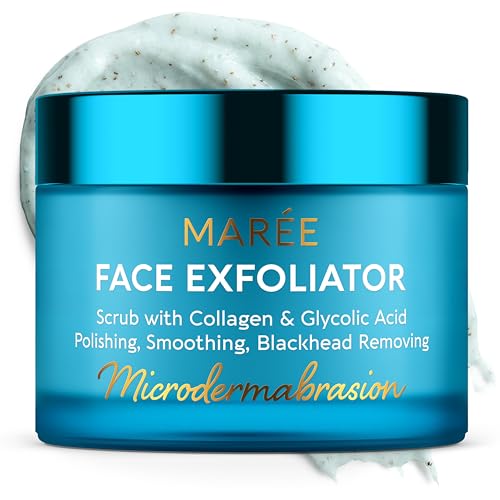
Combination formulas can provide broader exfoliation coverage but may also be more demanding. Mad Hippie pairs bamboo and volcanic ash with six AHAs. MAREE combines hydrated silica and walnut shell powder with glycolic acid. These designs rank well because they document more than one exfoliation route, but users should not assume that a complex formula is automatically appropriate for sensitive skin.
Look for anti-aging support without overreading claims
The anti-aging language in these listings generally refers to smoother, brighter, firmer, or younger-looking skin rather than proven reversal of aging. Ingredient details help clarify the positioning. Mad Hippie lists six AHAs, including glycolic and mandelic acids. DERMA E lists glycolic acid and vitamin A. MAREE features glycolic acid, marine collagen, hyaluronic acid, and niacinamide. BODY FIRM identifies a complex designed to support the look of collagen and elastin.
Vitamin C appears in Skin 2.0, Fresh Essence Co, and OUPEICHARM. Turmeric is featured by Skin 2.0, while Era Organics emphasizes manuka honey and Australian cehami extract. These ingredients support different product stories, including brightening, moisture, and soothing-oriented care. They should be treated as formulation evidence, not a guarantee of a cosmetic result.
Consider comfort and moisture support
Exfoliation can be drying for some routines, so moisture-oriented ingredients are useful selection signals. Mad Hippie lists squalane, hyaluronic acid, and probiotics. MAREE lists hyaluronic acid, camellia seed oil, and marine collagen. Fresh Essence Co includes ceramides, glycerin, and macadamia oil. Era Organics emphasizes manuka honey and describes the scrub for dry and sensitive skin.
Formula standards can also help narrow the list, although they do not predict individual compatibility. Mad Hippie is listed as fragrance-free, dye-free, paraben-free, and sulfate-free. Fresh Essence Co lists vegan, non-GMO, cruelty-free, paraben-free, sulfate-free, and phthalate-free claims. DERMA E lists vegan and cruelty-free credentials and excludes several ingredients. Skin 2.0 is described as dermatologist tested and cruelty free. Always review the full current label when a specific ingredient matters to you.
Decide whether cleansing is a priority
Several selected products are also face washes or cleansing treatments. NAELI is a gel cleanser aimed at pores and oilier skin types. DERMA E describes deep cleansing and impurity removal. MAREE specifically mentions makeup, impurities, and dead-cell removal.
If you already use a separate cleanser, a more focused scrub or peeling gel may fit better. Fresh Essence Co supplies a dry-skin application method and a 20–30-second massage instruction. Other listings generally advise damp-skin circular massage and rinsing. Follow the selected product’s directions rather than treating all facial scrubs as interchangeable.
The selected sizes range from compact 1.1-ounce containers to larger six-fluid-ounce tubes. A larger container may be convenient for regular use, while a smaller jar can be useful if you are testing a new exfoliation style or use scrubs infrequently. Fresh Essence Co uses a squeeze tube and provides a nickel-size application direction. BODY FIRM supplies six fluid ounces. The format and amount can matter as much as the featured ingredients when choosing a product for occasional or regular use.
The best anti-aging facial scrubs are not necessarily the most aggressive or the most heavily marketed. Prioritize a clearly documented exfoliation system, ingredients that fit your objective, and comfort features that match your skin. Introduce any new exfoliant gradually, avoid the eye area, and consider daytime sun protection as part of an exfoliating routine.
Final Recommendation
Mad Hippie MicroDermabrasion Facial ranks first overall in this specification-based comparison under the published weighted criteria.
Mad Hippie MicroDermabrasion Facial is the first overall specification-based choice among the best anti-aging facial scrubs because it combines physical exfoliants, six AHAs, and documented hydration and barrier-support ingredients. NAELI is the more targeted option for shoppers wanting a clearly identified AHA/BHA cleanser, while DERMA E offers a balanced botanical and acid combination. MAREE is a mature-skin-oriented alternative with collagen, hyaluronic acid, and niacinamide. For dry-feeling or sensitive routines, Era Organics and Fresh Essence Co provide comfort-focused formats. Together, these are practical options among the top anti-aging facial scrubs based on supplied specifications rather than customer sentiment or hands-on testing.
Frequently Asked Questions
How should I choose among the best anti-aging facial scrubs?
Start with exfoliation type. Choose a physical scrub if you prefer particles, a peeling gel if you want rolling-gel application, or an acid cleanser if pore and surface-renewal claims matter most. Then check whether the formula lists hydrators, soothing ingredients, fragrance information, or skin-type guidance relevant to your routine.
Are acid scrubs better than physical scrubs?
The supplied evidence does not establish that one type is universally better. Mad Hippie and MAREE document combined physical and acid systems, while NAELI focuses on glycolic, lactic, and salicylic acids. DRMTLGY and Era Organics emphasize physical microdermabrasion-style particles. The better fit depends on your preferences and tolerance.
Which selected product has the most hydration support?
Mad Hippie lists squalane and hyaluronic acid, MAREE lists hyaluronic acid and camellia seed oil, and Fresh Essence Co lists ceramides, glycerin, and macadamia oil. Era Organics emphasizes manuka honey and moisturizing positioning for dry or sensitive skin. These are ingredient-based distinctions, not guarantees of a particular result.
Can I use an exfoliating scrub every day?
The listings do not provide one universal schedule. Fresh Essence Co specifically recommends two to three uses weekly. Follow the instructions for the product you choose and reduce use if your routine becomes uncomfortable or dry.
Do anti-aging facial scrubs remove wrinkles?
The product listings use appearance-focused language such as smoother, brighter, firmer, or reduced-looking lines and wrinkles. They do not establish that a scrub removes wrinkles. Treat these products as exfoliating skin-care steps and review the complete label before use, especially when combining them with other active products.