Buying Guide
The best sensitive facial scrubs are not defined by one universal exfoliating particle or ingredient. They differ in how they remove surface buildup, how much information the listing provides about irritation-conscious formulation, and how clearly the product limits use. This comparison uses public listing features and specifications only. It does not represent hands-on testing, clinical verification beyond claims shown in a listing, or customer-opinion analysis.
Start with the exfoliation type
The gentlest-looking option in this group is Aveeno Calm + Restore Nourishing PHA Exfoliator. Its listing calls PHA a non-abrasive liquid exfoliant and pairs it with oat oil. This is a cleanser-exfoliator rather than a conventional grain scrub, so it may appeal to shoppers who want to avoid a gritty texture. Beekman 1802 takes another low-abrasion approach with jojoba beads, while Hey Honey describes its Dead Sea salt crystals as dissolving and non-abrasive.
Physical exfoliation is still represented across the selection. DHC uses finely milled apricot seed granules, Mudita Earth uses bamboo microspheres, No7 uses microdermabrasion crystals, Palmer’s uses coconut sugar, and Queen Helene uses an oatmeal blend. These formats can feel more tactile, but the supplied evidence does not establish that one particle size or material works for every sensitive complexion. Apply light pressure and follow each product’s own directions rather than assuming a scrub should be worked vigorously.
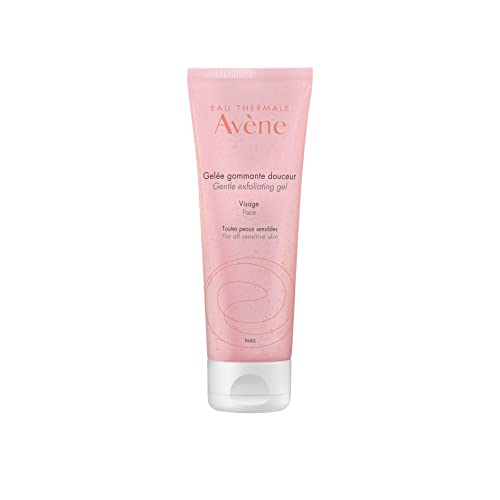
Avène provides a gel format and says it can be used on wet or dry skin. Its once- or twice-weekly direction makes the intended cadence easy to understand. No7 likewise limits use to twice weekly. DHC says to use its scrub a few times a week, while Mudita Earth gives a two- to three-times-weekly range. These limits are useful because sensitive skin can be exposed to too much exfoliation when multiple active products are combined.
When comparing the top sensitive facial scrubs, look for evidence that addresses both the exfoliant and the surrounding formula. Aveeno Calm + Restore lists PHA, oat oil, and exclusions including fragrance, parabens, sulfates, alcohols, dyes, and phthalates. Aveeno Positively Radiant lists soy extract, natural exfoliating beads, and exclusions including parabens, phthalates, sulfates, and dyes. Those details make the products easier to compare than listings that only say “gentle.”
Beekman 1802 documents oat milk, goat milk, lactic acid, and jojoba beads, along with exclusions for synthetic colors, synthetic fragrances, abrasive exfoliant particles, and microplastics. Mudita Earth identifies bamboo, papaya, pineapple, shea butter, jojoba, and probiotic ferment, and describes the formula as free from synthetic fragrance, sulfates, and parabens. These listings give a clearer view of the intended balance between exfoliation and conditioning ingredients.
Other products offer a narrower but still useful ingredient picture. DHC names licorice root and allantoin as soothing ingredients and states that the formula is fragrance- and colorant-free. Palmer’s identifies chamomile, coconut water, and coconut oil as part of its hydrating and calming blend. Queen Helene focuses on oatmeal and honey. If you already know that a particular ingredient category does not suit you, compare the available details before selecting a scrub.
Match the product to your routine
For a daily cleanser-exfoliator format, the two Aveeno entries provide the clearest daily-use positioning. Calm + Restore is centered on non-abrasive PHA and oat oil, while Positively Radiant uses natural exfoliating beads and soy extract. “Daily” in a listing does not require daily use for every person; it describes the product’s stated routine positioning. A sensitive routine may still call for less frequent application, especially when other exfoliating products are present.
For a more occasional routine, Avène and No7 provide especially clear boundaries. Avène recommends once or twice weekly, and No7 says to use its microdermabrasion scrub only twice weekly. DHC, Mudita Earth, and Hey Honey also provide useful frequency or application information. Beekman, Palmer’s, and Queen Helene have less specific frequency information in the supplied evidence, so follow the product label and introduce them conservatively.
Consider whether you want a face-only product or a formula also positioned for body use. Mudita Earth says it can be used on the face, chest, back, and shoulders.
Use a cautious application method
Avoid the eye area when the directions say to do so. Avène explicitly includes that instruction. No7 directs users to apply a thin layer to clean, damp skin, massage in small circles for one minute, and rinse. DHC recommends use a few times weekly as a second step after an oil-based cleanser. These directions illustrate why a product’s application method matters as much as its ingredient headline.
A practical approach is to begin with the lowest stated frequency, use a small amount, and avoid pressing hard. Rinse thoroughly where the listing instructs you to rinse, then continue with the rest of your established routine. Do not combine several exfoliating products in the same session simply because each one is described as gentle. If your skin is persistently reactive, seek individualized advice from a qualified medical professional.
Final recommendation
Aveeno Calm + Restore PHA Exfoliator ranks first overall in this specification-based comparison under the published weighted criteria.
The final choice among the best sensitive facial scrubs depends on the documented features that match your intended use.
Aveeno Calm + Restore Nourishing PHA Exfoliator is the highest-scoring returned product and the first overall specification-based choice. Its non-abrasive PHA, oat oil, fragrance-free formula, hypoallergenic sensitive-skin testing language, and daily cleanser format give it the most complete evidence profile in this comparison.
The top sensitive facial scrubs differ by texture and routine. Choose Beekman 1802 if documented barrier-conscious ingredients and jojoba beads are priorities. Pick DHC for a fragrance-free, microbead-free apricot-granule scrub with clear frequency guidance. Avène is a strong gel-format choice for weekly use, while No7 suits shoppers who want a defined twice-weekly microdermabrasion routine. Mudita Earth provides bamboo plus fruit enzymes, and the Aveeno Positively Radiant formula emphasizes soy extract and daily cleansing.
Palmer’s and Queen Helene are more straightforward botanical physical scrubs, with coconut sugar, chamomile, oatmeal, and honey featured in their supplied descriptions. Hey Honey is the mineral option, using dissolving Dead Sea salt crystals and bee propolis. Whichever format you select, prioritize the stated use instructions and the formula details most relevant to your own sensitivity profile.
Frequently Asked Questions
What are the best sensitive facial scrubs for avoiding abrasive particles?
Aveeno Calm + Restore is the clearest choice in this list because its PHA is described as a non-abrasive liquid exfoliant. Beekman 1802 also documents jojoba beads and explicitly excludes abrasive exfoliant particles. Hey Honey describes its dissolving Dead Sea salt crystals as non-abrasive. These descriptions are product-specific; they do not mean every sensitive complexion will respond identically.
How often should a sensitive-skin scrub be used?
Follow the selected product’s directions and start at the less frequent end when a range is given. Avène recommends once or twice weekly, No7 says twice weekly, and Mudita Earth gives two to three times weekly. DHC says a few times a week. Aveeno products are positioned for daily use, but individual tolerance and the rest of your routine still matter.
Are chemical exfoliators better than physical scrubs for sensitive skin?
The supplied evidence does not establish a universal winner. Aveeno Calm + Restore uses PHA, while Beekman combines lactic acid with jojoba beads. Other selected products use grains, sugar, bamboo, crystals, or mineral particles. The relevant comparison is the documented exfoliation design, formula details, and use guidance, not a blanket rule that one category suits everyone.
What ingredients support a gentler facial scrub routine?
The selected listings identify several supporting ingredients, including oat oil in Aveeno Calm + Restore; oat milk and goat milk in Beekman 1802; licorice root and allantoin in DHC; soy extract in Aveeno Positively Radiant; and chamomile in Palmer’s. These ingredients are part of the listed formulas, but the supplied evidence does not guarantee a particular personal response.
It can be a useful screening detail if you prefer to avoid fragrance. Aveeno Calm + Restore and DHC are explicitly described as fragrance-free, while Mudita Earth and Beekman 1802 also provide fragrance-related exclusion information. Product listings do not replace individualized medical guidance, so consider your known sensitivities and patch-test according to the product’s directions.