Buying Guide
The best anti-fatigue rubber flooring depends on the work area, liquid exposure, cleaning routine, available floor drainage, and required coverage. This is a specification-based comparison using supplied listing data, not a hands-on test or a summary of customer opinions. The selected products are all documented as rubber anti-fatigue mats or matting intended for standing work areas, kitchens, bars, garages, workshops, entryways, or other wet and high-traffic locations.
Start with the standing area
Measure the length and width of the area where people actually stand. A mat that is too short may leave the main work position uncovered, while a larger mat may be harder to move for cleaning. Envelor, ROVSUN, Ottomanson, VECKYJL, and smabee provide footprints around 36 x 60 inches. These formats are suited to a single long counter, prep station, doorway, or workbench area.
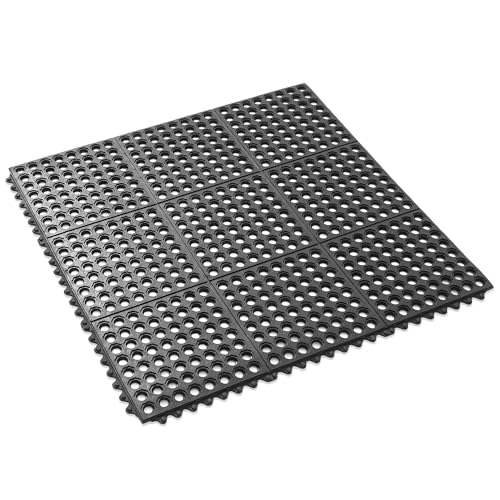
GOCEZIA and Wzzlcky extend to approximately 83 inches, making them relevant when one continuous surface is preferred along a longer counter or workstation. GRIDMANN and Yesland use 36 x 36-inch interlocking tiles. Their smaller individual format can be useful when coverage needs to expand in stages or follow a less straightforward layout. The trade-off is that a tiled surface has seams that require alignment and cleaning attention.
Match drainage to the floor beneath
Drainage holes are a defining feature across much of this group. They allow water, grease, waste, or other debris to pass through the surface instead of remaining on top. New Star Foodservice describes drainage holes for liquid and waste and also lists light grease resistance. Envelor describes openings for water, grease, ice melt, and spills. VECKYJL identifies large hexagonal holes for water, oil, and debris.
A drainage mat works best when the floor beneath it can receive the runoff and when the mat can be lifted or moved for periodic cleaning. Check the location for low spots, standing water, and obstacles before installation. Drainage openings may also allow crumbs or other debris to collect underneath, so the cleaning routine should include both the upper surface and the floor below.
Compare comfort specifications carefully
Every selected product is presented as an anti-fatigue mat or matting, but the supplied listings do not include standardized compression measurements, independent ergonomic testing, or laboratory fatigue results. Treat comfort descriptions as listing evidence rather than a guarantee of personal results. Floor hardness, footwear, shift length, and the user’s preferences can affect how a mat feels.
Thickness provides useful context, although it does not by itself establish comfort. Yesland and GRIDMANN list approximately one-half inch. Envelor and Wzzlcky list approximately 0.4 inch, while several larger drainage mats are near 0.3 inch. Ottomanson lists approximately 0.2 inch, so it may provide a firmer, lower-profile surface than thicker selections. New Star Foodservice specifies approximately 3/8 inch and describes a low-profile design.
Look for traction and edge details
Traction is especially relevant in kitchens, bars, garages, pool areas, and other places where water or grease may be present. The listings describe textured surfaces, non-slip protection, non-slip backing, or high-traction construction for the selected products. These are documented design claims, not independent slip-resistance test results. Keep the mat on a clean, compatible floor and follow any care instructions supplied with the product.
VECKYJL documents beveled edges, which can create a more gradual transition at the perimeter. GRIDMANN and Yesland document interlocking edges, which can help connect adjacent tiles. ROVSUN states that the mat lays flat and can be cut to a smaller size. Wzzlcky also documents trimming flexibility. If a mat will sit near a doorway, cart path, or other transition, compare the listed thickness and edge design with the surrounding floor.
Consider material and intended use
The selected listings describe rubber construction, with some specifying natural and recycled rubber or high-grade rubber. New Star Foodservice calls its construction commercial grade and identifies food-service, assembly-line, and mechanic applications. ROVSUN specifies natural and recycled rubber and lists indoor and outdoor utility uses. VECKYJL also identifies natural and recycled rubber and describes commercial and residential applications.
Application language can help narrow the choice, but it does not replace checking the actual conditions. A kitchen may need drainage and grease resistance. A garage may benefit from a cuttable format and hose cleaning. A bar or long restaurant counter may need extended coverage. A patio, pool area, or garden may prioritize runoff and outdoor placement. Use the documented features that match the space rather than assuming every rubber mat performs identically in every environment.
Plan the cleaning routine
Cleaning information varies in detail, but several selected listings describe simple water-based maintenance. ROVSUN, Ottomanson, Wzzlcky, smabee, Envelor, and Yesland describe hose washing or rinsing. GOCEZIA lists rinsing or wiping with a damp cloth. New Star Foodservice describes a drainage and stain-resistant design intended to support a clean work area.
Before placing a mat, make sure there is enough clearance to lift, roll, or move it for cleaning. Open surfaces can trap food particles, soil, and other debris underneath. After washing, allow the mat and the supporting floor to dry according to the product instructions and site requirements. Regularly inspect edges, seams, and the underside for residue or movement.
Choose modular tiles or a continuous mat
GRIDMANN and Yesland document interlocking tile construction. This format can make it possible to build a wider surface from repeated pieces and replace or rearrange individual sections. It may be a practical choice for changing layouts, workstations with unusual boundaries, or projects where coverage will be added later. However, seams create more joints to align and maintain.
GOCEZIA and Wzzlcky document long rectangular formats, while the 36 x 60-inch products provide broad one-piece coverage. A continuous mat generally avoids tile seams, but its length and weight may make handling more involved. Compare the intended placement, storage space, cleaning access, and whether trimming is permitted before choosing.
Final recommendation
Among the top anti-fatigue rubber flooring, the ranked products differ under documented standing comfort, drainage and wet-area design, traction and stability, coverage and fit flexibility, durability and material suitability, and cleaning and maintenance.
GRIDMANN 36 x 36-Inch Interlocking Rubber Mat ranks first overall in this specification-based comparison under the published weighted criteria.
GRIDMANN 36 x 36-Inch Interlocking Rubber Mat is the first overall specification-based choice. It combines documented drainage, textured traction, anti-fatigue support, commercial use, and expandable interlocking coverage. Its 36 x 36-inch tile format is especially relevant when the work area may need modular expansion.
Envelor 36 x 60-Inch Rubber Drainage Mat is a strong alternative for a broad standing station because the listing documents solid rubber construction, cushioning, drainage holes, wet-or-dry traction, indoor/outdoor use, and a flat-laying design. Choose ROVSUN when cut-to-size flexibility and natural-and-recycled rubber documentation are useful. Choose VECKYJL when beveled edges, large hexagonal drainage holes, and the listed six-month warranty are priorities.
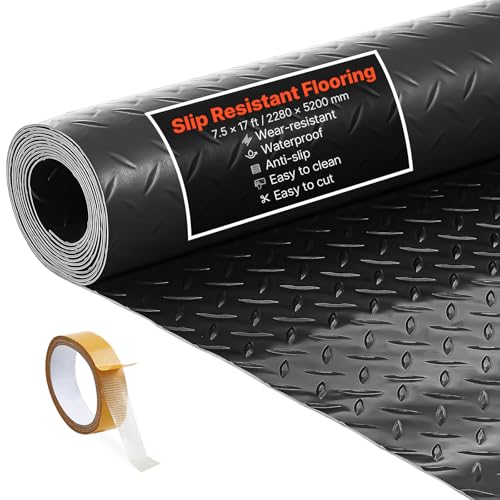
GOCEZIA and Wzzlcky are the long-format options in this selection. GOCEZIA documents an approximately 82.6-inch rectangular mat with drainage and rinse-or-wipe cleaning. Wzzlcky documents an approximately 83-inch roll that can be trimmed to fit. Yesland provides another modular option with interlocking edges, cuttable material, drainage holes, and a one-half-inch listed thickness.
Ottomanson is suited to buyers who prioritize hose cleaning, indoor/outdoor placement, and stated resistance to stains, fading, and wear. New Star Foodservice is a practical food-service and industrial choice with commercial-grade construction, drainage, light grease resistance, and a low-profile format. smabee provides a straightforward large rubber surface with hexagonal drainage holes, water resistance, and easy washing.
The best anti-fatigue rubber flooring purchase should follow the site: select drainage for wet or greasy zones, broad coverage for long standing stations, modular tiles for expandable layouts, and a documented thickness and material that fit the expected use. No listing should be treated as a substitute for measuring the floor, checking drainage below the mat, and planning routine cleaning.
Frequently Asked Questions
Is the best anti-fatigue rubber flooring always perforated?
No. Perforated construction is common among these selected products because the listings describe use in wet or greasy locations and provide a route for liquids and debris. Whether it is appropriate depends on the floor beneath the mat, the available drainage, and how easily the surface can be lifted for cleaning. A perforated design may be useful in a kitchen, bar, garage, pool area, or workshop, but it can also allow debris to collect underneath. Check the site conditions rather than choosing by appearance alone.
Which selected mats cover a long work area?
Wzzlcky and GOCEZIA document lengths of approximately 83 inches. Envelor, ROVSUN, Ottomanson, VECKYJL, and smabee document footprints around 36 x 60 inches. These formats may suit a longer counter, prep station, entry zone, or workbench. Measure the available length and leave room for nearby doors, carts, and transitions. Also compare thickness and edge treatment, especially where the mat meets another floor surface.
Are interlocking rubber mats suitable for commercial kitchens?
GRIDMANN is described for restaurants and commercial kitchens and documents interlocking edges, drainage, traction, and anti-fatigue properties. Yesland also documents interlocking drainage tiles for kitchens and bars. This format can help create a larger surface from multiple pieces, but seams require attention during installation and cleaning. Confirm that the floor is level enough for the pieces to connect and that the completed area can be lifted or separated when the underside needs service.
How should these mats be cleaned?
Follow the listing guidance for the specific product. Rinsing or hose washing is documented for Envelor, ROVSUN, Ottomanson, Wzzlcky, smabee, and Yesland. GOCEZIA lists rinsing or wiping with a damp cloth. Remove debris from drainage openings and inspect the floor beneath the mat. Let both surfaces dry appropriately before returning the mat to service. Cleaning frequency should reflect the amount of water, grease, food residue, soil, and foot traffic in the area.
What should I verify before ordering?
Verify the footprint, thickness, material, drainage pattern, edge treatment, cleaning method, and whether the product can be cut or interlocked. Check whether the selected length fits the standing station without blocking a doorway or creating an unwanted transition. For modular coverage, confirm how the pieces connect. For outdoor or wet placement, confirm that the site can handle runoff. Also review any listed warranty and check the current product specifications before purchase.
Which features matter most in a restaurant or bar?
Drainage, traction, standing comfort, coverage, and cleaning access are the main documented considerations in this selection. VECKYJL, Envelor, New Star Foodservice, and smabee describe features relevant to restaurant or bar environments, while GRIDMANN and Yesland provide modular alternatives. A larger mat may cover a station more efficiently, but a smaller tile may be easier to rearrange. Match the surface to the available drainage and establish a routine for cleaning below the mat as well as on top.