Buying Guide
Choosing the best outdoor rubber rugs starts with the location rather than the pattern. A compact front-door mat has different requirements from a garage drainage surface or a broad commercial entrance. The products above are compared from public listing information, including stated construction, dimensions, cleaning instructions, drainage features, and intended applications. They were not hands-on tested, and this guide does not summarize customer opinions.
Match the mat to the entry
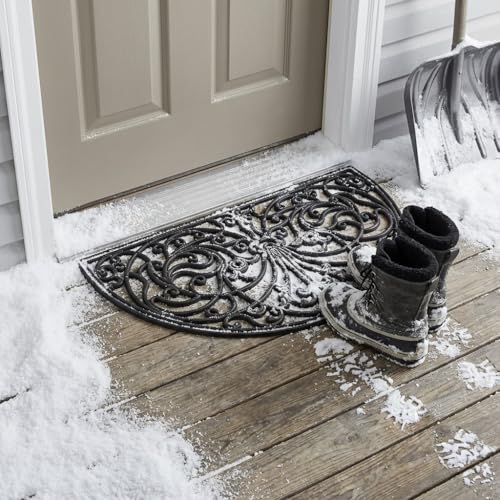
For a standard single door, measure the usable width and the space from the threshold outward. Compact options such as the Ottomanson, Gorilla Grip, DII, Kempf, BEHERO, and RESARE mats are easier to position near a typical doorway. Their listed dimensions range from 17 by 30 inches to 36 by 17 inches, while the Kempf model uses a half-moon profile. Check the door swing before buying, especially where the mat is listed at 0.4 or 0.5 inches high.
Broader entrances may benefit from the Calloway Mills 30-by-48-inch mat or the Durable Corporation 24-by-48-inch model. The Uniboho mat is approximately 59 by 35 inches, making it more appropriate for a garage, bar, kitchen, pool area, or other large wet zone than a narrow residential threshold. A larger mat can provide more coverage, but it also needs enough floor space to lie flat.
Choose solid, textured, or open construction
Solid rubber surfaces offer a continuous area for wiping shoes. The Calloway Mills mat is a large solid-rubber option, while the Ottomanson uses raised ridges for scraping. Textured or fingertip surfaces, such as those documented for BEHERO and RESARE, focus on removing dirt from shoes and paws. The Gorilla Grip design adds deep grooves, a beveled border, and a retention dam to help contain moisture and debris.
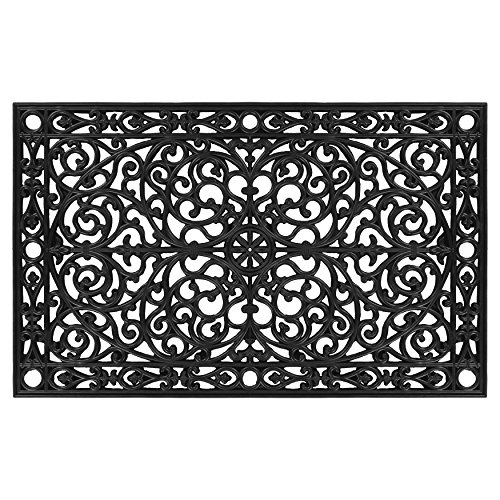
Open designs work differently. The Durable Corporation mat uses a tire-link herringbone weave, while the DII and Kempf mats use open lattice or scroll patterns. These constructions let dirt fall through instead of leaving all debris on the walking surface. They can also be useful where water needs a path away from the top of the mat. Open designs may not feel or look like a conventional solid doormat, so consider whether scraping or drainage is the primary need.
Prioritize drainage in wet locations
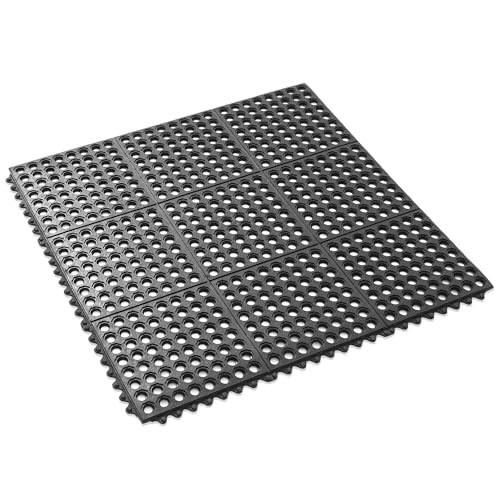
If rain, snow, slush, pool water, or cleaning water is a regular concern, look for documented holes or open construction. The Uniboho and ZIVEXER mats use hole-based drainage layouts, and RESARE also documents drainage holes. Durable Corporation’s tire-link design is another strong drainage-oriented format. DII and Kempf provide open patterned construction.
Drainage does not replace a suitable floor surface. Water still needs somewhere to go beneath the mat, and the area should be cleaned periodically so blocked openings do not reduce the intended function. For a covered porch with ordinary moisture, a textured mat may be sufficient; for a wet work area, an open drainage model is more directly aligned with the stated use.
Check traction and edge design
A non-slip claim is useful evidence, but the actual floor, slope, dirt, and moisture conditions still matter. The supplied listings describe rubber or textured backing for several products, including Ottomanson, Gorilla Grip, DII, BEHERO, and RESARE. Beveled edges appear on Gorilla Grip, BEHERO, and RESARE, and are described as helping with transitions or reducing edge-related tripping concerns.
Place any mat on a clean, compatible surface and keep the underside free of grit. The product listings identify uses on surfaces such as tile, wood, concrete, stone, decks, and similar hard floors, but conditions can vary. A mat that shifts, curls, or catches a door should be repositioned or replaced with a better-fitting size or profile.
Consider maintenance and material details
Most selected products document simple care such as shaking, sweeping, vacuuming, rinsing, or hosing. Open mats often release loose debris easily, while grooved surfaces may need more deliberate rinsing. Allow a rinsed mat to dry as directed before placing it back in service. The Uniboho and ZIVEXER listings specifically mention possible rubber odor, so airing those products in a ventilated area may be appropriate.
Material terminology varies. Some products are described as all-rubber or heavy-duty rubber, while others combine a rubber backing with a woven polyester or polypropylene topside. That distinction matters if you want a fully rubber surface, a softer textile feel, or a particular cleaning routine.
Final recommendation
Gorilla Grip WeatherMAX Natural Rubber Doormat ranks first overall in this specification-based comparison under the published weighted criteria.
Durable Corporation Durite Outdoor Entrance Mat is the highest-scoring returned product and the first overall specification-based choice among these best outdoor rubber rugs. Its recycled tire-link construction, open herringbone weave, broad 24-by-48-inch size, and direct drainage evidence make it especially compelling for wet, high-traffic areas.
For a lower-profile front-door solution, Ottomanson is the more targeted choice. Gorilla Grip emphasizes grooves, a border, and moisture retention, while Calloway Mills provides a large solid rubber surface. DII and Kempf are better suited to shoppers who want decorative open patterns. Uniboho and ZIVEXER focus on drainage, with Uniboho covering a much larger area. BEHERO emphasizes dirt capture, and RESARE provides a useful combination of drainage and size options. Together, these are the top outdoor rubber rugs for different documented use cases rather than a single universal design.
Frequently Asked Questions
What should I look for in the best outdoor rubber rugs for rain?
Look for documented drainage holes or open construction, along with a surface and backing described for wet conditions. Durable Corporation, Uniboho, ZIVEXER, DII, Kempf, and RESARE provide the clearest drainage-oriented evidence in this comparison. Also check that the floor beneath the mat can receive the water.
Are rubber rugs suitable for garage and commercial entrances?
Several selected products are explicitly positioned for garages, workshops, kitchens, bars, restaurants, or other high-traffic areas. Durable Corporation, Uniboho, ZIVEXER, and RESARE are the most utility-focused examples. Match the footprint to the available floor area and confirm that the mat’s height does not interfere with doors or equipment.
How do I clean an outdoor rubber mat?
Follow the listing’s stated care method. Common options in this group include shaking, sweeping, vacuuming, rinsing, and hosing. Open designs can release loose dirt through their pattern, while grooved mats may need rinsing to clear trapped debris. Let a washed mat dry as directed before returning it to the entry.
Is a low-profile mat always the best choice?
Not necessarily. A low profile can help a door open freely, but a thicker or more open mat may offer greater coverage or drainage. Ottomanson and RESARE document 0.2-inch heights, while BEHERO and Calloway Mills list thicker profiles. Measure the threshold and door gap before choosing.
What size outdoor rubber rug should I buy?
Measure the doorway or work area first. A 17-by-30-inch or similar compact mat suits many single entrances, while 24-by-36 and 30-by-48-inch formats cover more approach space. Extra-large models such as Uniboho require substantial clear floor area and are generally better for broad commercial or wet-work zones.