Buying Guide
Choosing among the best anti-slip bath rugs starts with the floor, doorway, and wet-zone layout rather than appearance alone. Public listings commonly describe a combination of absorbent textile fibers and a backing intended to grip smooth flooring. That combination is useful, but the mat still needs an appropriate surface and maintenance routine. Several listings warn that water beneath a rug can contribute to slipping, so no backing should be treated as a substitute for a clean, dry, level floor.
Match the rug to the bathroom layout
Measure the open floor beside the tub, shower, or sink before choosing a size. A 17-by-24-inch mat, such as the AMOAMI, Yimobra, or Ruggnovea, is suited to a compact landing zone. The Bosap and TYUU are similarly oriented toward smaller areas, while the 32-by-20-inch ACCUMTEK covers a wider section in front of a tub or shower.
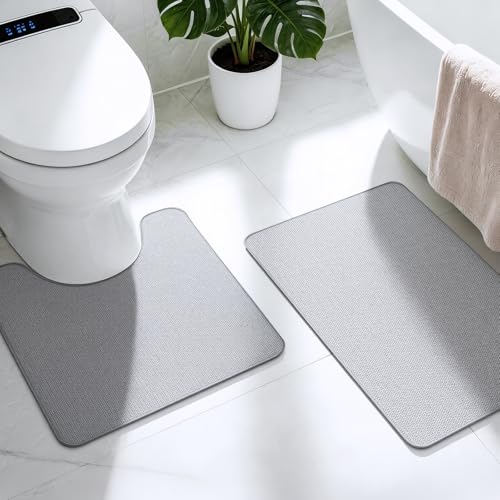
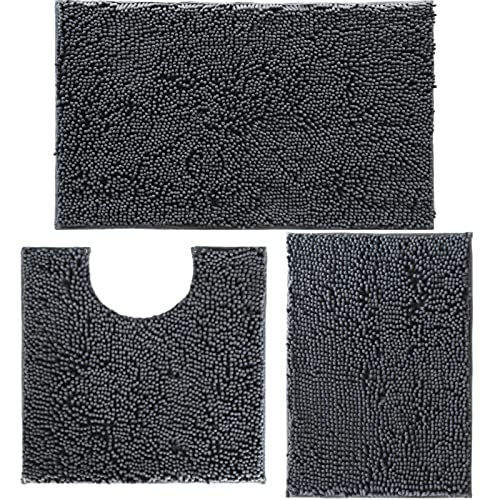
Sets can solve several layout problems at once. The RUN HELIX set includes small, large, and U-shaped pieces, while the HOMTEB set combines a rectangular rug with a U-shaped toilet contour. These formats can cover a sink, toilet, and shower area without requiring one oversized rug. They also demand more planning: check that each piece lies flat and that the shapes do not overlap or crowd a doorway.
Check door clearance and pile height
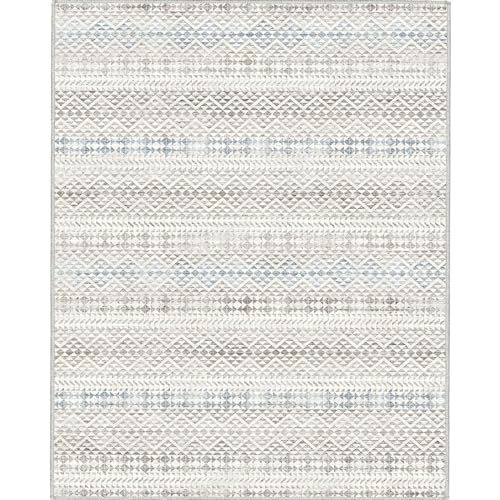
Profile matters in bathrooms with inward-swinging doors. Bosap lists a 0.2-inch height, and HOMTEB describes an ultra-thin 3.5mm design. TYUU and Color&Geometry also emphasize low-pile construction. These are the most logical styles when the rug must slide under a door or sit in a narrow clearance.
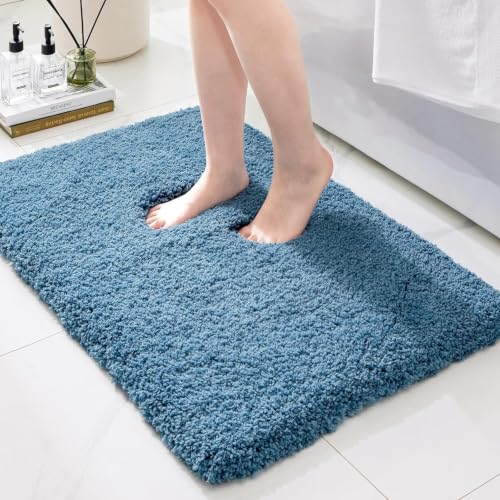
Plush rugs trade clearance for softness. Yimobra lists a plush chenille construction, ACCUMTEK lists a 1.2-inch height, and Ruggnovea lists a 1.88-inch height. Thick fibers may feel more cushioned, but buyers should compare the listed height with the door gap and the distance beneath nearby cabinets. The PADOOR mat, listed at 0.5 inches, occupies a middle position between ultra-thin and deep plush designs.
Evaluate the backing material
The selected rugs document several backing types. HOMTEB, Bosap, and Color&Geometry identify rubber backing. TYUU specifies natural rubber, while ACCUMTEK uses natural PVC. AMOAMI describes clear rubber, and Ruggnovea uses a foam-and-latex backing. RUN HELIX uses PVC, and Yimobra uses a hot-melt adhesive backing.
These material descriptions help distinguish the designs, but they do not establish identical performance across every floor. Follow the product-specific warning to place a rug on a clean, dry, smooth, or level surface where stated. Keep the underside dry and inspect whether the mat moves before regular use. A backing intended for grip can lose practical stability if water becomes trapped beneath it.
Consider absorbency and drying
The listings describe chenille, microfiber, terry cloth, and waffle textures as water-absorbing surfaces. Chenille appears in PADOOR, ACCUMTEK, Yimobra, RUN HELIX, and Color&Geometry. These terms indicate the documented construction, not a hands-on ranking of drying speed.
If the rug will be used repeatedly throughout the day, look for a surface paired with explicit quick-dry or drying guidance. Low-pile designs generally take up less vertical space, while deep shag designs hold more fiber volume. The right choice depends on whether your priority is a flatter, easier-to-air surface or a thicker cushion underfoot.
Review cleaning instructions before buying
Care instructions differ substantially. Bosap, TYUU, AMOAMI, Yimobra, ACCUMTEK, RUN HELIX, and Ruggnovea describe machine-washable care, although their washing and drying directions vary. Bosap specifies cold water, mild detergent, and low-temperature drying. TYUU says not to bleach or tumble dry. These details should be followed rather than generalized across the category.
Color&Geometry is a notable low-profile option whose listing calls for rinsing or wiping and air drying instead of machine washing. PADOOR emphasizes vacuuming, rinsing, and gentle scrubbing. Non-machine-washable care may be acceptable if the rug is easy to shake, vacuum, or rinse, but it is less convenient for households that prefer frequent machine cleaning. Always keep the backing and underside in good condition, since cracked or damaged backing can affect how the rug lies on the floor.
Choose comfort versus coverage
A small plush rug can provide a comfortable landing spot without covering the entire bathroom. For broader coverage, choose ACCUMTEK or one of the multi-piece sets. RUN HELIX provides three shapes, while HOMTEB adds a U-shaped contour rug to its rectangular mat. For a single mat with a more generous footprint, the 32-by-20-inch ACCUMTEK is larger than the compact options in this comparison.
Texture is another comfort choice. Waffle designs such as AMOAMI add a structured surface, low-pile options such as TYUU and Color&Geometry emphasize flatter placement, and chenille rugs emphasize softness. No listing alone can prove how a rug will feel to every person, so use the stated material, pile, and dimensions as comparison points rather than guarantees.
Final recommendation
HOMTEB Thin 2-Piece Bath Mat Set ranks first overall in this specification-based comparison under the published weighted criteria.
The final choice among the best anti-slip bath rugs depends on the documented features that match your intended use.
HOMTEB is the highest-scoring returned product and the first overall specification-based choice. Its 3.5mm profile, rubber backing, absorbent terry cloth, washable care, and two-piece format make it unusually versatile for bathrooms where door clearance and toilet-area coverage matter together. Bosap is the better fit for a single ultra-thin rectangular mat, while TYUU offers a compact low-pile alternative with natural rubber backing.
For plush comfort, Yimobra, ACCUMTEK, and Ruggnovea provide deeper textile constructions, with ACCUMTEK offering the largest single-rug footprint among those choices. PADOOR provides a middle-height chenille design with reinforced construction. RUN HELIX is the most coverage-oriented set, and Color&Geometry is a sensible low-pile choice when air-drying and non-machine-washable care are acceptable. These are the top anti-slip bath rugs in this comparison based on documented specifications, not customer sentiment or hands-on testing.
Frequently Asked Questions
What should I look for in the best anti-slip bath rugs?
Start with a backing described as rubber, PVC, latex, or another grip-oriented material, then check the intended floor conditions. Compare the rug’s dimensions and height with the wet zone and door clearance. Absorbent fibers, washable care, and a suitable profile are also important. The HOMTEB and Bosap listings are especially relevant for thin placement, while plush options such as Yimobra prioritize a deeper underfoot feel.
Are thick bath rugs better than thin bath rugs?
Neither style is universally better. Thick rugs such as Ruggnovea and ACCUMTEK emphasize cushioning and plush fibers, but their listed heights may be unsuitable beneath a door. Thin designs such as Bosap, HOMTEB, and Color&Geometry are easier to consider for low clearances and may dry with less bulk. Choose based on the bathroom’s physical constraints and the type of comfort you want.
Are bath-rug sets worth considering?
A set can be useful when the bathroom needs separate mats beside the sink, shower, and toilet. RUN HELIX includes three shapes, and HOMTEB includes a rectangular mat plus a U-shaped contour rug. Sets can provide better zone coverage than one small rug, but each piece must be positioned flat and cleaned individually.
Can I machine wash every anti-slip bath rug?
No. Many selected listings describe machine washing, including AMOAMI, Yimobra, ACCUMTEK, and Ruggnovea, but directions differ for temperature, detergent, and drying. Color&Geometry recommends rinsing or wiping and air drying, while PADOOR emphasizes vacuuming and gentle rinsing. Check the specific care instructions before washing, and do not assume that one backing material has the same care requirements as another.
Where should an anti-slip bath rug be placed?
Place it in the documented use area, such as outside a shower, tub, or sink, on a clean, dry, smooth, and level floor when the listing requires those conditions. Keep water from collecting underneath, check that the mat does not shift, and consider a low-profile rug if it must sit near a door. A rug’s backing is only one part of maintaining a stable placement.