Buying Guide
This guide compares the best artificial floor trees using documented height and footprint, foliage realism and density, branch adjustability and shaping, planter quality and base stability, materials and long-term durability, and assembly, maintenance, and indoor versatility.
Why an artificial floor tree works for so many rooms
Artificial floor trees fill the visual gap that a small potted plant cannot, adding greenery and height to living rooms, offices, entryways, and bedrooms. The best artificial floor trees replicate the canopy, trunk, and silhouette of mature species so the room reads as naturally planted, not as decor props. Unlike live plants, they need no sunlight, watering, or pruning, which suits busy homes, rentals, and low-light interiors.
Match the species to your style
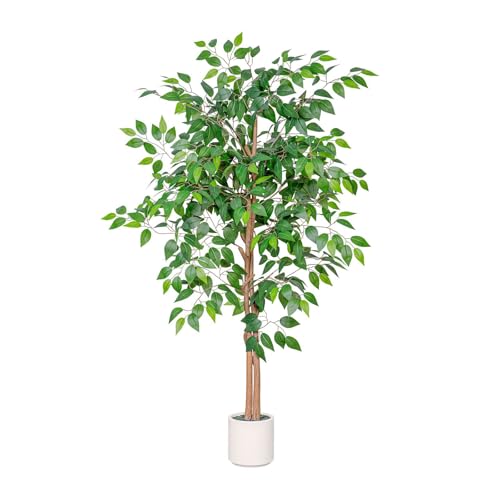
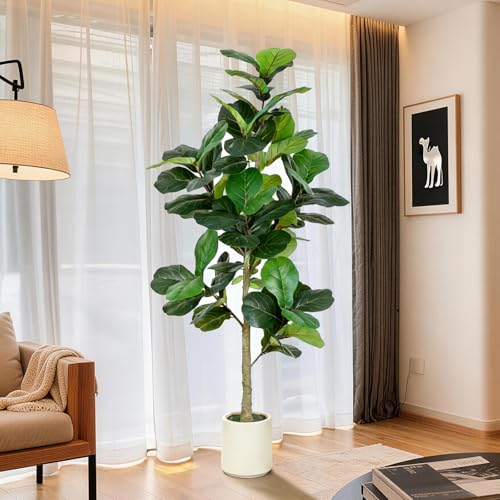
Different species produce very different moods. The fiddle leaf fig trees from Loreviessa and VIVATREES offer broad, architectural leaves that suit modern and farmhouse interiors. The ficus trees from Arborvigro and VECELO layer smaller leaves for a fuller, more traditional canopy. The eucalyptus trees from Aveyas and Caxchiling give a softer, rounder leaf shape that works well in reading nooks and bedrooms. The dracaena and palm trees from Flydeer produce a more upright, tropical profile, while the Bird of Paradise from HZXGCP adds a statement-making tropical silhouette for larger rooms.
Height matters because artificial floor trees should clear furniture and ceilings without crowding. Five-foot trees such as the Arborvigro ficus and Aveyas eucalyptus work well in standard eight-foot rooms. Six-foot trees such as the Loreviessa fiddle leaf fig, HZXGCP Bird of Paradise, and the Flydeer dracaena add stronger vertical presence for rooms with higher ceilings or empty corners. Footprint also matters: slim bases like the Flydeer dracaena and Flydeer palm fit narrow corners, while wider canopies like the VECELO ficus and Caxchiling eucalyptus fill open floor space.
Foliage realism and density
Realism comes from leaf shape, vein detail, color variation, and canopy density. Listings that specify leaf counts, vein patterning, and multi-tone color treatments give a clearer picture of canopy quality. The VECELO ficus lists over 1000 polyester leaves, the Aveyas eucalyptus lists about 300 silk leaves with vein detail, and the Loreviessa fiddle leaf fig uses printed silk leaves with deep green hues. Look for layered, adjustable branches so the foliage can be fluffed into a full canopy rather than shipped flat.
Planter quality and base stability
The planter and base determine whether the tree looks finished and stays upright. Trees such as the VIVATREES fiddle leaf fig, Flydeer dracaena, and Flydeer palm include a proportional planter for an out-of-the-box display. Others, including the HZXGCP Bird of Paradise and VECELO ficus, ship in a sturdy nursery pot with cement or concrete weighting for added stability. Higher listed weights, such as the 13.4-pound VECELO ficus and the 12.05-pound Flydeer palm, suggest stronger resistance to tipping.
Materials and durability
Look for silk, polyester, or PE blends that resist fading and dust. Several listings describe fade-resistant and dust-resistant fabrics, with a few noting washable surfaces. These material choices help top artificial floor trees hold their color and shape across seasons.
Assembly and ongoing care
Most artificial floor trees need some shaping after shipping. Listings that mention adjustable branches with internal metal wires, such as the Loreviessa fiddle leaf fig and Aveyas eucalyptus, allow you to bend and fluff the foliage into a fuller silhouette. Care is mostly dusting with a soft or damp cloth, with occasional rinsing for washable leaves. Choosing a tree with a slim footprint and included planter simplifies placement and reduces setup time.
Final recommendation
Loreviessa 6ft Artificial Fiddle Leaf Fig Tree ranks first overall in this specification-based comparison under the published weighted criteria.
The final choice among the best artificial floor trees depends on the documented features that match your intended use.
The Loreviessa 6ft Artificial Fiddle Leaf Fig Tree stands out as the first overall specification-based choice, combining a 6ft profile with a wider crown, dense silk leaf canopy, and reinforced adjustable branches for controlled shaping. For buyers prioritizing a bundled planter, the VIVATREES 6ft Fiddle Leaf Fig and Flydeer 6ft Dracaena arrive ready to display. For tropical interiors, the HZXGCP 6ft Bird of Paradise delivers a strong multi-trunk silhouette, while the VECELO 6ft Ficus Tree offers the heaviest base for stability. If you want softer foliage and easy shaping, the Aveyas 5ft Eucalyptus Tree and the Caxchiling 6ft Eucalyptus Tree both offer layered leaves and adjustable branches, rounding out the top artificial floor trees for varied interiors.
Frequently Asked Questions
Among the best artificial floor trees, what height works best for an artificial floor tree in a standard room?
In a room with an eight-foot ceiling, a five-foot tree sits comfortably below artwork and shelves, while a six-foot tree fills corners with more vertical presence. Choose based on ceiling height, furniture placement, and how much floor space you want to keep open.
How do I keep an artificial floor tree looking full after unboxing?
Look for trees with adjustable branches and internal wire supports, such as the Loreviessa fiddle leaf fig or Aveyas eucalyptus. Gently bend and separate the branches, then fluff the leaves outward to rebuild canopy density after shipping compression.
Do artificial floor trees need a separate decorative planter?
Some trees ship with a coordinated planter, including the VIVATREES fiddle leaf fig, the Flydeer dracaena, and the Flydeer palm. Others arrive in a sturdy nursery pot that can be placed inside a decorative basket or cover to match your interior style.
Are artificial floor trees safe around pets and children?
Listings that highlight non-toxic or pet-friendly materials, such as the Loreviessa fiddle leaf fig, point to safer material choices. As with any decor item, placement in a stable spot with a weighted base reduces tipping risk in homes with active pets or children.
Where can artificial floor trees realistically be used?
Most artificial floor trees in this guide are designed for living rooms, bedrooms, offices, entryways, hallways, and covered porches. A few listings also mention outdoor use, but shaded or covered placement helps preserve color and material life over time.