Buying Guide
The best bamboo bowl sets differ less by the word “bamboo” than by construction, contents, capacity, and care instructions. The listings in this comparison include bamboo fiber, bamboo mixed with other materials, and solid-bamboo lids or small bowls. Read the material description carefully: a fiber-composite bowl is not the same product format as a handmade wooden serving bowl, and a children’s feeding bundle serves a different purpose from a six-size mixing set.
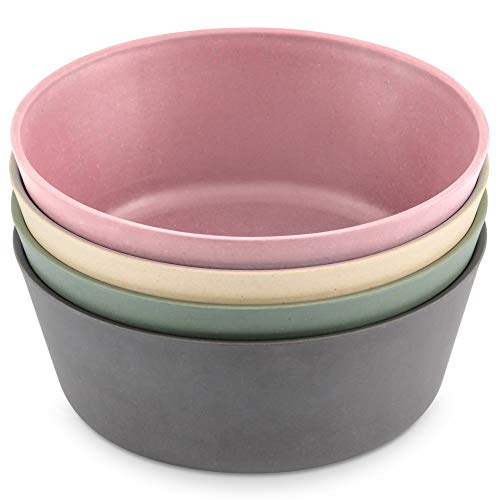
For general kitchen work, Chef Craft is the clearest multi-size option. Its six capacities run from 0.25 to 4.5 quarts, so it can cover small ingredient preparation as well as larger mixing tasks. Nomotruc takes a simpler approach with four matching 22-ounce bowls. That format is easier to understand when you want repeated portions for snacks, sides, cereal, or desserts, but it does not provide a large bowl for substantial mixing.
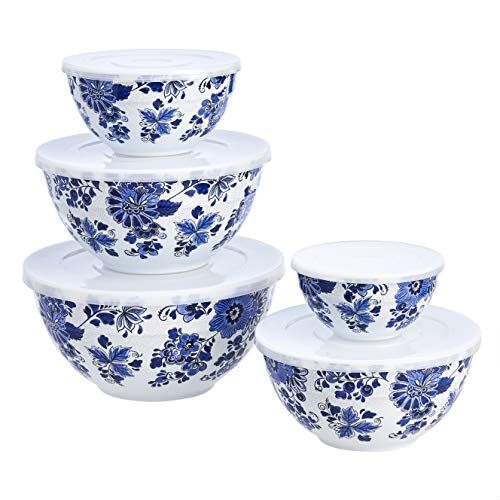
Lidded serving sets are a separate category within the best bamboo bowl sets. JOYMAY and ShineMe both list three nesting bowls measuring 10, 8, and 6 inches, plus bamboo lids. JOYMAY adds salad spoons and forks, giving it more table-service equipment. ShineMe focuses on fitted lids and storage, and its listing identifies uses ranging from leftovers to pasta, fruit, soup, popcorn, and dough. Confirm whether the lid material needs separate care before placing the complete set into a dishwasher.
Match capacity to the household
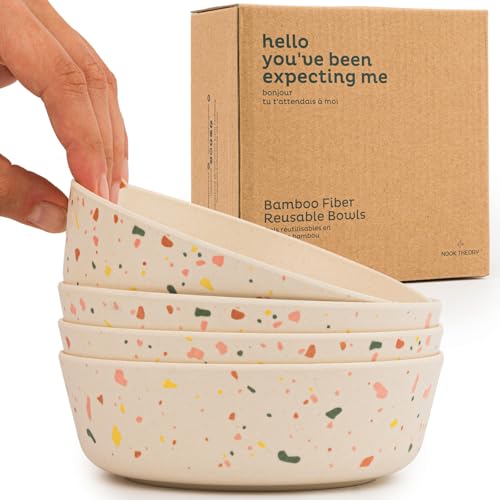
Capacity is especially important for children. WeeSprout lists four 10-ounce bowls, while Nook Theory lists four 18-ounce bowls. The smaller WeeSprout size is suited to toddler portions, cereal, snacks, and smaller meals. Nook Theory provides more room for a growing child’s meal and documents a wide, stable base. Neither listing presents a range of bowl sizes, so these are portion-specific choices rather than flexible kitchen prep sets.
The baby bundles take another approach. The shopwithgreen set includes one bowl alongside a plate, cup, utensils, and suction component, but does not state the bowl’s capacity. Let’s Make also does not document a capacity; instead, its value comes from a divided plate, bowl, suction design, and feeding utensils. Zak Designs lists a 6-inch bowl with an 8-inch plate and 10-ounce tumbler, creating a small coordinated place setting rather than a bowl assortment.
Review the care instructions
Dishwasher guidance varies. Chef Craft, Nomotruc, Grow Forward, WeeSprout, Nook Theory, shopwithgreen, and Zak Designs list dishwasher-safe care, with several specifying the top rack. JOYMAY and ShineMe describe their bowls as dishwasher safe, while the bamboo lids may warrant separate attention because the listings identify them as solid bamboo. Let’s Make specifically recommends hand washing, so it is a better fit for buyers willing to follow a more involved care routine.
Heat limitations should also be part of the decision. Nook Theory, shopwithgreen, and Zak Designs state that their products are not microwave safe. WeeSprout warns against microwave use and certain hot or acidic foods. Let’s Make is also non-microwavable. These restrictions are not defects, but they do affect whether a set can move directly from refrigerator storage to reheating. If microwave convenience is central to your routine, do not assume it from a bamboo label; look for an explicit manufacturer instruction.
Consider storage and included extras
Nesting bowls are valuable where cabinet space is limited. JOYMAY and ShineMe both document nesting designs, while WeeSprout says its bowls stack. The lidded sets also extend beyond ordinary serving: JOYMAY says its lids can function as cutting or display boards, and ShineMe lists tray and coaster uses. Those extras make the sets more useful for gatherings, leftovers, and countertop service, although they also introduce more pieces to clean and store.
For children, look for shape rather than just material. Grow Forward describes high lips, wide bases, and a shallower bowl depth to support self-feeding. Nook Theory lists a wide stable base and smooth rim. Let’s Make uses suction bases on non-porous surfaces, while shopwithgreen includes a silicone suction component. These features are documented design choices, not guarantees against spills, so the surface and the child’s use still matter.
Compare material descriptions carefully
Several listings describe bamboo fiber as biodegradable, BPA-free, or a renewable alternative to plastic. Chef Craft states that its bowls are made from 60–70% bamboo fiber powder. Nomotruc describes 100% natural high-grade bamboo fiber, and the kids’ products use either bamboo fiber or bamboo combined with other materials. Zak Designs explicitly identifies a bamboo-and-melamine construction. These differences matter if you are seeking a particular composition, finish, or disposal profile.
Do not treat “bamboo” as a complete specification. Check whether the bowl is fiber-based, solid bamboo, or a composite. Also check whether a product is intended for adult food preparation, children’s portions, or baby-led weaning. The most useful set is the one whose documented design fits your routine.
Final recommendation
Chef Craft Eco Bamboo Fiber Mixing Bowl Set ranks first overall in this specification-based comparison under the published weighted criteria.
Chef Craft Eco Bamboo Fiber Mixing Bowl Set is the first overall specification-based choice among these best bamboo bowl sets. Its six clearly listed capacities, natural dye-free color, bamboo fiber composition, and dishwasher-safe care give it strong general kitchen utility. For covered serving, JOYMAY is a suitable alternative because it adds lids and salad utensils; ShineMe is a close fit when storage and fitted lids matter more than included serving tools.
Families should choose by age and portion size. Grow Forward is a well-equipped children’s dinnerware option, while Nook Theory and WeeSprout are more focused bowl-only choices. For baby feeding, Let’s Make stands out for suction and divided-food design, while shopwithgreen supplies a broad bundle of basic feeding pieces. Among the top bamboo bowl sets, the best match depends on whether you prioritize capacity, lids, stacking, child-focused stability, or care simplicity.
Frequently Asked Questions
Are bamboo fiber bowls the same as solid bamboo bowls?
No. Bamboo fiber bowls use a processed fiber material, while a solid-bamboo lid or bowl is a different construction. The listings here identify both formats. Chef Craft and Nomotruc describe bamboo fiber, while JOYMAY and ShineMe identify solid bamboo lids. Check the specific material field rather than relying on the category name.
Which of the best bamboo bowl sets is suited to meal prep?
Chef Craft is directly suited to varied meal prep because it lists six capacities from 0.25 to 4.5 quarts. Nomotruc is useful for smaller prep and serving tasks with four 22-ounce bowls. JOYMAY and ShineMe also describe prep uses, but their main advantage is adding lids for storage and serving.
Are these bowls microwave safe?
Do not assume so. Nook Theory, shopwithgreen, Let’s Make, and Zak Designs state that their products are not microwave safe. WeeSprout also warns against microwave use and certain hot or acidic foods. The supplied listings do not provide a general microwave approval for the category, so follow the instructions for the exact set.
Which set is best for toddlers?
WeeSprout lists four 10-ounce bowls for toddler portions, snacks, cereal, and meals. Nook Theory lists four larger 18-ounce bowls with wide stable bases and smooth rims. Grow Forward is better when plates are also needed, while the shopwithgreen and Let’s Make sets are designed for earlier feeding stages and include utensils or suction-related components.
Do bamboo bowl sets usually go in the dishwasher?
Many selected listings describe dishwasher-safe care, including Chef Craft, Nomotruc, Grow Forward, WeeSprout, Nook Theory, shopwithgreen, and Zak Designs. Let’s Make specifically recommends hand washing. For lidded sets, verify whether the bamboo lids have separate care instructions even when the bowls themselves are dishwasher safe.