Buying Guide
Choosing among the best boys’ bowl sets starts with identifying how the bowls will be used. A toddler learning to scoop needs different features from an older child serving ramen, while a family replacing several place settings may prioritize quantity over character artwork. The products here are compared from supplied listing specifications and features, not from hands-on testing or customer sentiment.
Match the set to the child’s stage
For toddlers, stability and manageable portions are central. Havawish documents silicone suction bases, divided plates, and detachable sleeves, making its design especially relevant to self-feeding. PHEENOWL lists a 9.2-ounce bowl and identifies children ages 2 to 8, while Munchkin specifies use for toddlers 18 months and up and includes ergonomic flatware handles. These details provide more useful age and handling information than a generic “kids” label.
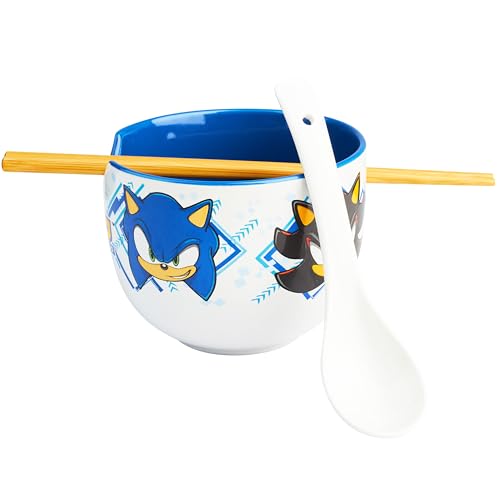
Older children and teens may prefer larger bowls or more specialized formats. Get Trend lists a 20-ounce ceramic bowl with chopsticks and a spoon and recommends the set for children over age 8. Layron goes further toward preparation, listing a 33-ounce bottom bowl, a draining insert, and a 16.9-ounce top bowl. Both are better understood as noodle-focused options than as complete everyday dinnerware.
Compare bowl capacity and configuration
Capacity is one of the clearest differences in this category. Grow Forward lists four 20-ounce bowls, Mfacoy lists four 18-ounce cereal bowls, and Get Trend lists one 20-ounce bowl. Those measurements can help shoppers estimate whether a set is suited to cereal, soup, noodles, or larger portions. PHEENOWL’s 9.2-ounce bowl is more clearly oriented toward child-size meals.
Several products do not state bowl capacity. Ratulie, shopwithgreen, PLASKIDY, and Munchkin provide piece counts and other dimensions, but their supplied specifications do not give bowl volume. Avoid assuming that a bowl with a similar diameter has the same usable capacity. If portion size matters, favor a listing with an explicit ounce measurement or confirm the dimensions before buying.
Configuration also matters. Havawish uses bowls plus three-section plates, while Ratulie and shopwithgreen include divided plates for separated foods. Grow Forward and Mfacoy concentrate on matching bowls and plates without cups or flatware. Layron’s insert-based design is useful for microwave noodles but less suitable when the goal is a conventional cereal or dinner bowl.
Choose materials for the setting
Wheat straw fiber and food-safe PP appear in Grow Forward, Mfacoy, Ratulie, and shopwithgreen. Their listings emphasize lightweight or drop-resistant construction, which can be useful for children’s everyday meals and portable use. PLASKIDY uses lightweight BPA-free plastic and describes its pieces as break resistant. These materials may be more practical where accidental drops are a concern, but the supplied evidence does not establish that any item is indestructible.
Havawish specifically lists 304 stainless steel with BPA-free silicone and suction bases. Stainless steel can be attractive for shoppers seeking a reusable metal bowl, although Havawish’s listed set weight is higher than several plastic alternatives. Get Trend uses ceramic, which supports its themed ramen presentation but may require more care around drops.
Check cleaning and heating details
Microwave and dishwasher compatibility can reduce daily friction, but the exact documentation varies. PHEENOWL, Grow Forward, Mfacoy, Ratulie, shopwithgreen, Havawish, and Get Trend list both microwave and dishwasher use in their supplied features. PLASKIDY gives specific limits: microwave use up to 212°F and top-rack dishwasher use up to 158°F. shopwithgreen lists microwave temperature resistance up to 248°F.
Munchkin’s supplied features do not state microwave or dishwasher compatibility, so shoppers should not infer it from the product category. Layron is designed for microwave noodle preparation and is dishwasher safe, but its listing excludes BBQ and convection use. Follow the product’s own instructions rather than applying a general assumption to similar-looking materials.
Consider quantity and storage
A single child may need only one bowl, but multiple bowls simplify rotation between meals. Grow Forward and Mfacoy each provide four bowls, while Havawish supplies four bowls alongside four plates. Ratulie offers a complete setting for four, and PLASKIDY provides six of each major dish type. shopwithgreen also supplies four bowls, plates, and cups with utensils.
For compact storage, Grow Forward describes stackable pieces, shopwithgreen describes compact stacking, and PLASKIDY describes its set as stackable. Large 20- and 24-piece assortments may occupy more cabinet space despite their practical coverage. Measure the storage area if the set will be kept in a small kitchen, dorm, or camper.
Final Recommendation
Havawish Stainless Steel Suction Plate and Bowl Set ranks first overall in this specification-based comparison under the published weighted criteria.
Havawish Stainless Steel Suction Plate and Bowl Set is the highest-scoring returned product and the first overall specification-based choice. Its documented suction bases, divided plates, 304 stainless steel, silicone construction, detachable sleeves, and dishwasher compatibility create a well-rounded option for toddlers learning to self-feed.
Among the top boys’ bowl sets, PHEENOWL is a more compact choice for ages 2 to 8, while Grow Forward and Mfacoy are better suited to shoppers who mainly need several matching bowls and plates. Ratulie and shopwithgreen provide broader place settings, and PLASKIDY is useful when six settings are preferred. For older children who specifically enjoy noodles, Get Trend offers a character-themed 20-ounce ceramic bowl, while Layron focuses on microwave preparation. Munchkin remains a sensible toddler assortment where age guidance and small-hand flatware matter most.
The best boys’ bowl sets are not interchangeable: capacity, material, piece count, divided plates, suction features, and care instructions point to different use cases. Use those documented specifications to narrow the choice instead of treating a decorative theme as a substitute for function.
Frequently Asked Questions
What should I look for in the best boys’ bowl sets for toddlers?
Look for clearly stated child sizing, manageable bowl capacity, stable bases, rounded or smooth edges, and materials suited to repeated use. Havawish documents suction bases and divided plates, PHEENOWL gives a 9.2-ounce bowl and ages 2 to 8, and Munchkin identifies toddlers 18 months and up. Those details help match the set to a child’s stage without assuming that every kids’ bowl is toddler-sized.
Are wheat straw bowls microwave and dishwasher safe?
Several selected wheat straw sets document both features. Grow Forward and Mfacoy list microwave and dishwasher use, while Ratulie and shopwithgreen do the same. shopwithgreen also lists temperature resistance up to 248°F. Check the individual product instructions because material names alone do not establish appliance compatibility or temperature limits.
Which selected set is best for ramen?
Get Trend is the clearest character-themed ramen serving option, with a 20-ounce ceramic bowl, spoon, and bamboo chopsticks. Layron is more focused on microwave preparation, with a 33-ounce bottom bowl, draining bowl, and 16.9-ounce top bowl. Both are specialized designs, so a conventional bowl-and-plate set may be more suitable for varied family meals.
Do all bowl sets include plates, cups, and utensils?
No. Grow Forward and Mfacoy pair bowls with plates but do not list cups or flatware. Get Trend includes a bowl, spoon, and chopsticks rather than a full place setting. Ratulie, shopwithgreen, PLASKIDY, and Munchkin provide broader assortments. Review the included-piece list carefully if replacing an entire child’s place setting is the goal.
Are stainless steel bowls better than plastic bowls for children?
The supplied listings show trade-offs rather than a universal winner. Havawish documents 304 stainless steel with silicone suction bases, while several other selected sets use lightweight wheat straw fiber, food-safe PP, or plastic. Stainless steel may appeal for reusable metal construction, whereas lightweight materials may be easier to carry. Compare weight, stability, cleaning instructions, and the child’s age before choosing.