Buying Guide
Choosing the best batter mixing bowls starts with the recipes you make and how you transfer mixtures around the kitchen. A bowl that suits a small batch of beaten eggs may be less suitable for deep cake batter or a recipe that needs refrigerator storage. The products above differ mainly in capacity, material, pouring design, stability, cleanup, and storage.
Match capacity to your recipes
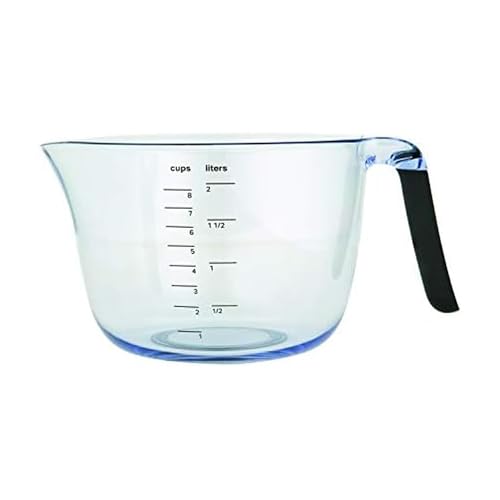
Capacity is one of the clearest differences in this category. The KitchenAid Universal Plastic Batter Bowl holds 8 cups, which is a compact option for smaller households and routine baking. The Anchor Hocking and Reston Lloyd bowls hold 2 quarts, while the Glad single bowl reaches 3 quarts and the Le Creuset holds 3.25 quarts.
For larger batches, the Cuisinart 4qt Batter Bowl and OXO Good Grips 4Qt Batter Mixing Bowl provide 4-quart capacities. The UP 4.3 Quart Latte Style Melamine Batter Bowl is slightly roomier, while the Rorence set includes a 5-quart bowl. Listed capacity is not the same as recommended working fill: mixtures need room for whisking, folding, and expansion. OXO’s extra-tall walls may also help contain ingredients during mixing, based on the supplied listing.
Look for controlled pouring
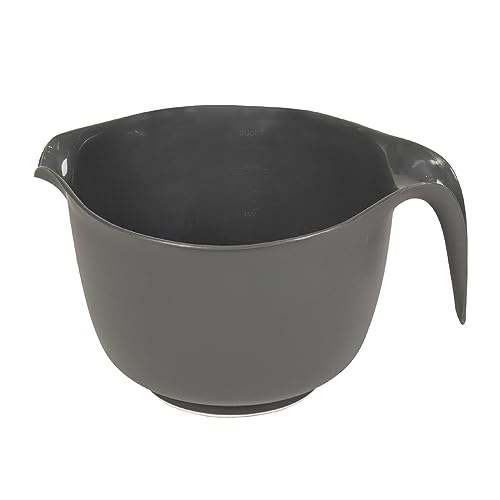
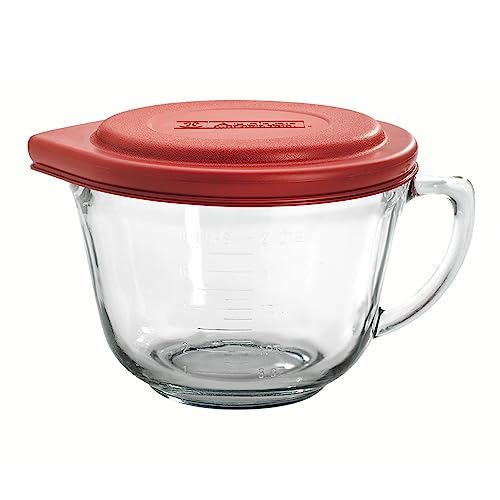
A pour spout is useful when batter must move from the bowl into a pan, griddle, or smaller vessel. The Cuisinart, OXO, UP, Glad single bowl, Glad four-piece set, KitchenAid Universal bowl, and Reston Lloyd bowl document spouts or pouring features. The Anchor Hocking bowl lists a pointed lip, and its measurement lines are etched into the glass.
Handles add another layer of control. Cuisinart, OXO, UP, Glad, KitchenAid, and Reston Lloyd document handles or handle features. The Glad set uses handle lips on three bowls and a full handle on the largest. If you often pour with one hand, prioritize a bowl with both a stable grip and a defined spout.
Consider stability during whisking
Nonslip bases appear on many of the plastic choices. Cuisinart, OXO, UP, Glad, KitchenAid, and Reston Lloyd all document nonslip or anti-skid base features. Rorence adds silicone handles and silicone bottoms to its stainless steel bowls. These details are intended to support steadier countertop use, although the supplied listings do not provide hands-on performance measurements.
The Anchor Hocking bowl is described as thick-walled and designed to enhance stability, but it does not list a nonslip base. Le Creuset’s stoneware listing also does not document a nonslip base or handle. Those materials may still suit a prep routine, but buyers who want explicitly documented countertop grip should focus on the plastic and stainless options.
Compare materials and heat-use claims
Plastic and melamine bowls are represented here as lightweight options. The UP bowl is specifically described as lightweight and shatter-resistant, while the Glad and KitchenAid bowls use plastic construction. These materials may be practical for frequent handling, but the supplied evidence does not establish comparative durability beyond the stated attributes.
The Le Creuset stoneware bowl has the broadest documented heat-use range: freezer, oven, microwave, and broiler safety are listed. It is also described as nonporous, non-reactive, and resistant to chips, scratches, and stains. Anchor Hocking’s glass bowl is described as stain- and odor-resistant, with dishwasher suitability. These are material and care specifications, not evidence of a particular baking result.
Check cleanup and storage details
Dishwasher-safe construction is listed for Cuisinart, Le Creuset, Glad, KitchenAid, Anchor Hocking, Rorence, and Reston Lloyd. OXO’s supplied feature list emphasizes its lid, tall walls, spout, and measurements but does not state dishwasher safety in the provided evidence. The UP bowl also does not have dishwasher safety listed, so its cleanup assessment is more conservative.
Storage features vary. OXO includes a lid that can cover the bowl and allow stacking in the refrigerator. Anchor Hocking also includes a lid. Rorence and the Glad four-piece set nest, which can be useful in a crowded cabinet. Reston Lloyd documents a detachable handle, while its airtight lid is sold separately.
Decide whether you need a set
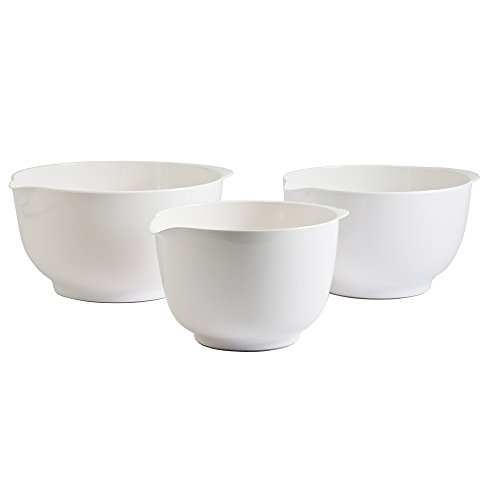
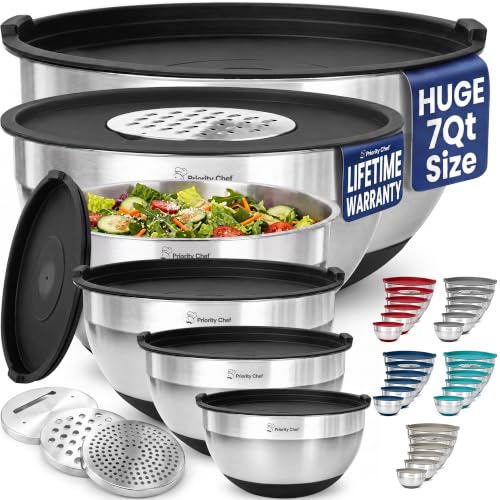
A single bowl is simpler when your recipes usually use one working capacity. The Cuisinart, OXO, UP, Glad single bowl, KitchenAid Universal bowl, Le Creuset, Anchor Hocking, and Reston Lloyd choices each focus on one main vessel. Sets provide more flexibility: Glad supplies four sizes from 1.2 to 3 quarts, while Rorence supplies 1.5-, 3-, and 5-quart bowls along with lids and utensils.
Sets can reduce the need to wash and reuse one bowl during multi-step recipes, but they also require more storage space unless they nest. If cabinet space is limited, the Glad set’s nesting design or Rorence’s nesting bowls may be more practical than several unrelated single bowls.
Final Recommendation
Rorence Stainless Steel Mixing Bowl Set ranks first overall in this specification-based comparison under the published weighted criteria.
Cuisinart 4qt Batter Bowl CTG-00-BB is the first overall specification-based choice among these best batter mixing bowls. Its 4-quart capacity, interior measurements, pour spout, handle, nonslip base, dishwasher-safe construction, and documented lifetime warranty create a balanced feature set for everyday baking.
Choose OXO Good Grips 4Qt Batter Mixing Bowl with Lid if covered storage and extra-tall walls matter more than having multiple sizes. Pick Rorence Stainless Steel Mixing Bowl Set when you want a 5-quart maximum capacity, nesting bowls, lids, handles, and included utensils. Le Creuset Stoneware Signature Batter Bowl is the material-focused alternative for documented oven, microwave, broiler, freezer, and dishwasher use.
For a compact cabinet, Glad Mixing Bowls with Pour Spout, Set of 4 provides four nesting sizes. For a lighter single bowl, the UP 4.3 Quart Latte Style Melamine Batter Bowl provides generous capacity with a handle, spout, and nonslip base. The selected top batter mixing bowls cover different workflows, so the right choice depends on whether capacity, storage, material, or one-handed pouring is your priority.
Frequently Asked Questions
Among the best batter mixing bowls, what capacity is best for pancake or cake batter?
A 2- to 3-quart bowl can suit smaller and ordinary batches, while 4 quarts or more provides additional room for whisking and larger recipes. The Cuisinart and OXO bowls are 4-quart options, and the UP bowl is 4.3 quarts. Capacity alone does not indicate how much batter should be mixed at once, so leave working room above the mixture.
Are glass or stoneware bowls better than plastic for batter?
The answer depends on the documented features you need. Le Creuset lists freezer, oven, microwave, broiler, and dishwasher safety, while Anchor Hocking describes glass that resists stains and odors. Plastic and melamine options such as Glad, KitchenAid, and UP emphasize lighter handling, spouts, handles, or nonslip bases. The supplied evidence does not establish that one material produces better batter.
Do batter mixing bowls need a pour spout?
No, but a spout or pointed lip may make transferring liquid batter more controlled. Cuisinart, OXO, UP, Glad, KitchenAid, and Reston Lloyd document pouring features, while Anchor Hocking lists a pointed lip. If you usually scrape batter directly into a pan with a spatula, capacity or stability may matter more.
Is a lid useful on a batter bowl?
A lid is useful when you want to cover a mixture for refrigerator storage or protect contents between preparation steps. OXO and Anchor Hocking include lids in the supplied evidence. Reston Lloyd lists an airtight lid as a separate item, while a lid is not documented for the other selected bowls.
Should I buy one bowl or a nesting set?
Choose one bowl if you prefer a simpler setup and already know your usual recipe size. A nesting set is more flexible for recipes that use multiple quantities. Glad provides four nesting sizes, and Rorence provides three nesting stainless steel bowls plus lids and utensils. Compare cabinet space with the number of sizes you expect to use.