Buying Guide
Choosing among the best bathroom wastebaskets starts with the physical space, not the appearance of the bin alone. Measure the gap beside the toilet, the clearance under a vanity, and the distance needed to remove a liner. The supplied models range from very narrow rectangular designs to round open-top baskets, so a few inches can determine whether a wastebasket is convenient or awkward.
A slim rectangular wastebasket is usually the easiest fit beside a toilet or vanity. Cesun, CEROELDA, Purexa, TIPGO, and MOPALL all document narrow profiles intended for compact rooms. The iDesign Cade also lists a 5.5-inch width and specifically describes cabinet, under-sink, and under-desk placement. These designs make efficient use of narrow gaps, but their height and depth still matter. Measure all three dimensions, including the space needed to lift out a liner or open a lid.
Round bins can be more flexible in open floor areas. A round or oval bin may be easier to reposition, but a rectangular model can use a corner more efficiently. For a very tight location, compare the listed width and depth rather than relying on terms such as “slim” or “compact.”
Decide whether you need a lid
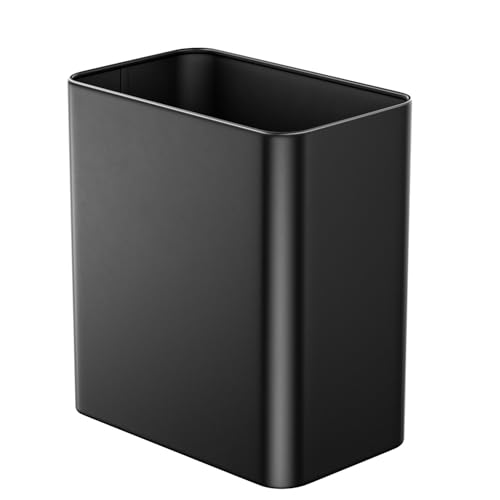
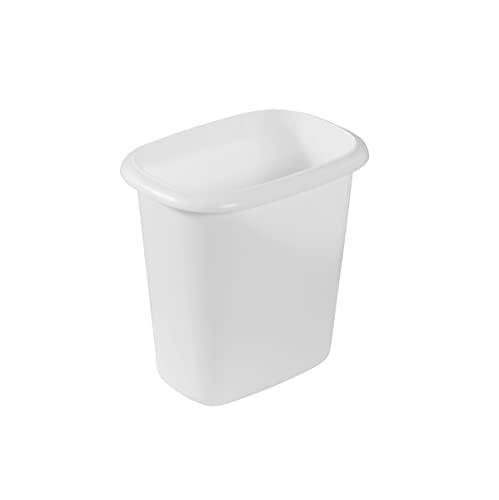
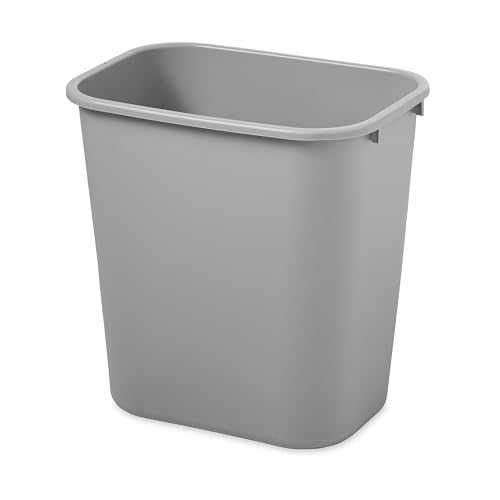
Open-top designs such as OXO, iDesign, Veelesa, and Rubbermaid are convenient for tissues, cotton products, and other light bathroom waste. They do not require a button, pedal, or sensor, and disposal is immediate. The trade-off is that the supplied evidence does not document odor isolation or a barrier against pets.
Covered models are more appropriate when concealing waste is a priority. A lid can also help keep contents visually hidden. CEROELDA specifically documents a sealed interior and odor filter; Purexa describes an odor barrier; and several other covered models describe odor or pet control. These are product claims based on the listings, not independent test results.
Compare the opening mechanism
Pedal cans are useful when you prefer hands-free operation. Cesun and CEROELDA document step pedals, and both also include features that keep the lid open during longer tasks. Soft-close mechanisms may be preferable in bedrooms, shared bathrooms, or other areas where a sudden lid movement is undesirable.
Press-top lids provide a simpler alternative. MOPALL and TIPGO describe one-touch opening and removable lids, while Purexa adds a pop-up lid to its concealed-liner system. These cans may be lighter and simpler than pedal models, but they require contact with the lid. It also lists an IPX5 waterproof rating.
Consider capacity and emptying frequency
Small bathroom bins commonly prioritize footprint over volume. The selected products document capacities from 1.3 gallons for CEROELDA to 3 gallons for the covered Coeusy wicker model. A 1.3- to 1.9-gallon bin can suit a powder room or low-waste bathroom, while a 2.3- to 2.7-gallon model may reduce emptying frequency without becoming a large floor object. The right capacity depends on how many people use the room and whether the bin receives only dry waste.
Capacity should be considered with liner removal. CEROELDA and Coeusy document removable inner liners, while Purexa describes a dual-bucket system. MOPALL and TIPGO specify removable lids, which can make bag changes easier. Open bins simplify access, but a covered bin may require an extra step when removing a full liner.
Review materials and cleaning details
Plastic models such as TIPGO, MOPALL, Purexa, and iDesign are generally positioned in the listings as lightweight or easy to clean. Metal models add a different finish and construction approach. These descriptions support comparing maintenance features, but they do not establish independent durability results.
Woven designs require a little more attention to moisture. Coeusy’s covered model includes a water-resistant plastic inner bin, which separates waste from the exterior. Its natural water-hyacinth body gives it a decorative role, but the listing’s material makes it sensible to keep the woven exterior from becoming unnecessarily wet. For a bathroom with frequent splashes, a sealed plastic or metal interior may be easier to manage.
Choose the look that fits the room
A wastebasket does not have to look purely utilitarian. Coeusy’s water-hyacinth wicker construction suits boho or farmhouse décor, while the OXO, Cesun, Veelesa, and CEROELDA models use more restrained contemporary finishes. MOPALL and Purexa provide compact covered designs in white, and TIPGO offers a black plastic option. Decorative styling should not override fit, liner access, or the required opening method, but it can help the bin blend into a visible bathroom corner.
Final Recommendation
Cesun 1.6-Gallon Soft-Close Pedal Can ranks first overall in this specification-based comparison under the published weighted criteria.
Cesun is the first overall specification-based choice among these best bathroom wastebaskets because it combines a slim footprint, hands-free pedal operation, soft-close lid, stay-open function, and removable inner bucket. CEROELDA is a strong alternative when the documented odor filter and sealed interior are priorities, while Purexa is better suited to shoppers focused on concealed liners and narrow placement. For an open-top design, OXO offers a tidy rim and smooth interior, and iDesign is particularly practical under a sink or inside a cabinet. The top bathroom wastebaskets differ mainly in containment, access, and liner handling, so select the design that matches your room’s actual constraints.
Frequently Asked Questions
How do I choose among the best bathroom wastebaskets for a narrow gap?
Measure the available width, depth, and height, then compare those figures with the product dimensions. iDesign, Purexa, Cesun, TIPGO, and MOPALL all document narrow designs, but the best fit depends on whether the lid can open and whether the inner liner can be removed without hitting the vanity or toilet.
Are open-top or lidded bathroom wastebaskets better?
Open-top models are quickest to use and have fewer moving parts. Lidded models conceal waste and may help with odor or pet control when those features are documented. OXO, iDesign, Veelesa, and Rubbermaid are open-top examples; Cesun, CEROELDA, Purexa, TIPGO, and MOPALL are covered examples.
What size bathroom wastebasket is suitable for everyday use?
The supplied products range from 1.3 to 3 gallons. Smaller capacities can work in powder rooms or low-waste spaces, while 2.3 to 3 gallons may be more convenient for shared bathrooms. Larger capacity usually requires checking the footprint carefully so the bin does not obstruct movement.
Which features make a bathroom wastebasket easier to clean?
Look for a smooth interior, removable liner, removable lid, or wipeable exterior. OXO and Rubbermaid document smooth interiors, CEROELDA and Coeusy document removable inner bins, and TIPGO and MOPALL document removable lids. Metal and plastic surfaces may also be simpler to wipe than exposed woven material.
Do bathroom wastebaskets need waterproof protection?
Not every bathroom bin needs a formal waterproof rating, but splash-prone rooms benefit from materials and interiors that are easy to wipe dry. These specifications should be matched to the bathroom’s moisture level rather than treated as a guarantee for every use case.