Buying Guide
Choosing the best bed serving trays is mainly a matter of matching the structure to the task. A tray for breakfast and drinks has different requirements from one used as a laptop desk or reading stand. This is a specification-based comparison using supplied listing descriptions and technical fields, not hands-on testing or customer-opinion analysis.
Choose legs or a flat serving surface
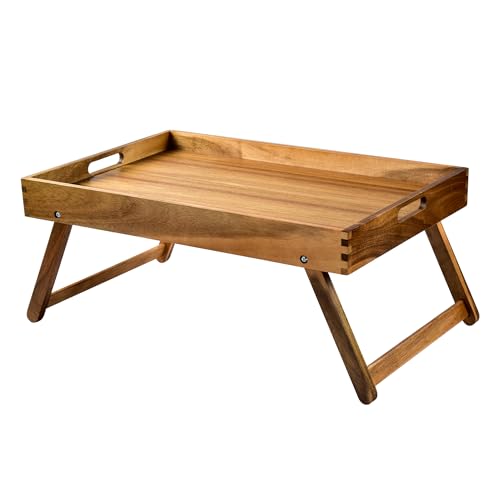
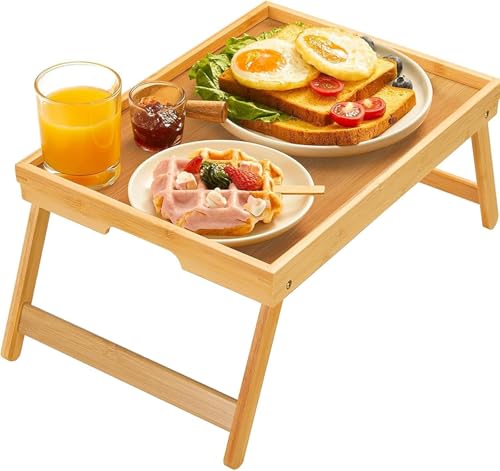
Folding legs raise the work surface above bedding and can make meals, writing, or laptop use more practical. INSAGO, Taxenxar, VaeFae, Utoplike, Pipishell, Kaukinye, and the selected Artmeer bed-table designs document folding legs. When folded, these products can also function as flatter serving trays and take less room in a closet or under a sofa.
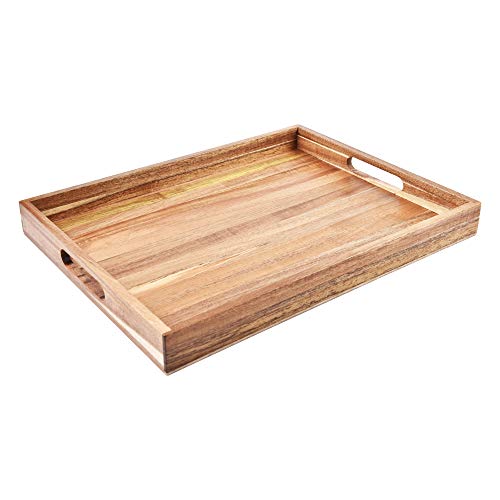
A flat tray can be easier to carry and may suit a bed, ottoman, or lap. It does not provide the same raised working height as a tray table. ROSSIE HOME uses a collapsible frame and folds flat, while its lowered front edge is positioned as a comfort feature. Consider whether you need a tabletop or simply a portable surface before choosing.
Measure the surface for your routine
Surface dimensions matter when a tray will hold several items. INSAGO and Taxenxar document 22-by-14-inch surfaces. ROSSIE HOME documents a 20-by-11-inch usable surface and compatibility with laptops up to 17.3 inches. Artmeer’s device-slot model opens to about 20.07 by 12.2 inches, giving it room for media viewing and serving.
Medium trays can be easier to move and store. VaeFae measures about 16.93 by 12 inches, while Pipishell opens to about 16.3 by 11.8 inches. These sizes may suit breakfast, snacks, or a book, but may feel crowded when a laptop and meal are used together. Measure the space between pillows, the bed width, and any laptop before ordering.
Look for edges that contain loose items
Raised edges or surrounding lips can help keep cups, plates, food, and small devices from sliding toward bedding. INSAGO documents 1.18-inch raised edges, and Taxenxar, VaeFae, Pipishell, Kaukinye, and the selected Artmeer models identify raised edges or lips. This feature can help during carrying, but the supplied listings do not establish spill-proof performance.
The edge design also affects working comfort. A high rim can reduce usable flat area around a laptop, while ROSSIE HOME’s lowered front edge may be more comfortable for work. If reading is the priority, Artmeer’s tilting-top model documents four adjustable angles and a metal support bar.
Consider handles and storage
Built-in or inset handles make it easier to move a loaded tray from the kitchen to a bedroom or sofa. Metal handles are documented on INSAGO, while Taxenxar uses inset handles. Pipishell, VaeFae, Kaukinye, and Artmeer also document carrying handles or slots. Check whether the handle design leaves enough uninterrupted space for plates and a laptop.
Storage is another practical distinction. Folding legs let a tray change from a raised table to a flatter serving surface. Pipishell gives a folded height of about 1.61 inches, and Artmeer’s large device-slot model lists a closed height of about 1.57 inches. ROSSIE HOME also folds flat. Check the folded length and available storage location before buying.
Compare bamboo and acacia care
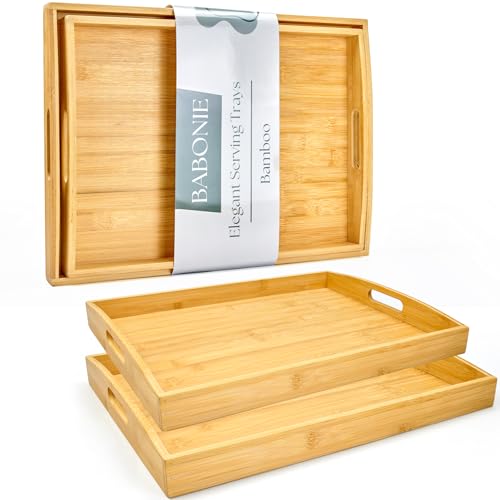
Bamboo appears across many selected products and is described in the supplied listings as lightweight and easy to wipe clean. Pipishell, Artmeer, and Kaukinye document bamboo construction and damp-cloth or water-based cleaning guidance. Artmeer’s medium tray says bamboo oil may be used occasionally for extended care.
Acacia is used by INSAGO, Taxenxar, Utoplike, and VaeFae. These listings emphasize wood grain, smooth surfaces, or everyday serving use. VaeFae specifically advises hand washing with mild soap and cool water, immediate drying, and avoiding soaking. Follow the care instructions for the selected model rather than assuming all wood trays can be treated alike.
Match features to the user
For someone recovering in bed, a raised tray with handles and a contained edge may be more useful than a decorative flat tray. For laptop work, surface dimensions and device fit deserve priority. ROSSIE HOME is the clearest documented choice for a larger laptop, while Artmeer’s device-slot tray is designed for viewing a phone or tablet. For reading, Artmeer’s tilting-top design offers the most specific adjustment feature.
For occasional breakfast service, VaeFae or Pipishell provide simpler folding-leg formats. For a larger meal or several daily essentials, INSAGO or Taxenxar provide more documented room. These distinctions help narrow the top bed serving trays to the format that fits your room, routine, and storage space.
Final recommendation
Among the top bed serving trays, the ranked products differ under documented surface size and usable bed space, leg and frame support, raised-edge spill control, handles and fold-flat storage, meal, work, and reading versatility, and material and maintenance practicality.
INSAGO Extra Large Acacia Bed Tray ranks first overall in this specification-based comparison under the published weighted criteria.
INSAGO Extra Large Acacia Bed Tray is the first overall specification-based choice among these best bed serving trays. Its 22-by-14-inch surface, raised edges, crossbars, folding legs, metal handles, and stated support capacity give it a broad documented combination of meal and work features. Taxenxar is an alternative for a similar extra-large footprint and traditional wood-frame construction. Choose ROSSIE HOME when large-laptop compatibility matters most, Artmeer’s device-slot tray for screen viewing, or Artmeer’s tilting-top model for angled reading. For compact storage, Pipishell is the more space-conscious option. These are specification-based judgments, not hands-on performance claims.
Frequently Asked Questions
What should I check before buying one of the best bed serving trays?
Check the open surface dimensions, tray height, folded size, handle placement, raised-edge design, and cleaning instructions. If you plan to use a laptop, compare its dimensions with the documented usable surface rather than relying only on the title. Also consider whether folding legs are necessary or whether a flat serving tray better fits your routine.
Are folding legs useful on a bed serving tray?
Folding legs can raise the surface for meals, writing, reading, or laptop work and then fold away for storage. They also allow the product to function as a flatter serving tray. The listings for INSAGO, Taxenxar, VaeFae, Utoplike, Pipishell, Kaukinye, and the selected Artmeer models document this type of design. A folding frame still needs to be placed on a reasonably stable surface.
Which selected tray is best for a large laptop?
ROSSIE HOME is the clearest documented choice because its listing says the usable surface fits laptops up to 17.3 inches. It also includes a phone and tablet slot and a lowered front edge. INSAGO documents space for laptops up to 15.6 inches and offers a larger overall surface, so it may suit a meal and a moderate-size laptop together.
Do raised edges prevent spills?
Raised edges or lips can help keep items from sliding off, and several selected trays document that feature. They should be treated as a containment aid rather than a guarantee against spills. Liquid can still move if the tray is tilted, overloaded, or carried too quickly. Use the manufacturer’s care instructions for the wood or bamboo surface.
Which design is best for reading?
Artmeer’s tilting-top bed tray is the most reading-focused option because the listing documents four adjustable angles and a supporting metal bar. Standard folding-leg trays can also support books or tablets, but they do not provide the same documented angle adjustment. Consider the available surface area if the tray will also hold food, drinks, or a computer.