Buying Guide
The best handle serving trays should be selected by the way you plan to carry, present, and clean them. A tray for breakfast in bed has different priorities from a three-piece party set or an ottoman organizer. These products are ranked from supplied specifications and listing features rather than hands-on testing or customer sentiment.
Start with the serving job
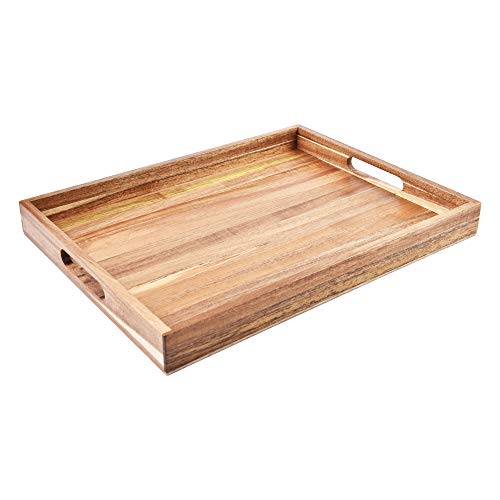
For routine meals, look for a surface large enough for the items you normally carry without making the tray awkward to lift. The ZESPROKA measures 17 by 13 inches and is described as fitting a dinner plate, drinks, and additional tableware. The KISENG is 17 by 12 inches, while the COTTON CRAFT tray is 17 by 13 inches with a 2.5-inch listed height. These dimensions suit a meal, coffee service, or several snacks, but the actual load arrangement will depend on plate and glass sizes.
For especially large dishes or group service, the Tiangrid trays have the broadest documented footprint at 20.5 by 13.4 inches. Its listing specifically says the trays can hold 20-inch dinner plates. That claim makes this model more appropriate for large-format serving than compact bedside or decorative tasks. A large tray can also require more cabinet space, so check both the open footprint and the stacked quantity before choosing it.
Choose the right material
Plastic is generally a practical direction when low weight, casual use, or simple handling matters. The Czlizdyt, MDLUU, KPROE, and Tiangrid options all use plastic-based construction, with polypropylene, food-grade plastic, BPA-free plastic, or plastic and silicone described in their listings. The Czlizdyt and MDLUU models also document dishwasher-safe care, while the KPROE requires hand washing and should not be soaked.
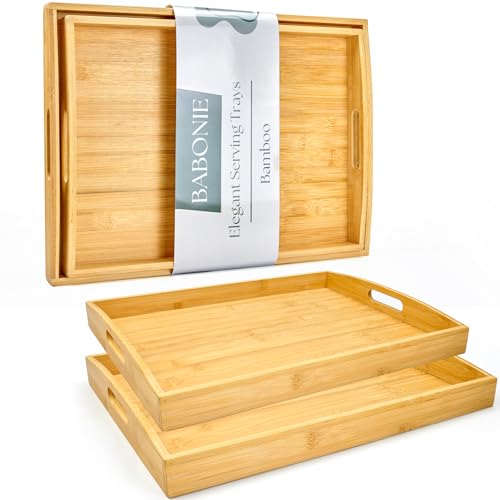
Wood and bamboo offer a warmer decorative appearance. ZESPROKA and KISENG use acacia wood; the COTTON CRAFT model uses mango wood; and both Fibogollo sets use bamboo or acacia. The wood listings emphasize grain, finish, or decorative appeal. They also generally call for wiping or gentler care rather than promising dishwasher use. This makes them suitable for serving and display, but users should follow each listing’s supplied maintenance guidance rather than assuming they can be treated like plastic.
Melamine offers another option for decorative entertaining. DEAYOU’s three-piece set combines a floral print with a shatterproof and scratch-resistant description. It is positioned for indoor and outdoor use and stacks for storage. The supplied evidence does not state that it is dishwasher safe, so hand-care assumptions are more appropriate.
Examine the handles and tray walls
Handles matter most when the tray is full. ZESPROKA documents low-profile side handles and describes a firm grip even when loaded. KISENG describes ergonomically designed handles, while the KPROE tray uses bent side handles formed with the main body. MDLUU uses ear-shaped handles intended to help with stability while transporting food.
Raised edges and walls help keep cups, plates, and small items from moving off the surface. A textured surface can provide a different kind of containment: the Czlizdyt and MDLUU trays document grip elements on both the upper and lower surfaces, while KPROE and Tiangrid describe textured anti-slip surfaces.
Match quantity to storage needs
A single tray is enough when you want a decorative piece or a dedicated breakfast surface. Sets are more useful when serving several people, separating clean and used items, or keeping one tray available while another is being cleaned. The Czlizdyt and MDLUU sets each include two trays, the DEAYOU and Tiangrid options include three, and both Fibogollo sets provide two sizes.
Dual-size sets are especially flexible. The Fibogollo acacia and bamboo sets each document one larger tray and one smaller tray. The smaller tray can handle condiments, utensils, or compact organization, while the larger tray handles meals or shared snacks.
Consider cleaning and food-use guidance
Cleaning evidence varies substantially. Czlizdyt and MDLUU explicitly state dishwasher-safe construction. KPROE specifies hand washing, wiping, and no soaking. The wood and bamboo options generally describe smooth surfaces that can be wiped with a damp cloth or cleaned with a soft, dry cloth. Those distinctions matter if the tray will carry sauces, drinks, or frequent meals.
Among selected products, use only the food-contact and care claims supplied for that specific tray. Avoid assuming that a decorative surface, wood finish, or melamine tray is microwave safe when the listing does not say so.
Final recommendation
ZESPROKA 17-Inch Acacia Wood Tray ranks first overall in this specification-based comparison under the published weighted criteria.
ZESPROKA 17-Inch Acacia Wood Tray is the highest-scoring returned product and the first overall specification-based choice.
The final choice among the best handle serving trays depends on the documented features that match your intended use. ZESPROKA’s 17-by-13-inch acacia wood surface, low-profile handles, surrounding high wall, and broad serving-use description create a balanced package for meals, snacks, breakfast in bed, and room-to-room service.
The top handle serving trays for extra stability are the Czlizdyt and MDLUU sets because both document grip features on the tray surface and underside. Choose Czlizdyt when the larger 17.7-by-12.5-inch footprint and dishwasher claim matter most; choose MDLUU for a slightly smaller 16.5-by-11.4-inch pair with a documented 1.7-inch height. For large gatherings, Tiangrid offers three wide trays. For decorative wood presentation, KISENG, Fibogollo, and COTTON CRAFT provide different combinations of natural material, size, and styling.
Frequently Asked Questions
What size handle serving tray is practical for a meal?
A footprint around 16 to 17 inches long and 11 to 13 inches wide is represented by many selected models and is generally suited to a plate, drink, and smaller accompaniments according to their listings. ZESPROKA documents room for a 10-inch dinner plate, glass, and saucer. Tiangrid is much larger and is specifically listed for 20-inch dinner plates, so it is better suited to unusually large serving jobs than compact room-to-room use.
Are wooden or plastic trays easier to maintain?
The answer depends on the specific listing. MDLUU and Czlizdyt explicitly document dishwasher-safe cleaning, while KPROE calls for hand washing and no soaking. The acacia, bamboo, and mango wood products emphasize wiping or gentle cleaning. Plastic-based trays may offer simpler routine care, while wood and bamboo can provide a warmer decorative appearance but require closer attention to the supplied instructions.
Which best handle serving trays are useful for parties?
DEAYOU’s three melamine trays and Tiangrid’s three polypropylene trays are the clearest party-oriented options in this selection. DEAYOU emphasizes indoor and outdoor entertaining, decorative floral print, and stackability. Tiangrid emphasizes a large 20.5-by-13.4-inch footprint, three-tray quantity, and use for gatherings, barbecues, poolside events, and restaurants.
Do anti-slip features replace raised edges?
No. Anti-slip textures or rubber elements are intended to help items stay in place on the tray surface, while raised edges or walls provide a physical barrier. Czlizdyt and MDLUU document upper and lower grip features. ZESPROKA documents a high surrounding wall, and the COTTON CRAFT tray lists a 2.5-inch height. A buyer carrying liquids or loose items may prefer a tray with both types of support when the evidence confirms them.
Are two-tray sets better than single trays?
They are more flexible, but not automatically better for every kitchen. A two-piece set can support simultaneous serving, separate uses, or a smaller organizing task. The Fibogollo acacia and bamboo sets document different large and small tray sizes, while a single ZESPROKA or KISENG tray may be preferable when you want one dedicated decorative serving surface. Storage space and cleaning preferences should guide the decision.