Buying Guide
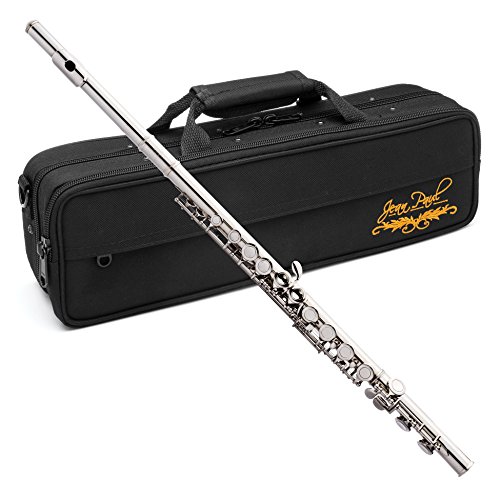
Choosing the best beginner flutes in 2026 starts with recognizing that the “beginner” segment is more varied than it looks. The Jean Paul USA FL-220 layers a silver-plated finish and a NAPBIRT-certified factory setup on the same closed-hole foundation. For younger learners or those who need a softer entry point, the Nuvo jFlute takes a different path with a waterproof ABS plastic body, donut head joint, and removable key extensions.
Understanding Beginner Flute Body Construction
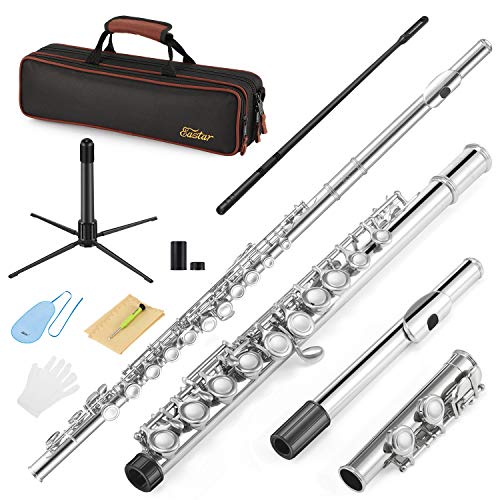
Almost every metal option here uses cupronickel (copper-nickel alloy) or brass-nickel as its core material. Cupronickel favors richer resonance and durability, which is why listings like the Eastar EFL-1 and EastRock specify it as “real cupronickel.” Nickel-plated surfaces add oxidation resistance, and POGOLAB documents additional anti-oxidation surface treatment plus higher copper content to resist sweat and saliva buildup. The Nuvo jFlute breaks from this group with ABS plastic, trading metal resonance for washability, ultra-light construction, and impact resistance. Choosing between them depends on whether durability or acoustic character matters more for the specific learner.
Ergonomic Features That Help Beginners Succeed
For first instruments, ergonomic design often determines whether a student keeps practicing. Three features show up across the most specification-aligned candidates:
- Undercut beveled embouchure: Documented on the Eastar EFL-1, EastRock, and POGOLAB listings, designed for easier air response and clearer tone production.
- Offset G and split E keys: Present in the Jean Paul USA FL-220, Eastar EFL-1, EastRock, Mendini by Cecilio, POGOLAB, Kmise MI0102, and GLORY GFL-01 listings, supporting ergonomic hand position and cleaner high E notes.
- Soft-touch pads and responsive springs: Double-bladder pads appear on the Eastar EFL-1, Mendini by Cecilio, EastRock, and POGOLAB listings, while high-carbon or stainless-steel memory springs are listed by the Eastar EFL-1, EastRock, and POGOLAB for crisp key rebound.
The Nuvo jFlute sidesteps these traditional ergonomics with a first-note mouthpiece that helps beginners produce a sound on day one, plus removable key extensions that grow with the learner.
Closed-Hole vs. Open-Hole Designs
A closed-hole flute caps every key, which makes it easier to cover finger holes cleanly while building technique. Every 16-key C flute in this guide uses a closed-hole layout, including the Jean Paul USA FL-220, Eastar EFL-1, EastRock, Mendini by Cecilio, POGOLAB, Kmise MI0102, WUQIMUSC, Conboxus, and GLORY GFL-01 listings. Beginners who are certain they want to progress to open-hole playing later can consider that path later, but for the best beginner flutes today, closed-hole remains the dominant specification.
Tone Quality and Intonation Design
Tone quality at the beginner level is driven by pad airtightness, embouchure geometry, and plating. Listings that discuss waterproof leather pads, double-bladder pads, gut pads, or precision-fit pads target airtight sealing, which directly supports stable pitch. The Jean Paul USA FL-220 specifically states engineered accurate intonation across the range, while POGOLAB emphasizes a rounded rectangle embouchure hole for clearer low-register tone. Silver plating, where present, generally aims for warmer resonance than nickel plating, which is why the Jean Paul USA FL-220 is the only silver-plated model in the ranked set.
Starter Kit Completeness
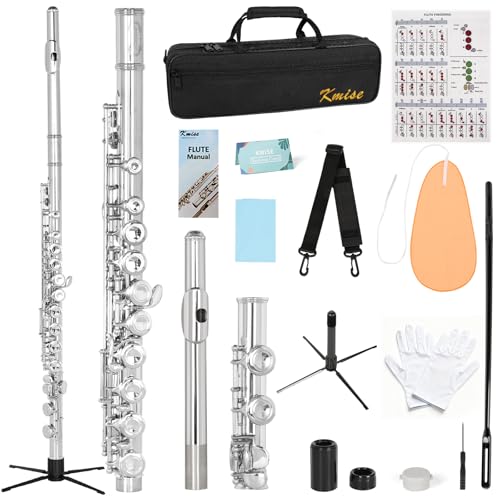
For most families, the kit matters as much as the flute itself. The Eastar EFL-1 lists a hard case, foldable stand, cleaning kit, and gloves in addition to a 12-month warranty. The Mendini by Cecilio and Kmise MI0102 go further with a printed lesson book and beginner’s guide respectively. Instruments that arrive with fewer items may require separate purchases for stand, gloves, or cleaning rod.
Warranty and Long-Term Support
Manufacturer coverage varies widely. The Jean Paul USA FL-220 and Nuvo jFlute each list 1-year manufacturer warranties. Several entries document shorter windows, including Kmise MI0102 at 180 days and WUQIMUSC at 90 days, which can be relevant for parents planning multi-year study.
Matching the Instrument to the Learner
Younger students and hygiene-conscious households often do well with the Nuvo jFlute because the ABS body is washable, lightweight, and forgiving. Beginners returning to flute after a long break, or adult learners who want a more familiar metal feel, will find the closed-hole C flute category richer, with the Eastar EFL-1, Jean Paul USA FL-220, and Kmise MI0102 offering the broadest evidence of beginner-focused design. Students who value a printed starting guide will gravitate toward the Mendini by Cecilio or Kmise MI0102. Those prioritizing silver-plate construction and a technician setup should look closely at the Jean Paul USA FL-220.
Final Recommendation
Eastar EFL-1 Closed Hole C Flute ranks first overall in this specification-based comparison under the published weighted criteria.
The final choice among the best beginner flutes depends on the documented features that match your intended use.
For shoppers comparing top beginner flutes at the specification level, the Jean Paul USA FL-220 is the first overall specification-based choice in this guide, with a silver-plated closed-hole build, offset G, split E, NAPBIRT setup, and a 1-year manufacturer warranty that align closely with how a first serious student flute is described. As alternatives, the Eastar EFL-1 is the most specification-aligned kit-oriented pick, the Kmise MI0102 adds a bundled beginner’s guide, the Nuvo jFlute covers a different ergonomic category with its plastic and modular design, and the Mendini by Cecilio remains appealing for learners who want a printed lesson book bundled in. Choosing among them depends on which specification areas matter most: construction, ergonomics, kit, warranty, or a non-traditional beginner instrument.
Frequently Asked Questions
The best beginner flutes generally use a closed-hole key layout, an offset G, and a split E key to make finger placement more forgiving for new players, while intermediate flutes often move to open-hole keys and may use silver plating for richer resonance.
Should first-time flute students pick a closed-hole or open-hole design?
Closed-hole flutes cap each tone hole, which makes it easier to seal finger contact and produce clean notes early on. Every 16-key C flute ranked in this guide is a closed-hole model, including the Jean Paul USA FL-220, Eastar EFL-1, and Kmise MI0102. Open-hole designs can come later once technique is established.
Why are cupronickel and nickel plating common on beginner flutes?
Cupronickel and brass-nickel alloys are common because they combine durability with manageable production. Listings such as the Eastar EFL-1, EastRock, POGOLAB, and Conboxus all call out cupronickel or brass-nickel construction, with nickel plating or silver plating applied on top for oxidation resistance and tone.
Are plastic beginner flutes a legitimate option?
Plastic instruments are a legitimate option for specific learners. The Nuvo jFlute shows how an ABS plastic body, donut head joint, and first-note mouthpiece can support very young beginners or situations where durability and washability matter more than traditional metal resonance.
How important is a starter kit when choosing among top beginner flutes?
A starter kit influences how soon a student can begin practicing. Bundled cases, cleaning rods, cloths, gloves, and stands reduce the need for separate purchases, while additions like the lesson book in the Mendini by Cecilio kit or the beginner’s guide in the Kmise MI0102 set add extra learning support beyond the flute itself.