Buying Guide
Selecting from the best sterling silver flutes means weighing where silver is used, how the headjoint shapes tone, and which keywork fits your playing style. The models below document each of these elements clearly, allowing an evidence-based comparison.
How Sterling Silver Placement Shapes Tone
Sterling silver content varies widely across these flutes. The Haynes Amadeus AF780SE and Haynes Amadeus AF780 are built around a sterling silver headjoint, body, and footjoint, while the Jupiter Azumi AZ2SRBO blends sterling silver with stainless steel. Several TSTS models restrict sterling silver to the tube body, headjoint, or lip plate, leaving some sections in nickel silver or cupronickel. The denser the silver content across the tube, the more pronounced the warmth and projection described in the listings. Players looking for the most silver-driven tone should focus on full-sterling configurations, while those seeking a brighter, lighter response may prefer partial-silver or hybrid builds.
Headjoint and Scale Design
The headjoint is where the airstream first meets the flute, and its cut affects articulation and color. Haynes Amadeus lists hand-cut sterling silver headjoints for its AF680SE, AF780, and AF780SE, while Jupiter documents the Altus/Bennett scale on the AZ2SRBO for consistent in-tune playing. Several TSTS flutes describe a sterling silver headjoint or tube body without specifying a hand cut, and a few add design notes such as 958 silver content or hand-polished square mouthpieces. Choosing the right headjoint specification depends on whether you prioritize a documented scale or a specific hand-cut profile.
Keywork and Mechanism Choices
Keywork configuration defines how the flute feels under the fingers. Open hole models like the Jupiter Azumi AZ2SRBO, the TSTS Sterling Tube Body 17-Hole French Button Flute, the TSTS Beginner Professional Sterling Silver Body Flute, and the ZOCWJK Sterling Silver Body Open-Hole Flute offer advanced technique options. The Haynes Amadeus AF780SE, Haynes Amadeus AF680SE, and the ZOCWJK Sterling Silver Body Open-Hole Flute add a Split E mechanism for smoother high E response. Offset G is nearly universal in this group, and B footjoints extend the range across most professional and intermediate entries.
Build Quality and Craftsmanship
Premium Haynes models highlight hand-cut headjoints and drawn tone holes for consistent seating. TSTS models with documented 958 silver content, hand assembly, and lead-free soldering add craft-focused evidence at lower tiers. When build evidence is sparse, it is worth treating the listing as a starting point for further research.
Tonal Range and Extensions
B footjoints extend the low register and appear on most of these flutes, including the Haynes Amadeus AF780SE, the TSTS Solid Sterling Open-Hole Student Flute, the TSTS 17-Hole Sterling Silver Hand-Fit Flute, and the ZOCWJK Sterling Silver Body Open-Hole Flute. Split E mechanisms add stability in the upper register on several professional and intermediate models. The combination of B foot and Split E gives players access to wider repertoire and more reliable octave transitions.
Included Accessories and Case
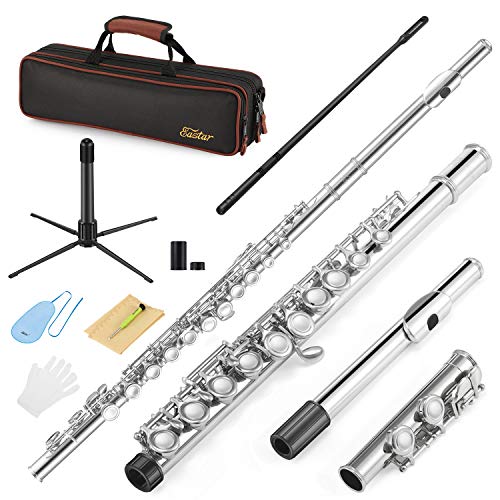
Accessories range from full kits to sparse listings. The Jupiter Azumi AZ2SRBO includes a case, while the TSTS Solid Sterling Open-Hole Student Flute ships with a French style case, cleaning rod, and polishing cloth. The TSTS Inline Sterling Full-Silver Flute pairs its case with a carrying bag, and the ZOCWJK Sterling Silver Body Open-Hole Flute also includes a case. Several Haynes professional listings do not document accessories, so a separate case purchase may be required.
Matching a Flute to Your Playing Level
Beginner players can start with the TSTS Beginner Professional Sterling Silver Body Flute for a sterling silver body and 17-hole layout that supports open- or closed-hole technique with the included plug. Intermediate players progressing toward open-hole technique can consider the TSTS Solid Sterling Open-Hole Student Flute for full sterling silver content with Split E, or the TSTS Sterling Tube Body 17-Hole French Button Flute for a sterling silver body with French carved button. Advanced and professional players will find the Haynes Amadeus AF780SE, Haynes Amadeus AF780, Haynes Amadeus AF680SE, and Jupiter Azumi AZ2SRBO most aligned with traditional expectations for scale design and silver content.
Final recommendation
The Haynes Amadeus AF780SE Professional Flute ranks first overall in this specification-based comparison under the published weighted criteria and is the first overall choice among the best sterling silver flutes. Its sterling silver headjoint, body, and footjoint, combined with a hand-cut Amadeus headjoint, drawn tone holes, Offset G, Split E mechanism, and B footjoint, deliver the most complete silver and mechanism profile. For players considering the top sterling silver flutes with a focus on documented scale design, the Jupiter Azumi AZ2SRBO stands out, while the Haynes Amadeus AF780 is a strong alternative when Split E is not required. Beginners and students looking for accessible options among the best sterling silver flutes can look toward the TSTS Solid Sterling Open-Hole Student Flute or the TSTS Beginner Professional Sterling Silver Body Flute.
Frequently Asked Questions
What makes a flute qualify as one of the best sterling silver flutes?
A flute typically qualifies when sterling silver appears in the headjoint, body, or footjoint and is supported by documented craftsmanship such as hand-cut headjoints, drawn tone holes, or named scale designs.
How much sterling silver is ideal for a beginner flute?
Beginner flutes with sterling silver in the tube body or headjoint offer a tonal upgrade at a lighter weight, while full-sterling options provide a fuller silver sound for advancing students.
Why is the Split E mechanism important on the best sterling silver flutes?
Split E stabilizes the high E response and appears on the Haynes Amadeus AF780SE, Haynes Amadeus AF680SE, and the ZOCWJK Sterling Silver Body Open-Hole Flute, supporting more reliable upper register playing.
Are closed-hole flutes a smart entry point among top sterling silver flutes?
Flutes with open-hole keywork and plug options can serve beginners and still support advanced technique later, while closed-hole-only flutes provide a familiar surface for new players who are not yet ready for open holes.
How does headjoint design affect tone in sterling silver flutes?
Headjoint cut, scale design, and material blending shape air flow and color. Haynes Amadeus lists hand-cut headjoints, Jupiter documents the Altus/Bennett scale, and TSTS models highlight 958 silver content or square mouthpiece polishing, each contributing to a distinct tonal character.