Buying Guide
Shopping for the best intermediate flutes means moving past beginner instrument features and into the mechanical territory that supports real repertoire growth. Step-up flutes typically add open-hole keys, a B-foot joint, sterling silver headjoints, and split E mechanisms. Each of these features changes how the instrument feels and responds, so aligning them with the player’s current technique is more important than chasing a single flagship specification.
An intermediate flute is built for a player who has outgrown a beginner instrument but is not yet ready for a professional hand-cut mechanism. The most common upgrades are a sterling silver headjoint, open-hole keys, an offset G key, and a B-foot joint. Models like the Yamaha YFL-362H and Yamaha YFL-382H document these features clearly, with nickel silver bodies and silver-plated keys to keep weight manageable. The Pearl Flutes 665RBE1RB Quantz Series and the Gemeinhardt Model 3OB build on the same foundation with open-hole keys and B-foot joints for players ready to expand into the low register.
Headjoint Materials and Tone
The headjoint has the largest influence on tone because it shapes the air column before it reaches the body. Sterling silver headjoints, as found on the Yamaha YFL-382H with gold-plated lip plate and the YFL-362H, give a slightly warmer and more complex response than nickel silver. Gold-plated lip plates, like the one on the Yamaha YFL-362H with gold-plated lip plate, change the feel of the embouchure and can shift the tonal color toward darker shades. These differences are subtle but provide meaningful playing variety for developing tone.
Key Mechanism and Ergonomics
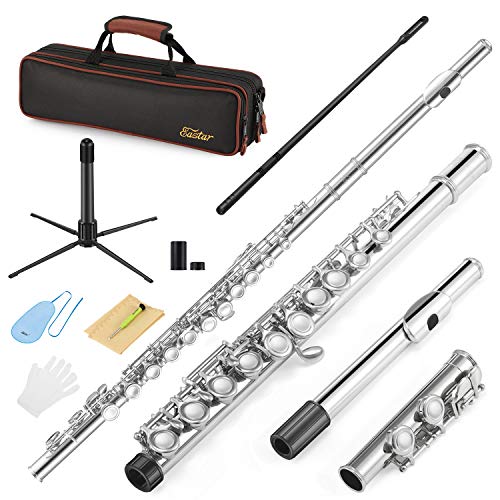
Key mechanisms are where playing comfort and technique development are won or lost. Offset G keys are the most common ergonomic choice among advancing students and are featured on the Yamaha YFL-362H, Gemeinhardt Model 3OB, and the Jean Paul FL-430. Inline G keys, found on the Yamaha YFL-382H, suit players with smaller hands or those who prefer a traditional layout. A split E mechanism, present on the Jean Paul FL-430, Herche Superior Flute M2, and the EASTROCK open hole flute, makes the high E more responsive, which is helpful for solo and ensemble repertoire.
Open Hole vs Closed Hole
Open-hole keys offer more nuanced tone control and are required for most advanced repertoire, but they require accurate finger placement. Closed-hole keys are easier for newer players and are typical of beginner and early intermediate flutes like the Gemeinhardt 2SP. The Jean Paul FL-430 ships with removable plugs so a player can transition between open and closed playing on the same instrument. For definitive open-hole training, the Pearl Flutes 665RBE1RB, Gemeinhardt Model 3OB, Herche Superior Flute M2, and EASTROCK are documented open-hole instruments.
Footjoints determine the lowest note the flute can produce. C-foot joints are common on beginner and intermediate flutes and reach down to middle C. B-foot joints, found on the Pearl Flutes 665RBE1RB, Gemeinhardt Model 3OB, and EASTROCK, extend the range to B below middle C, opening up more advanced repertoire. For players tackling standard intermediate literature, a B-foot joint is a meaningful upgrade that does not require a complete change of instrument.
Mechanical Quality and Pads
Mechanical quality determines how the instrument will hold up over years of practice. Ribbed key construction, as featured on the Herche Superior Flute M2, supports key alignment and stability. Blue steel springs, double bladder pads, and stainless steel springs are all signs of durable mechanism design. The Yamaha YFL-362H and YFL-382H document silver-plated keywork for corrosion resistance, while the Gemeinhardt 2SP lists triple coated silver plated finish and stainless steel springs along with documented magnehelic bench testing.
Setup, Case, and Accessory Kit
A complete accessory kit reduces the time between unboxing and first note. Yamaha YFL-362H and YFL-382H variants include a carrying bag, and the Pearl Flutes 665RBE1RB includes a French style case and cover. The Jean Paul FL-430 is documented as being setup and play-tested by NAPBIRT-certified technicians before shipping, supporting a documented out-of-box experience. Herche Superior Flute M2 includes a plush lined case, cleaning swab, and tenon protectors, plus a one-year repair and maintenance plan and three-year manufacturer warranty for documented long-term coverage. The Gemeinhardt 2SP publishes a five-year limited warranty, which is one of the longer documented terms in this category.
Matching the Flute to the Player
Reviewing the best intermediate flutes means mapping instrument features to the player rather than choosing by tier alone. A student moving up from a closed-hole beginner flute may benefit from an offset G key with an open-hole design and plugs, as available on the Jean Paul FL-430. A tone-focused player may prioritize the Yamaha YFL-382H with sterling silver headjoint and gold-plated lip plate. A repertoire-focused player needing a B-foot joint should compare the Pearl Flutes 665RBE1RB, Gemeinhardt Model 3OB, and EASTROCK open hole flute side by side.
Final recommendation
Pearl Flutes 665RBE1RB Quantz Series Intermediate Flute ranks first overall in this specification-based comparison under the published weighted criteria.
The final choice among the best intermediate flutes depends on the documented features that match your intended use.
The Yamaha YFL-382H Intermediate Flute with Sterling Silver Headjoint and Gold-plated Lip Plate stands as the first overall specification-based choice for players ready to step up to a sterling silver headjoint and gold lip plate configuration in an intermediate instrument. Its sterling silver headjoint, gold-plated lip plate, and inline G key system support a focused, traditional approach to tone development, while the nickel silver body footjoint and silver-plated keys keep the instrument durable for daily practice. For players who prefer offset G ergonomics, the Yamaha YFL-362H Intermediate Flute with Sterling Silver Headjoint offers a similar specification set with a more natural hand position. Together with the Yamaha YFL-362H with gold-plated lip plate, the Yamaha YFL-382H with inline G, the Pearl Flutes 665RBE1RB Quantz Series, the Gemeinhardt Model 3OB, the Gemeinhardt 2SP, the Jean Paul FL-430, the Herche Superior Flute M2, and the EASTROCK open hole flute, these instruments represent the top intermediate flutes selected for this specification-based comparison.
Frequently Asked Questions
Look for documented features that match the player’s current technique, such as open-hole keys, a B-foot joint, and a sterling silver headjoint. The Yamaha YFL-362H, Yamaha YFL-382H, and Pearl Flutes 665RBE1RB cover most of these features within intermediate specifications.
Open-hole keys are required for most advanced repertoire and offer finer tone control, but they require accurate finger placement. Closed-hole designs like the Gemeinhardt 2SP are still valid intermediate options, and the Jean Paul FL-430 ships with removable plugs to allow transition.
A sterling silver headjoint, as documented on the Yamaha YFL-382H and YFL-362H, changes the metal that shapes the air column, which can produce a warmer and more complex tone than nickel silver. It is one of the most recognizable upgrades in the top intermediate flutes.
A B-foot joint extends the range to low B and unlocks more advanced repertoire. It is documented on the Pearl Flutes 665RBE1RB, Gemeinhardt Model 3OB, and EASTROCK open hole flute, all of which are solid intermediate choices.
What is the difference between offset G and inline G keys?
Offset G keys place the G key slightly closer to the player’s hand, which most intermediate students find more ergonomic, as on the Yamaha YFL-362H and Jean Paul FL-430. Inline G keys offer a traditional layout and are documented on the Yamaha YFL-382H variants.