Buying Guide
Selecting the best carbide core drill bits starts with the hole rather than the brand name. A bit for a small pipe passage is a different purchase from a 6-inch cutter for an air-conditioning installation. The supplied products divide into rotary-hammer core bits, concrete hole-saw kits, and broader carbide-tipped hole-saw packages. Match the cutting diameter, drive system, and documented material use before comparing convenience features.
SDS-Plus and SDS-Max are not interchangeable assumptions. The Bosch T3927SC and Diablo DMAPLCC1030 are specified for SDS-Plus rotary hammers or hammer drills, with the Diablo listing also mentioning corded and cordless SDS-Plus tools. The DAYDOOR and TGFTGF products likewise document SDS-Plus shanks or connecting rods.
For larger rotary-hammer work, the Bosch HC8555 is SDS-Max only. The Bosch HC7507 requires an SDS-Max or Spline core-bit adapter, so it is not an all-in-one connection. Mesa Diamond lists an SDS adapter and describes SDS Plus or SDS Max configurations according to need. Luney is the most flexible kit in this group because its supplied connecting bits cover both SDS-Plus and SDS-Max systems.
The Spyder kit takes a different route. Its listing specifies Hex10 and Hex8 arbors and pilot bits but does not identify an SDS drive. That makes it more appropriate for buyers whose existing arbor setup matches the included components, rather than for someone specifically seeking an SDS-Max core bit.
Choose the diameter and required reach
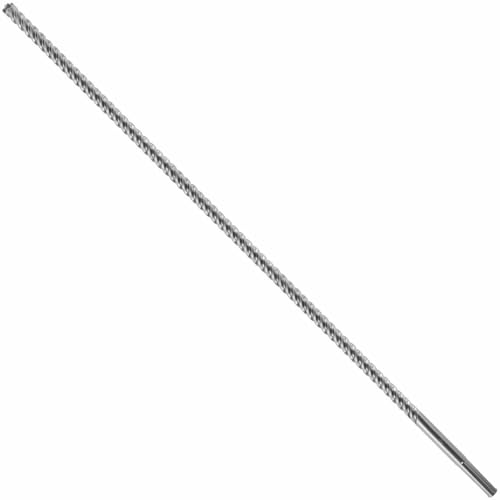
Diameter is the most visible specification, but reach can matter just as much. The Bosch HC8555 is listed at 4 inches with a 17-inch usable length and 22-inch overall length. The Bosch T3927SC is a 17-inch thin-wall bit, while DAYDOOR supplies a 220 mm SDS-Plus shank with a 110 mm center pilot. These long formats are relevant when the work involves thick walls or deeper blocks, although the listing data does not establish a universal maximum drilling depth for each product.
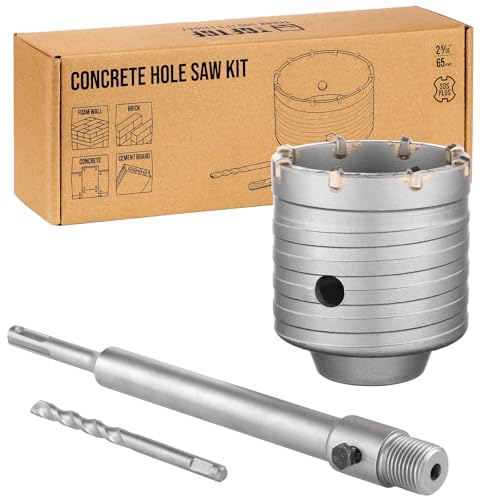
For a mid-size opening, TGFTGF lists a 2-9/16-inch hole saw and a 9-27/32-inch connecting rod. Diablo is the more compact single-bit choice at 1-3/8 inches with a specifically listed 3-inch cutting depth. Mesa Diamond covers a much larger 6-inch opening. Bosch HC7507 lists a 5-inch bit but separately states a maximum core size of 2-5/8 inches deep, an important distinction when planning a deep pass.
If the required diameter changes from job to job, a kit can be more practical. Luney lists seven sizes from 30 mm through 110 mm. XIELAOBAN lists 30, 40, 50, and 65 mm sizes, while Spyder lists 12 hole-saw sizes from 3/4 to 4-1/2 inches. These kits reduce the need to select a new single bit for every opening, but they also introduce more parts to identify and store.
Consider cutting construction and tooth design
All selected products document carbide or tungsten-carbide cutting elements, but the designs differ. The Bosch HC8555 uses a carbide-tipped cutter and wave design. Bosch HC7507 adds asymmetrical carbide teeth and a carbide-tipped centering bit. Bosch T3927SC uses tungsten carbide teeth in a thin-wall format. These details are useful indicators of intended construction, but they are not a substitute for checking the material and tool instructions.
Several kits describe tungsten carbide teeth or bodies. TGFTGF specifies a steel and tungsten-carbide hole saw, while DAYDOOR lists triple-edge tungsten carbide teeth. XIELAOBAN describes high-grade tungsten steel and carbide construction. Mesa Diamond specifies a tungsten carbide cutting edge and high-frequency welding. The Spyder listing identifies tungsten carbide-tipped hole saws and includes both TCT and HSS pilot bits.
That distinction keeps this list focused on products independently presented as carbide core or carbide-tipped hole-saw options.
Look for core removal and chip clearance
A core that remains lodged inside the cutter can slow the job. The Bosch T3927SC lists an ejector hole, and Diablo lists integrated ejector holes. Spyder takes a more explicit approach with a rapid core-eject feature operated by a button. Mesa Diamond describes a clearance hole and spiral design, while DAYDOOR lists large chip-clearing holes.
These features are not identical. An ejector hole, a clearance opening, a spiral body, and a push-button mechanism address removal in different ways. Treat them as design conveniences documented by the listing, not as guarantees of a particular drilling result. The kits without a clearly described ejection feature may still suit buyers who prioritize size range or included connection parts.
Check setup details before starting
Pilot and centering components help define how each product is assembled. Bosch T3927SC has an integrated pilot bit and mandrel. TGFTGF includes a center drill with a 135-degree tip and a self-tightening thread. DAYDOOR uses a center pilot secured by a hex set screw and includes an Allen wrench according to the listing. Luney lists a no-tools-required quick-change connector.
Bosch HC7507 is different because its two-piece design requires a separate adapter. Mesa Diamond lists a pilot bit and adapter with the core bit. With any multi-piece kit, confirm that the connecting rod, arbor, pilot, and cutter are all intended to work together before drilling. The supplied specifications describe package contents, but they do not verify compatibility with every tool model.
Use the material guidance conservatively
Concrete, brick, block, and masonry appear repeatedly across the selected listings. The Bosch HC8555 specifically names concrete, brick, and block. Diablo names masonry and concrete use. TGFTGF, DAYDOOR, Luney, Mesa Diamond, and XIELAOBAN describe combinations of concrete, cement, stone, brick, or masonry.
Spyder has the broadest listed material range, including porous concrete block, ceramic wall tile, fiber cement board, wood, MDF, plastic, and more. That breadth can be useful for mixed work, but the listing’s material claims should still be checked against the tool manufacturer’s instructions. Luney’s listing also mentions using water to cool the bit in extremely hard materials. This is practical guidance from the product information, not a universal requirement for every carbide core bit.
Final Recommendation
Luney 20-Piece Concrete Hole Saw Kit ranks first overall in this specification-based comparison under the published weighted criteria.
Bosch HC8555 is the first overall specification-based choice among the best carbide core drill bits in this comparison. Its carbide-tipped construction, integral shank, 4-inch diameter, 17-inch usable length, and documented concrete, brick, and block use create the most specification-aligned large-masonry specification profile, provided you have an SDS-Max rotary hammer.
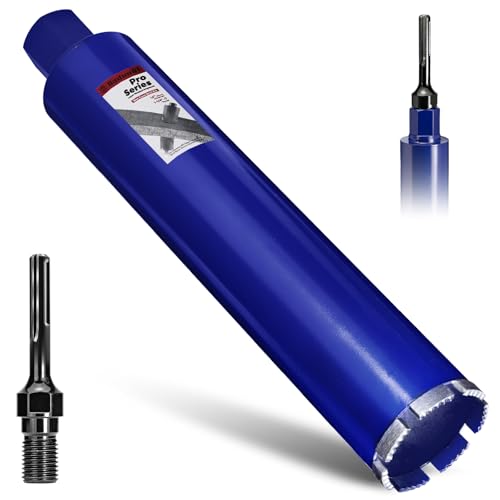
Choose Bosch HC7507 when a 5-inch format and asymmetrical carbide teeth are more important than an integrated connection. Mesa Diamond is the better documented large-diameter alternative when a 6-inch cutter, pilot, spiral design, and SDS adapter are useful. For SDS-Plus users, Bosch T3927SC, Diablo, DAYDOOR, and TGFTGF cover different diameter and reach needs.
Luney is the most adaptable multi-size kit because it lists seven sizes and both SDS drive formats. Spyder is compelling for mixed materials and rapid core ejection, while XIELAOBAN supplies a compact collection of listed metric sizes. These are the top carbide core drill bits here for different specifications, not customer-tested performance winners.
Before ordering, confirm the hole diameter, usable depth, hammer interface, pilot arrangement, and material instructions. A technically capable bit can still be the wrong choice if its shank does not match the drill or its diameter does not fit the installation.
Frequently Asked Questions
What are the best carbide core drill bits for concrete?
The Bosch HC8555, Bosch HC7507, Mesa Diamond, Diablo, DAYDOOR, TGFTGF, Luney, XIELAOBAN, Bosch T3927SC, and Spyder products all document carbide or tungsten-carbide cutting construction alongside concrete, masonry, brick, block, or related material use. The right choice depends mainly on diameter, depth, and drive system. Bosch HC8555 is the most strongly specified large SDS-Max option, while Diablo is a smaller SDS-Plus choice with a listed 3-inch cutting depth.
Should I choose SDS-Plus or SDS-Max?
Choose the interface that matches the rotary hammer or connecting system you already have. SDS-Plus products in this list include Bosch T3927SC, Diablo, TGFTGF, and DAYDOOR. Bosch HC8555 is SDS-Max only. Bosch HC7507 requires an SDS-Max or Spline adapter. Luney includes connecting bits for both SDS-Plus and SDS-Max, but buyers should still verify the exact supplied configuration.
Which selected product offers the most sizes?
Luney lists seven sizes from 30 mm to 110 mm and includes SDS-Plus and SDS-Max connecting bits. Spyder lists 12 hole-saw sizes from 3/4 to 4-1/2 inches. XIELAOBAN lists 30, 40, 50, and 65 mm sizes. Select based on both the diameter range and the drive components included, since a broad size selection is useful only when the kit fits the intended drill setup.
What helps remove the drilled core?
Bosch T3927SC and Diablo list ejector holes, Spyder lists a rapid push-button core eject, Mesa Diamond describes a clearance hole and spiral design, and DAYDOOR lists chip-clearing holes. These are different design approaches. The listings support treating them as removal or debris-management features, but they do not establish identical results across materials or drilling conditions.
Can these bits be used for tile or glass?
The selected products are primarily presented for concrete, masonry, brick, block, stone, or related construction materials. Spyder additionally lists ceramic wall tile among its materials. The excluded diamond-focused listings emphasize tile, glass, porcelain, marble, and similar surfaces, so they were not treated as independent carbide core drill-bit examples for this comparison. Always follow the selected product’s stated material and operating instructions.