Buying Guide
Choosing the best hex core drill bits starts with identifying the material, hole diameter, drilling depth, and tool connection. The products in this comparison divide into smaller diamond hole saws for tile, glass, porcelain, and stone, plus larger masonry core bits for brick, block, stucco, and concrete. These conclusions use listing specifications rather than hands-on testing.
Match the bit to the material
Small dry diamond sets are the most directly documented format for tile, porcelain, glass, marble, granite, and similar hard surfaces. ONEGOTOOL, Hacaroa, SALI, REKCKRUL, and AOKLIT list diamond cutting for combinations of these materials. AOKLIT is specialized because all ten pieces are 5mm. Hacaroa and ONEGOTOOL offer more flexibility when a project includes several hole sizes.
For larger masonry openings, consider the DaduoRi, BETTERI, and SALI large core bits. Their listings name brick, block, stucco, mortar, masonry, or concrete. DaduoRi’s 2-1/2-inch product specifically describes low- to medium-reinforced concrete, while BETTERI lists reinforced concrete among its applications. Those statements should not be extended to every concrete condition.
Check the shank and adapter
A 1/4-inch hex shank is convenient for many ordinary electric, cordless, and bench drills. ONEGOTOOL, Hacaroa, REKCKRUL, and AOKLIT describe this format. SALI’s five-piece set also documents a 1/4-inch hex shank, while its listing separately discusses a 3/8-inch adapter for some drill setups.
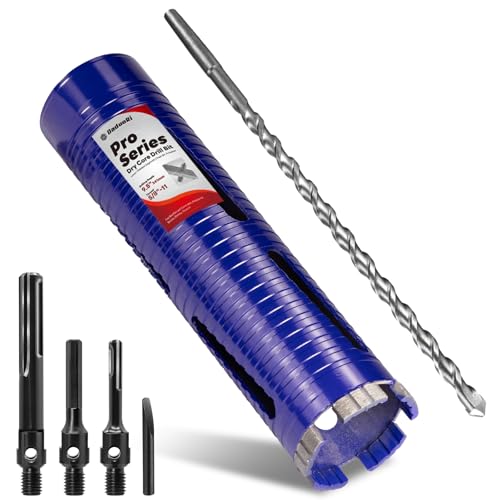
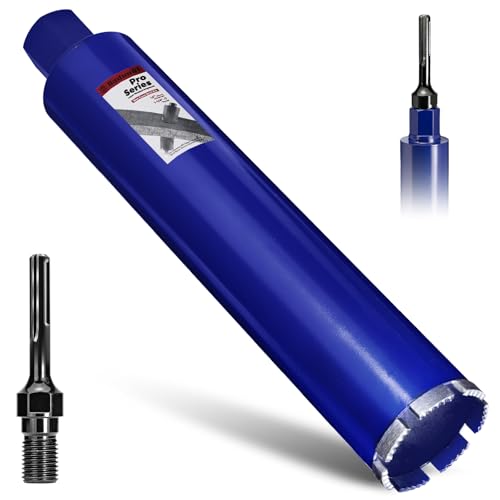
Larger core bits commonly use a 5/8-11 threaded body with an adapter. DaduoRi’s one-inch bit includes 1/2-inch hex, SDS Plus, and SDS Max adapters. Its 2-1/2-inch bit provides the same broad adapter approach, while BETTERI includes 1/2-inch hex and SDS Plus adapters. SALI’s two-inch bit includes 1/2-inch hex and SDS Plus adapters. Check the connection, drill capacity, and operating mode before use.
Decide between dry and wet drilling
Dry drilling can simplify work on tile and masonry when the product is designed for it. Several smaller bits use internal wax or cooling lubricant. Hacaroa, ONEGOTOOL, REKCKRUL, and AOKLIT list this type of cooling, although operating guidance differs. Water may be listed as an option for extending life on some products.
Wet drilling may help with cooling where the product permits it. DECKRKAT explicitly supports dry and wet drilling, and REKCKRUL describes both options. DaduoRi’s one-inch product recommends water when encountering concrete. Follow the individual listing instead of applying one method to every bit.
Compare size and depth
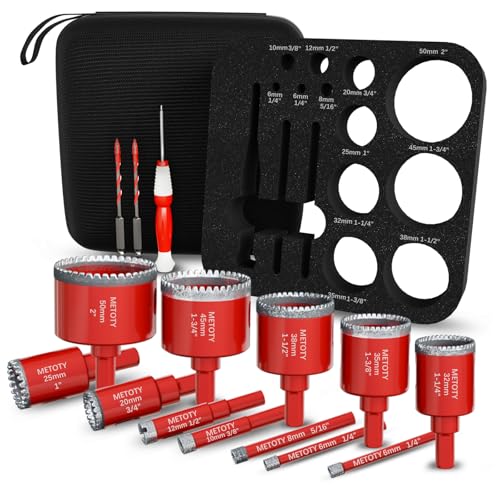
Multi-size sets are useful when one job includes several fixtures. ONEGOTOOL, Hacaroa, SALI, and REKCKRUL cover common diameters from about 1/4 inch to 1/2 inch. Hacaroa supplies ten pieces, while ONEGOTOOL includes repeated 1/4-inch bits. These formats favor variety over deep coring.
Single large bits are more appropriate when the opening size is fixed. DECKRKAT provides 1-1/4 inches, DaduoRi offers one inch and 2-1/2 inches, BETTERI offers three inches, and SALI provides two inches. DaduoRi lists 9.5 inches of depth for both selected models, while SALI lists 10 inches for its two-inch bit. BETTERI does not provide a working-depth figure in the supplied evidence.
Review positioning and debris features
Starting a diamond hole saw requires attention to the product guidance. Hacaroa and REKCKRUL describe beginning at an angle and gradually moving upright. The larger models use different positioning approaches: DaduoRi’s 2-1/2-inch bit and BETTERI include pilot bits and drift keys, while SALI’s two-inch bit lists chip-removal holes, regular sawteeth, and concentric axes. DECKRKAT describes two-way flutes for debris removal and cooling.
Final recommendation
Hacaroa 10-Pack Dry Diamond Core Bit Set ranks first overall in this specification-based comparison.
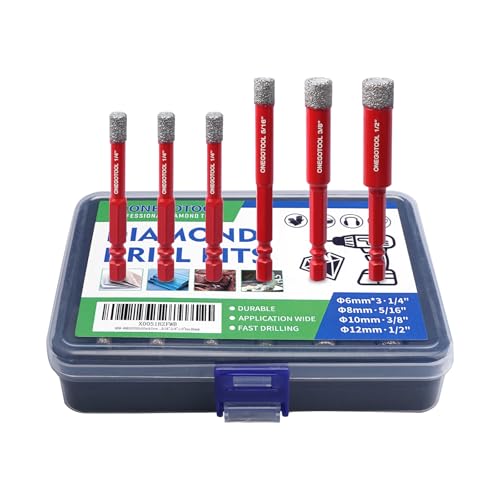
ONEGOTOOL 6-Piece Vacuum Brazed Diamond Set is the first overall specification-based choice among these best hex core drill bits. Its 1/4-inch hex shank, vacuum-brazed construction, internal cooling wax, four common sizes, and broad hard-material coverage make it a balanced option for general tile and light masonry hole work.
Choose Hacaroa when ten pieces and depth markers matter, or SALI’s five-piece set when a stated 35mm working depth is useful. For a larger opening, DECKRKAT provides a 1-1/4-inch format and adapter, while the DaduoRi and BETTERI products align with larger masonry penetrations. Among the top hex core drill bits, diameter, depth, and machine connection should guide the selection.
Frequently Asked Questions
What are the best hex core drill bits for tile?
For tile, porcelain, glass, and stone, the small diamond sets are the most directly documented choices. ONEGOTOOL, Hacaroa, SALI, REKCKRUL, and AOKLIT list hard tile-related materials and hex-shank compatibility. Pick a multi-size kit for varied holes, or AOKLIT when repeated 5mm holes are required.
Can hex core drill bits be used dry?
Several selected products are designed for dry drilling. ONEGOTOOL, Hacaroa, REKCKRUL, and AOKLIT list internal wax or cooling lubricant, while SALI describes dry drilling without water. Water may be listed for extending life on some products, but the correct method depends on the bit and material.
Do larger core bits fit a standard hex drill?
Some do through an included adapter, but the connection is not universal. DaduoRi, BETTERI, and SALI’s two-inch model list hex adapters. Check the adapter size, thread, drill capacity, and operating-mode instructions before use. An included adapter does not make every drill or mode appropriate.
What diameter should I choose?
Select the diameter based on the fixture, pipe, cable, or opening required. Smaller sets cover common sizes from about 1/4 inch to 1/2 inch. DECKRKAT provides 1-1/4 inches, DaduoRi offers one inch and 2-1/2 inches, BETTERI offers three inches, and SALI offers two inches.
Are these bits suitable for reinforced concrete?
Only some selected listings specifically mention reinforcement. DaduoRi’s 2-1/2-inch model describes low- to medium-reinforced concrete, and BETTERI lists reinforced concrete among its materials. The supplied evidence does not support a general claim for every reinforced-concrete condition, so review the individual product instructions and limits before drilling.