Buying Guide
The best carbide jobber drill bits are selected by considering carbide construction, cutting geometry, workpiece material, hole diameter, reach, and machine stability together. This comparison covers solid-carbide, carbide-tipped, coated, and uncoated industrial twist-drill formats using only supplied listing evidence. It is not a hands-on test, laboratory evaluation, or summary of customer opinions.
Match the bit to the workpiece
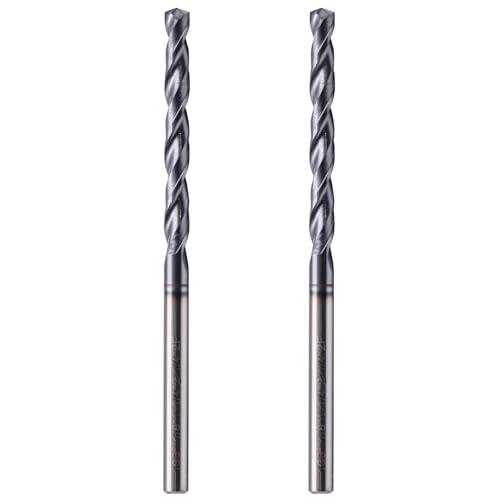
Start with the materials named in the listing. YFTOOL is directed toward stainless steel, hot-working steel below HRC40, and other high-hardness steels. The 2.5mm uxcell bit names stainless, alloy, tool, and hardened steels, making it a suitable specification match for small CNC holes.
For broader coverage, the 5mm uxcell bit lists non-ferrous metal, cast iron, stainless steel, aluminum, copper, alloy steel, plastic, wood, and other materials. The HOYUSK four-piece set names aluminum alloy, copper, steel, hardened steel, and cast iron. Drill America’s DMOD5/64 has a narrower specialist brief covering abrasive materials, cast iron, non-ferrous alloys, copper, plastics, and high-temperature drilling.
Consider carbide construction
Solid carbide appears throughout most of the selected products. The supplied descriptions associate it with rigidity, wear resistance, and cutting speeds above those of high-speed steel in certain applications. These descriptions do not mean that every carbide bit suits every drill or operating condition.
HOYUSK specifically warns that low-precision tools, misalignment, or vibration may cause breakage. The 6.35mm uxcell listing requires a rigid tool-holding system and says the bit is not suitable for hand drills. Drill America describes solid carbide as more brittle while also identifying long tool life and higher-speed capability. Secure workholding and controlled alignment are recurring requirements in the supplied evidence.
Use point angle and flute design as clues
Point angle can affect how the bit begins cutting and how the cutting tip is supported, but the supplied listings do not provide a controlled performance comparison. These are specification differences, not guarantees of one result.
Flute design is more consistently described. YFTOOL’s 30-degree helix is presented as a chip-control feature. The uxcell products use spiral chip space, and the extra-long 3mm version uses twisted spiral flutes. KLOT lists two flutes and a straight shank, while HOYUSK products describe sharp spiral flutes and chip-removal space. Actual chip evacuation also depends on speed, feed, coolant, alignment, and workholding.
Choose diameter and reach carefully
Diameter should match the required hole. The selected products include very small options such as 1/16 inch and 5/64 inch, common small sizes such as 1/8 inch, metric choices from 2.5mm to 6.35mm, and the HOYUSK set with four fractional diameters. Check whether a listing gives both cutting and shank diameters; the extra-long uxcell bit documents both as 3mm.
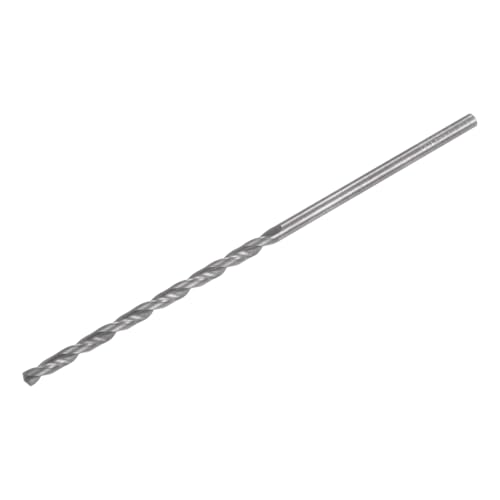
Reach matters for recessed or deeper holes. The extra-long uxcell bit has a 100mm overall length and 55mm flute length, making it the clearest selected option for extended reach. Longer tools may be more sensitive to vibration, so secure clamping and chip clearing are especially important. For ordinary access, the 2.5mm uxcell bit lists a shorter 38mm overall length.
Understand coatings
Coatings are documented on several selected products. YFTOOL uses TiAlSi, BestParts uses AlTiN, the 2.5mm uxcell bit uses AlTiSin, and the HOYUSK 1/16-inch set uses TISIN. The supplied descriptions associate these coatings with hardness, wear resistance, thermal stability, harder materials, or high-temperature work. They do not establish a universal coating hierarchy.
Uncoated bits can still suit a particular application. The 5mm uxcell bit is positioned for a broad material range, while Drill America’s uncoated DMOD5/64 is directed toward abrasive materials and accuracy-focused drilling. Match construction to the workpiece and operating guidance rather than assuming a coated bit is always preferable.
Plan for rigidity and chip control
Several listings recommend machining centers, CNC lathes, rigid holders, or securely clamped workpieces. The 2.5mm uxcell listing says longer clamping is preferable and recommends lower feed and speed when clamping is shorter. The 5mm and 6.5mm uxcell listings provide similar vibration-control guidance. HOYUSK cautions against low-precision equipment.
Spiral flutes and chip spaces are intended to assist evacuation, while YFTOOL combines a 30-degree helix with its 135-degree point. These features do not remove the need to clear chips and follow lubrication or cooling guidance. Use the manufacturer’s setup notes for the selected bit.
How this comparison was scored
The editorial score uses five category-specific criteria: carbide construction and rigidity at 25 percent, point and flute geometry at 20 percent, documented material suitability at 20 percent, size and jobber-length detail at 20 percent, and coating and heat-wear features at 15 percent. Rating, review, purchase, popularity, and marketplace-label information was not used in the public scores. The selected products meet the required editorial threshold.
Final recommendation
YFTOOL 5/16 in TiAlSi Carbide Jobber Bit ranks first overall in this specification-based comparison under the published weighted criteria.
YFTOOL 5/16 in TiAlSi Carbide Jobber Bit is the first overall specification-based choice among the best carbide jobber drill bits.
Its K30 fine-grain carbide, TiAlSi coating, 135-degree point, 30-degree helix, and stated hard-steel applications provide a strong documented combination for demanding machine work. BestParts is a practical alternative when a coated 1/8-inch pair is more useful than one larger bit. For small-hole CNC work, the 2.5mm uxcell bit has detailed dimensions and coating information. The 5mm uxcell pair is the broader uncoated option because its listing names many metals and non-metal materials.
The extra-long 3mm uxcell bit is appropriate when its 100mm reach is needed. Drill America’s DMOD5/64 and the 6.35mm uxcell bit are more specialized choices for abrasive materials or rigid equipment. Among the top carbide jobber drill bits, the deciding factors remain diameter, reach, workpiece, coating, and machine stability.
Frequently Asked Questions
Are the best carbide jobber drill bits suitable for a handheld drill?
The selected evidence generally points toward rigid equipment. HOYUSK warns against low-precision tools and vibration, while the 6.35mm uxcell listing explicitly says its bit is not suitable for hand drills. Drill America also requires a rigid tool-holding system. Follow the specific listing and use secure workholding.
Which selected bit is suited to stainless steel?
Several products document stainless-steel use. YFTOOL is directed toward stainless and harder steels, the 2.5mm uxcell bit names stainless and alloy steel, and the 5mm uxcell bit lists stainless among its broader applications. The choice depends on hole diameter, machine rigidity, coating, and the operating guidance for the particular bit.
The supplied evidence does not support that absolute conclusion. Coated products document coating-related hardness, heat, or wear features, while uncoated products still document useful applications. Select the construction based on the material and operating conditions rather than assuming one format is universally superior.
What does jobber length mean here?
Jobber length generally describes a conventional balance between flute length and overall reach for general drilling access. The 2.5mm uxcell bit lists a 19mm flute and 38mm overall length, while the extra-long 3mm uxcell bit lists a 55mm flute and 100mm overall length. The latter offers more reach but may require additional attention to vibration and clamping.
How should chips and heat be managed?
Use the chip-removal features documented for the selected product, clear accumulated debris, and follow lubrication or cooling guidance. Spiral flutes, chip spaces, and YFTOOL’s helix are intended to assist evacuation, but they do not replace correct speed, feed, clamping, and workpiece security. If a listing recommends lower feed or speed for shorter clamping, follow that precaution.