Buying Guide
The best carbon badminton rackets are not defined by carbon wording alone. A useful comparison also considers how the material is used, how much the racket weighs, what tension the frame supports, and whether the balance and head shape match your technique. The products above range from single rackets for focused practice to multi-racket packages for family or group play.
Start with construction details
Look for a clear distinction between full carbon, carbon graphite, and carbon composite. The YODIMAN 50T Graphite Carbon Fiber Racket specifies a 50T graphite carbon-fiber shaft, while the YODIMAN M46X Carbon Fiber Graphite Racket identifies an M46X carbon-fiber composite graphite shaft. Those details provide more useful context than a generic carbon label because they describe the shaft material and, in some cases, its rigidity.
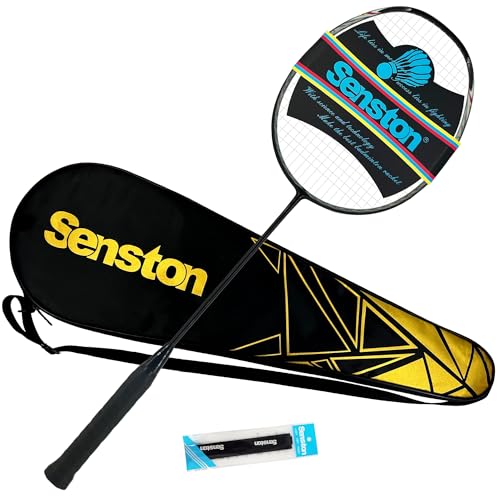
The Senston N80 5U Carbon Fiber Racket documents carbon fiber in both the frame and shaft. The AboveGenius APEX-530 Carbon Racket 2-Pack likewise states full-carbon frame and shaft construction. By contrast, the AIRZHANYU One-Piece 5U Carbon Racket describes composite carbon, so it should be viewed as a composite-carbon option rather than assumed to be an all-carbon frame and shaft.
Match weight to your swing
Badminton weight classes are a practical starting point. The selected 5U rackets sit around 73 to 79 grams in the supplied descriptions, including the INFINITE L-ONE 73g Carbon Fiber Racket, the Senston N80, and both YODIMAN options. These designs may feel quick to position and useful for fast exchanges, but very low weight is not automatically better for every player.
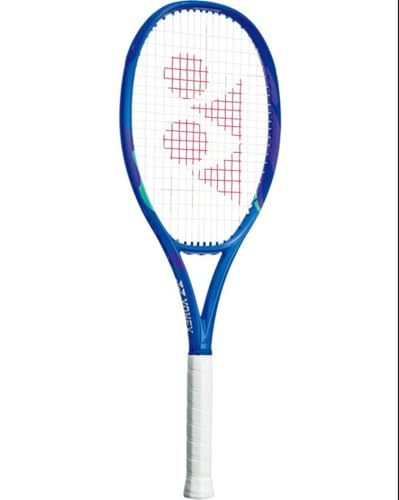
The YONEX Muscle Power 29 Carbon Graphite Racket is listed at 85 grams and uses an even balance. That gives shoppers a distinct alternative to the lighter, more attack-oriented choices. The Zalava 4U Carbon Fiber Racket 4-Pack is listed at 82 grams, placing it between the ultra-light models and the heavier YONEX option. Players who want a little more substance in the hand may prefer these specifications.
Consider balance and shaft behavior
Balance affects how a racket is presented in this guide. The YODIMAN 50T and YODIMAN M46X models are both described as head-heavy, which can suit players looking for an attack-oriented setup. The YONEX Muscle Power 29 is explicitly even balance, making it the clearest neutral option among the selected products.
Shaft descriptions also matter. The TENGAOSI High-Grade Graphite 2-Pack identifies a 46T medium-flex shaft, while the YODIMAN M46X model emphasizes high torsion resistance. The INFINITE L-ONE lists a 6.8-mm carbon shaft, and the AIRZHANYU one-piece model describes a moderately hard middle shaft. These are specifications, not guarantees of on-court results, but they help separate the designs.
Check string tension carefully
A racket’s stated tension range or maximum is useful when comparing factory setup and future restringing flexibility. The AboveGenius APEX-530 is pre-strung at 30 lbs, and the YODIMAN 50T is pre-strung at 26 lbs with a stated frame rating up to 35 lbs. The YODIMAN M46X is professionally strung at 25 lbs and also lists a 35-lb frame capability.
Not every racket is set up at a high tension. The Racket Stop Carbon X PRO 4U is pre-strung at 22 lbs, while the YONEX Muscle Power 29 lists a 30-lb maximum. The Senston N80 arrives in a 24–26-lb range, and the INFINITE L-ONE documents 24–30 lbs. Do not confuse a maximum frame rating with the tension already installed; they describe different aspects of the product.
Choose the right head and joint design
An isometric head is documented on the YONEX Muscle Power 29, Senston N80, INFINITE L-ONE, and AboveGenius APEX-530. This head shape is presented in the supplied evidence as enlarging or widening the effective hitting area. That can be relevant to developing players who want a more forgiving specification.
One-piece construction and integrated or built-in T-joints appear across several selections. The Senston N80, INFINITE L-ONE, AIRZHANYU one-piece model, and Zalava set all document a T-joint or one-piece design. These features are useful comparison points for shoppers who prioritize a stated connection and stability design rather than a particular brand name.
Decide between a single racket and a set
A single racket is usually the more focused choice when you already know your preferred weight, balance, and tension. The YODIMAN models, YONEX Muscle Power 29, Senston N80, INFINITE L-ONE, Racket Stop Carbon X PRO, and AIRZHANYU model all provide a single-racket format.
Sets make more sense for multiple players or replacement convenience. The AboveGenius package includes two full-carbon rackets, TENGAOSI includes two rackets with different documented playing styles, and Zalava supplies four rackets plus bags, shuttlecocks, and replacement overgrips. Accessories add convenience, but they should not replace checking the racket specifications themselves.
Final recommendation
AboveGenius APEX-530 Carbon Racket 2-Pack ranks first overall in this specification-based comparison under the published weighted criteria.
The YODIMAN 50T Graphite Carbon Fiber Racket is the first overall specification-based choice among these best carbon badminton rackets. Its 50T shaft, 5U weight, head-heavy balance, aerodynamic frame, and professionally installed 26-lb strings give it the most complete advanced-play profile in the comparison.
The YODIMAN M46X Carbon Fiber Graphite Racket is a close alternative for players who want 4U or 5U flexibility and a documented high-torsion-resistance shaft. For two players, the AboveGenius APEX-530 offers full-carbon construction and 30-lb pre-stringing. The YONEX Muscle Power 29 is the more neutral even-balance option, while the Senston N80 and INFINITE L-ONE emphasize light, forgiving handling.
Among the top carbon badminton rackets, the best fit depends on your weight preference, balance requirements, and whether you need one racket or a complete group package. Use the specification differences—not unsupported performance promises—to make the final choice.
Frequently Asked Questions
What should I compare when choosing the best carbon badminton rackets?
Compare the documented carbon construction, weight class, balance, shaft description, string tension, frame or T-joint design, and included equipment. A full-carbon frame and shaft is different from a carbon composite description, and a 5U racket will not feel the same as an 85-gram model.
Is a 5U racket suitable for beginners?
A 5U racket can be a reasonable option for a beginner who values light handling. The Senston N80, INFINITE L-ONE, AIRZHANYU one-piece model, AboveGenius APEX-530, and both YODIMAN selections document 5U or similarly light specifications. However, weight alone does not determine suitability; balance, grip, tension, and the player’s preferred feel also matter.
Does a higher string-tension rating mean a better racket?
Not necessarily. A higher stated limit can indicate more restringing headroom, but the appropriate tension depends on the player’s setup and the manufacturer’s specifications. The AboveGenius APEX-530 lists 30-lb pre-stringing, while the Racket Stop Carbon X PRO is pre-strung at 22 lbs. These are different configurations, not a simple quality ranking.
Should I buy a single racket or a carbon badminton racket set?
Buy a single racket when you need a specific personal setup. Choose a set when two or more people need equipment or when bags, shuttlecocks, and replacement grips are useful. The TENGAOSI package documents offensive and all-round rackets, while the Zalava package includes four rackets and group-play accessories.
Is an isometric head useful for developing players?
An isometric head is described in the supplied evidence as providing a wider or enlarged effective hitting area. The YONEX Muscle Power 29, Senston N80, INFINITE L-ONE, and AboveGenius APEX-530 document this design. It may be worth considering if you want a racket specification that emphasizes a more forgiving head shape during practice.