Buying Guide
The best cases of 12 motor oils should be chosen by the vehicle’s required viscosity and specification first, then by formulation and intended operating environment. A 12-quart case is simply a pack format; it does not make two oils interchangeable. The listings in this comparison range from light-duty gasoline oils to modified-engine formulas and heavy-duty diesel lubricants, so application matching matters more than brand familiarity.
Start with the owner’s manual
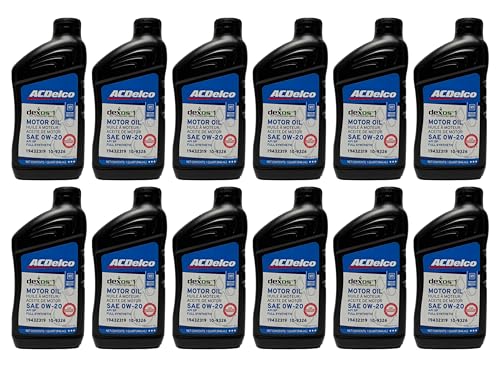
Check the manual, oil-filler cap, or manufacturer service information for the required SAE grade and performance specification. The selected products include 0W-20, 5W-30, 10W-30, 10W-40, and 15W-40. Those grades are not interchangeable by default. For example, ACDelco dexos1 Gen 3 is specifically labeled 0W-20, while Chevron Delo 400 XLE is a 15W-40 diesel-oriented oil. A lighter or heavier grade may affect whether the product is approved for a particular engine, climate, or service schedule.
Do not select an oil only because the temperature number looks familiar. The first number and the W describe low-temperature viscosity behavior, while the second number describes the operating-temperature grade. The required performance approval is equally important. Idemitsu IFG3 lists SP/GF-7A and modern TGDI and PFI compatibility. CAM2 Super ProMax products list API SP and ILSAC GF-6A references. ACDelco’s 0W-20 product identifies dexos1 Gen 3 and backward compatibility information. These details can help narrow a case after the required grade is known.
Full synthetic products in the selected group include ACDelco dexos1 Gen 3, ACDelco dexos2, Royal Purple HPS Street, and Red Line 10W30. Their listings describe synthetic formulation and, in several cases, more specific chemistry or protection features. Red Line identifies ester and PAO base stocks, while Royal Purple describes synthetic oil for modified engines and high-lift valvetrain requirements.
Synthetic blends, such as the CAM2, Duramax, and Chevron Delo selections, combine synthetic and other base-oil components. Their listings emphasize practical properties such as wear control, oxidation resistance, detergency, temperature protection, or soot dispersancy. A blend is not automatically the right or wrong choice. The correct decision depends on the vehicle’s stated requirement and the service context.
Match the oil to the engine type
Gasoline-engine coverage is clearest on the CAM2 products and Idemitsu IFG3. CAM2 Super ProMax 5W-30 is described for gasoline engines and turbocharged applications, while the 10W-30 version is listed for passenger cars and light trucks. Idemitsu specifically mentions TGDI and PFI engines. Those terms describe gasoline-engine designs, but the vehicle manual still controls the final selection.
Heavy-duty diesel use calls for a different review process. Chevron Delo 400 XLE 15W-40 is described for on-highway applications and 2017 greenhouse-gas-compliant diesel engines. Its listing discusses soot dispersancy, piston deposits, turbocharger protection, oxidation, wear, and corrosion. Those are relevant diesel-service considerations, but they do not make the product suitable for a gasoline vehicle that requires a different grade or approval.
Modified engines also deserve separate attention. Royal Purple HPS Street 10W-40 is positioned for modified engines and discusses roller or flat-tappet lifters with high-lift or high-ramp-rate camshafts. Red Line 10W30 is described for performance vehicles as well as passenger cars, light trucks, and marine applications. These products have more specialized positioning than a general light-duty oil, so confirm that the formulation and viscosity fit the engine build.
Look for useful protection evidence
Protection wording is most useful when it identifies a specific concern rather than making a broad performance promise. Idemitsu documents wear protection, deposit control, sealing performance, and film-thickness stability. ACDelco dexos1 Gen 3 describes resistance to varnish and sludge and improved compatibility with exhaust particulate filters. Chevron Supreme lists anti-wear and thermal-breakdown protection. Duramax describes additive detergency and protection in low- and high-temperature climates.
For diesel service, Chevron Delo provides the most detailed set of operating concerns in the selected group. For modified gasoline engines, Royal Purple’s valvetrain and deposit language is more relevant than a generic light-duty claim. For a routine gasoline application, the specification and viscosity usually deserve priority over a long list of secondary features.
Verify the case configuration
A case should contain twelve usable one-quart containers, but listing clarity varies. Idemitsu, ACDelco, Chevron Supreme, Duramax, and the CAM2 5W-30 listing provide direct quantity information. Red Line 10W30 identifies a 12-pack and one-quart format. Before ordering, verify that the stated unit count and bottle size match the vehicle’s oil capacity and the intended maintenance interval. A 12-quart case may cover multiple services, but the exact number depends on the engine.
Also check the product identity carefully when a listing contains conflicting fields. The title, features, and specifications should agree on grade, formulation, and quantity. If one field is unclear, consult the manufacturer’s current documentation before using the oil. This is especially important when a listing uses a part number, a family name, or application-specific language.
How this comparison was scored
The editorial score uses five category-specific criteria: application fit and viscosity clarity, industry specifications and certifications, formulation detail, documented protection features, and 12-quart pack clarity. Each selected product received a 0.0-to-10.0 score in every criterion. The weighted criteria emphasize correct application and documented standards, while the pack criterion rewards clear quantity information. This is a specification-based comparison using supplied public listing evidence, not a hands-on test and not a summary of customer opinions.
Final Recommendation
Idemitsu IFG3 5W-30 SP/GF-7A Case of 12 ranks first overall in this specification-based comparison under the published weighted criteria.
The final choice among the best cases of 12 motor oils depends on the documented features that match your intended use.
Idemitsu IFG3 5W-30 SP/GF-7A Case of 12 is the highest-scoring returned product and the first overall specification-based choice for shoppers whose manuals call for its grade and documented gasoline-engine specifications. It combines clear TGDI and PFI application guidance, modern SP/GF-7A labeling, a fully described protection profile, and an explicit 12-quart format.
The top cases of 12 motor oils are not interchangeable, so the best alternative depends on the vehicle. Choose ACDelco dexos1 Gen 3 for a documented GM-oriented 0W-20 application, ACDelco dexos2 for the listed 2.8L Duramax use case, or Chevron Delo 400 XLE for on-highway diesel service. CAM2 offers clearly described gasoline-engine synthetic blends in both 5W-30 and 10W-30. Royal Purple and Red Line are more specialized choices for modified or performance-oriented engines. Always confirm the required grade and approval before opening a bottle.
Frequently Asked Questions
What should I check before choosing among the best cases of 12 motor oils?
Confirm the SAE viscosity, required performance specification, engine type, and oil capacity in the vehicle’s manual. Then compare formulation and application details. A case quantity alone does not establish compatibility.
Is a 5W-30 case suitable for every gasoline engine?
No. Several selected products are 5W-30, including Idemitsu IFG3, CAM2 Super ProMax, Chevron Supreme, Duramax, and ACDelco dexos2, but their specifications and intended applications differ. Use 5W-30 only when the vehicle manufacturer permits that grade and the product meets the required standard.
When does a diesel-focused case make sense?
Chevron Delo 400 XLE 15W-40 is the selected diesel-focused option. Its listing discusses on-highway diesel use, soot dispersancy, piston deposits, turbocharger protection, oxidation, wear, and corrosion. It should be used only where the vehicle and engine manufacturer specify a compatible 15W-40 diesel oil.
Are synthetic blends and full synthetics interchangeable?
Not automatically. The selected listings include both types, but the vehicle’s specification controls. If the manual requires a particular full synthetic approval, choose a product that documents that approval rather than substituting based only on viscosity.
How do the top cases of 12 motor oils differ for modified engines?
Royal Purple HPS Street 10W-40 is explicitly positioned for modified engines and discusses high-lift or high-ramp-rate valvetrains. Red Line 10W30 lists performance vehicles among its applications and identifies ester/PAO base stocks. Confirm the engine builder’s requirements, viscosity, and approved specification before selecting either.