Buying Guide
Choosing among the best motor oils in US 2026 starts with matching the bottle to your owner’s manual, then layering in protective features that fit how and where you drive. Every product in this guide is a full-synthetic motor oil, but viscosity grade, specification coverage, and additive focus differ enough that the right pick depends on engine age, climate, and driving pattern.
Match the Viscosity Grade First
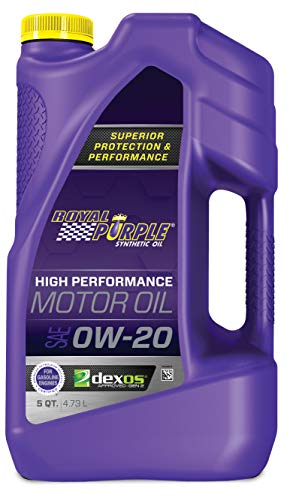
Viscosity grade, shown as 0W-20, 5W-20, or 5W-30 on the label, is the single most important specification to match. Your owner’s manual lists the grade the engine was designed around, and using the wrong one can change oil pressure and flow at startup. The Castrol EDGE 0W-20, Valvoline Advanced Full Synthetic 0W-20, Mobil 1 Extended Performance 0W-20, and Royal Purple ROY51020 all carry the 0W-20 designation favored by many late-model engines. The 5W-20 options include Mobil 1 Advanced Full Synthetic 5W-20, Valvoline MaxLife High Mileage 5W-20, and Castrol EDGE High Mileage 5W-20. For 5W-30, look at Mobil 1 High Mileage 5W-30, Castrol EDGE 5W-30, and Castrol EDGE High Mileage 5W-30.
Check API, ILSAC, and OEM Licensing
Beyond viscosity, specification coverage tells you how thoroughly the oil has been tested against current industry benchmarks. The most current list entries, including Valvoline MaxLife High Mileage 5W-20 and Valvoline Advanced Full Synthetic 0W-20, carry ILSAC GF-7A and API SQ along with additional Ford and Chrysler approvals. Castrol EDGE 5W-30 and Castrol EDGE 0W-20 add GM dexos1 Gen 3 licensing, which is important for some General Motors applications. Mobil 1 entries meet ILSAC GF-6 and include LSPI and timing-chain-wear protection language relevant to modern turbocharged engines.
Look at Wear, Deposit, and Sludge Claims
Manufacturers describe protective performance in different ways, so look at the specific tests or comparisons cited. Valvoline MaxLife High Mileage 5W-20 quotes 50 percent stronger wear protection and 20 percent stronger sludge defense than industry standards. Castrol EDGE 5W-30 and Castrol EDGE 0W-20 cite 3X stronger viscosity-breakdown resistance and 10X better high-stress performance based on the Kurt Orbahn and Seq IX tests. Mobil 1 Advanced Full Synthetic 5W-20 and Mobil 1 High Mileage 5W-30 emphasize their Triple Action Formula and Triple Action+ Formula for deposits, sludge, and engine cleanliness.
Consider High-Mileage Design
If your engine has passed 75,000 miles, dedicated high-mileage formulas add seal conditioners and additives aimed at reducing leaks and oil consumption. Mobil 1 High Mileage 5W-30, Valvoline MaxLife High Mileage 5W-20, Castrol EDGE High Mileage 5W-30, and Castrol EDGE High Mileage 5W-20 all target older engines. The Castrol High Mileage variants also use Phosphorus Replacement Technology aimed at extending catalytic-converter life.
Evaluate Thermal Range and Cold-Flow Behavior
Cold-start wear is a major contributor to engine wear, so the W-grade number matters in colder climates. Mobil 1 Extended Performance 0W-20 lists cold-flow protection to -40 degrees F, while Mobil 1 High Mileage 5W-30 and Mobil 1 Advanced Full Synthetic 5W-20 list cold-flow protection to -30 degrees F. Valvoline Advanced Full Synthetic 0W-20 is engineered specifically for low-temperature flow during cold starts. Internal heat protection of up to 500 degrees F is documented on multiple Mobil 1 entries.
Compare Drain Interval Capability
Drain interval claims range from 10,000 miles on Mobil 1 Advanced Full Synthetic 5W-20 and Mobil 1 High Mileage 5W-30, up to 20,000 miles on Mobil 1 Extended Performance 0W-20, Castrol EDGE 5W-30, and Castrol EDGE 0W-20. Castrol EDGE High Mileage 5W-20 and Castrol EDGE High Mileage 5W-30 sit in the middle at 15,000 miles. Royal Purple ROY51020 does not state a specific interval claim in its feature copy.
If your driving includes high-load conditions or your fuel contains ethanol, specialty formulas become relevant. Royal Purple ROY51020 claims improved compatibility with ethanol-containing fuels and superior corrosion protection alongside its high-performance positioning. Castrol EDGE 5W-30 and Castrol EDGE 0W-20 lean into high-stress performance numbers, which can matter for towing or spirited driving.
Final recommendation
Castrol EDGE 0W-20 Advanced Full Synthetic Motor Oil, 5 Quarts ranks first overall in this specification-based comparison under the published weighted criteria.
Among the best motor oils in US 2026, the most specification-aligned specification-based choice overall is the Castrol EDGE 5W-30 Advanced Full Synthetic Motor Oil, which combines a 20,000-mile drain interval claim, ILSAC GF-7, GM dexos1 Gen 3 licensing, and quantified viscosity and high-stress numbers in a widely supported 5W-30 grade. For 0W-20 applications, the Mobil 1 Extended Performance 0W-20 and Castrol EDGE 0W-20 both deliver top motor oils-level interval claims and modern licensing, while the Valvoline MaxLife High Mileage 5W-20 leads on combined specification coverage and quantified wear protection for high-mileage engines. Match the grade and specifications to your engine first, then select the additive and drain-interval profile that fits your climate and driving style.
Frequently Asked Questions
Among the best motor oils, what is the best motor oil viscosity grade for a modern gasoline engine?
The best motor oils viscosity grade depends on what the owner’s manual specifies. Most late-model engines call for 0W-20 or 5W-20, while some still use 5W-30. The Castrol EDGE 0W-20, Mobil 1 Extended Performance 0W-20, and Valvoline Advanced Full Synthetic 0W-20 all cover the 0W-20 case, while Castrol EDGE 5W-30 and Mobil 1 High Mileage 5W-30 cover the 5W-30 case.
Are high-mileage motor oils worth using past 75,000 miles?
High-mileage motor oils add seal conditioners and additives aimed at reducing leaks and oil burnoff in engines with more wear. Mobil 1 High Mileage 5W-30, Valvoline MaxLife High Mileage 5W-20, and the Castrol EDGE High Mileage variants are explicitly designed for engines with 75,000 miles or more.
How important is dexos1 Gen 3 licensing for motor oils?
Dexos1 Gen 3 licensing matters most if your vehicle is a General Motors product that requires it, and it also signals that an oil has passed a current set of GM-specific tests. Castrol EDGE 0W-20, Castrol EDGE 5W-30, and Valvoline Advanced Full Synthetic 0W-20 carry dexos1 Gen 3 licensing in this comparison.
Can I extend my oil change interval with a full-synthetic motor oil?
Drain interval claims vary by product and are stated by the manufacturer, not by your driving conditions. Mobil 1 Extended Performance 0W-20, Castrol EDGE 5W-30, and Castrol EDGE 0W-20 each list a 20,000-mile claim, while the Castrol EDGE High Mileage variants list 15,000 miles and Mobil 1 Advanced Full Synthetic 5W-20 lists 10,000 miles. Always follow the most conservative interval supported by your manual and driving conditions.
Do I need a specialty motor oil for ethanol-blend fuels or high-load driving?
If your fuel regularly contains higher ethanol blends or you tow, carry heavy loads, or drive hard, a specialty formula may help. Royal Purple ROY51020 specifically claims improved compatibility with fuels containing ethanol, while Castrol EDGE 5W-30 and Castrol EDGE 0W-20 highlight quantified high-stress performance numbers in their testing.