Buying Guide
Choosing among the best manual transmission fluids starts with the vehicle’s required specification, not with the bottle’s general description. Manual gearboxes may call for a GL-4 gear oil, a low-viscosity fluid, a friction-modified synchromesh product, or a manufacturer-specific formulation. The products above are ranked from the supplied listing evidence, with no hands-on testing or customer-opinion summary.
Start with the service specification
Check the owner’s manual, factory service information, or the fluid label on the transmission before selecting a product. The required viscosity can be decisive: the list includes 70W, 75W, 75W-80, and 75W-90 products. A lower-viscosity fluid is not automatically interchangeable with a heavier gear oil. For example, Red Line 50604 is identified for 70W and 75W requirements, while Red Line 50304 is positioned as 75W-90.
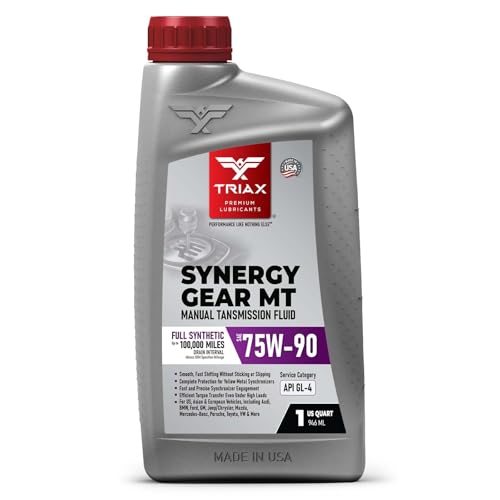
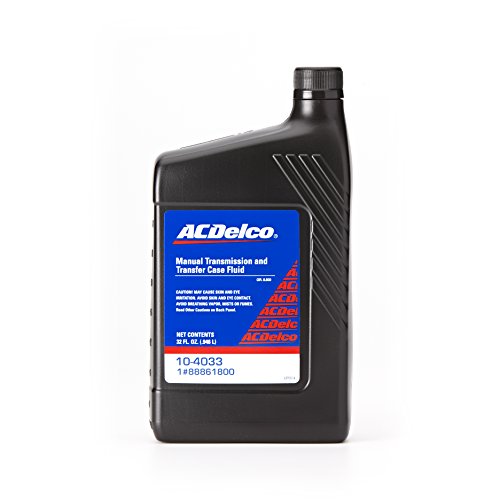
The same rule applies to the performance category. Red Line 50204 and Red Line 50304 both document GL-1, GL-3, and GL-4 applications, while TRIAX Synergy Gear MT products are identified as GL-4. A listing that does not state GL-4 should be matched only where the vehicle documentation allows it. ACDelco 10-4033 is identified as a 75W-90 manual transmission and transfer-case fluid, but the supplied evidence does not provide a GL-4 designation.
Match synchronizer requirements
Synchronizers depend on controlled friction to bring gears to speed. Several of the best manual transmission fluids in this comparison provide direct synchronizer evidence. Red Line 50204 describes balanced friction control for manual synchronizers and says it is safe for brass synchronizers. Red Line 50304 similarly emphasizes synchronizer life and brass-synchro safety.
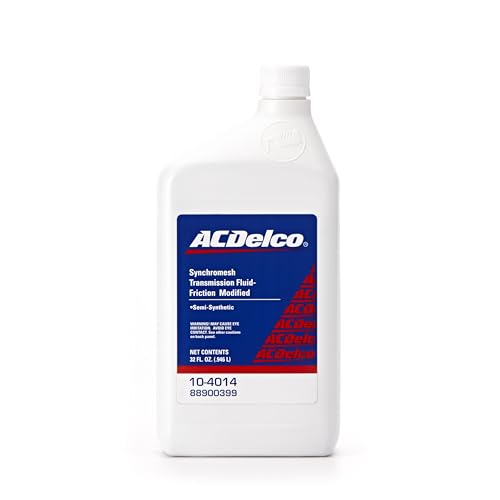
TRIAX Synergy Gear MT 75W-90 goes further in its listing by identifying yellow-metal, brass, copper, and aluminum compatibility. ACDelco 10-4014 is specifically formulated for synchromesh transmissions and is described as highly friction modified. These details are useful when the service documentation calls for a synchromesh or brass-synchronizer-compatible fluid.
Do not assume that every gear oil has the same friction behavior. The correct choice depends on the transmission design and the required fluid category. The presence of a GL-4 label, for example, is helpful evidence but does not by itself prove universal fitment.
Viscosity affects how a fluid is positioned for the transmission’s operating range. Red Line 50604 is the clearest low-viscosity choice in this list, with 70W/75W guidance and references to Mercedes 235.10, Dodge/Fiat BOT 350 M3, GM BOT 303, Toyota/Scion, and selected VW/Audi and Graziano applications. ACDelco 10-4037 is another targeted low-viscosity product, identified as 70W BOT 303 modified fluid.
For 75W-80 requirements, Red Line 50204 and the gallon-format TRIAX 75W-80 are the most directly documented options. The TRIAX listing supplies a stated 204 VI index and -60°F pour point, while Red Line 50204 provides a broad list of vehicle and transmission applications. These data points can help narrow the selection when the service information specifies a particular low-temperature or viscosity characteristic.
A 75W-90 product may be more appropriate when that exact grade is required. Red Line 50304, TRIAX 75W-90, and ACDelco 10-4033 all carry 75W-90 identification, but their documented application details differ. Always treat the vehicle’s stated grade as the controlling requirement.
Protection claims are most useful when they identify the components or conditions involved. Ford XT-M5-QS lists synthetic base oils and performance additives, along with thermal, oxidative, and shear stability. It also mentions protection for synchronizers and bearings. That makes it particularly relevant for a Ford application that specifies XT-M5-QS.
The TRIAX 75W-80 gallon product identifies PAO and ester components, friction modifiers, defoamers, a corrosion inhibitor, and a high viscosity index. Its listing also describes protection for yellow-metal components. Red Line 50204 and Red Line 50304 state that they lack the reactive sulfurs associated in their listings with damage to brass synchronizers.
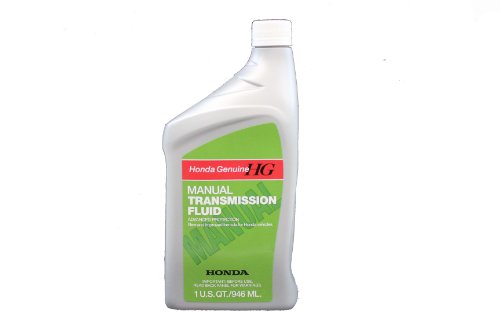
ACDelco 10-4014 documents protection against deposits, rust, corrosion, pitting, spalling, and general wear, as well as a stated temperature span from -40°F to 300°F. By comparison, Honda 08798-9031 has a shorter public specification set, but it does state lower fluid friction and improved shift quality. The differences in listing detail explain the scoring differences; they do not establish laboratory performance.
Choose manufacturer-specific fluid when appropriate
Manufacturer-branded fluids can be the most straightforward route when the part number matches the service requirement. Ford XT-M5-QS is explicitly a Ford fluid, Honda 08798-9031 is identified by a Honda part number, and ACDelco 10-4033 and 10-4037 are GM-associated products. These choices are not universal substitutes for one another. Their value is the clarity of the documented application when the vehicle specification agrees.
For broader documented coverage, Red Line 50204, Red Line 50304, Red Line 50604, and the TRIAX products list multiple vehicle makers or transmission applications. That breadth is useful for comparison, but it still requires a final fitment check. Names such as BMW, Honda, Jeep, or Mercedes-Benz in a listing should be treated as application references, not permission to use the fluid in every model from that brand.
Consider package quantity and service needs
Most selected products are listed in quart-sized packaging, which suits a single-fluid purchase when the transmission capacity is known. The TRIAX 75W-80 product is listed as one gallon, and that format may better match several fills or workshop service. Quantity does not change the fluid’s specification, so confirm the required volume separately.
That is an editorial choice based on documentation depth, not a hands-on performance conclusion.
How this comparison was scored
The editorial criteria are fitment and application clarity, synchronizer compatibility, viscosity and temperature support, wear and component protection, and formulation and specification detail. Each selected product received a score from 0.0 to 10.0 on every criterion. The weighted criteria total 100 points, and every selected product reached at least a 7.0 weighted editorial average. The ranking uses only the supplied product titles, description points, and specifications. It does not summarize customer sentiment or claim independent testing.
Final Recommendation
Red Line 50204 MTL 75W-80 GL-4 ranks first overall in this specification-based comparison under the published weighted criteria.
Red Line 50204 MTL 75W-80 GL-4 is the first overall specification-based choice among these best manual transmission fluids because its listing combines clear viscosity and GL-4 guidance with synchronizer-focused friction information, brass-synchro safety, and broad application references.
Choose Red Line 50304 MT-90 when the transmission calls for 75W-90 GL-4, or Red Line 50604 MT-LV when the required fluid is a 70W/75W low-viscosity GL-4 product. TRIAX Synergy Gear MT 75W-90 is notable for its yellow-metal documentation, while the TRIAX 75W-80 gallon product adds detailed PAO, ester, viscosity-index, and cold-temperature information.
For manufacturer-specific requirements, Ford XT-M5-QS, Honda 08798-9031, ACDelco 10-4014, ACDelco 10-4037, and ACDelco 10-4033 should be considered only when their documented part number or fluid description matches the vehicle’s service information. These are the top manual transmission fluids in this comparison by evidence-supported fitment and specification detail, not universal recommendations.
Frequently Asked Questions
What should I check before buying one of the best manual transmission fluids?
Confirm the required viscosity, GL category or manufacturer fluid number, transmission type, and required fill volume. Also check whether the gearbox uses brass or other yellow-metal synchronizer components and whether the manufacturer specifies a synchromesh or low-viscosity formula.
Is a GL-4 fluid suitable for every manual transmission?
No. GL-4 identification is useful only when it matches the vehicle’s service requirement. Red Line 50204, Red Line 50304, Red Line 50604, and TRIAX Synergy Gear MT products document GL-4 positioning, but each still needs to be checked against the specific transmission specification.
When does a low-viscosity manual transmission fluid make sense?
Use one when the service information calls for that grade or specification. Red Line 50604 is listed for 70W and 75W requirements, and ACDelco 10-4037 is identified as 70W BOT 303 modified low-viscosity fluid. Neither should be treated as a general replacement for 75W-80 or 75W-90 fluid.
Are manufacturer-branded fluids interchangeable?
Not automatically. Ford XT-M5-QS, Honda 08798-9031, and the ACDelco products have different application evidence. Match the exact part number or stated fluid requirement to the vehicle documentation before use.
Why does synchronizer compatibility matter?
Synchronizers rely on controlled friction during gear engagement. Products such as Red Line 50204, Red Line 50304, TRIAX Synergy Gear MT 75W-90, and ACDelco 10-4014 provide listing evidence related to friction behavior, brass or yellow-metal safety, or synchromesh use. Those details matter when the transmission requires them.