Buying Guide
Choosing the best ceramic rice bowls is easier when you focus on the specifications that actually affect daily use. Capacity, diameter, material, glaze, and care flexibility matter far more than decorative descriptions. The ten products in this guide were selected because each one documents a clear combination of these features, and each scored at least 7.0 on the weighted specification-based comparison.
Matching Bowl Capacity to Rice Portions
A standard Japanese rice serving is about 150 grams of cooked rice, which fits comfortably in a bowl that holds between 8 and 12 ounces. Most ceramic rice bowls in this guide sit in the 10 to 12 ounce range, with diameters around 4.4 to 4.75 inches and heights near 2.2 to 2.5 inches. The Saikai Pottery Traditional Japanese Rice Bowls and the Swlthwen Vintage Speckled Rice Bowls are two examples where the listed capacity and diameter line up well with this portion.
If you regularly serve ramen, udon, or other soups alongside rice, a slightly taller or wider bowl can help. The Ava Nord Stoneware Cereal Bowls provide a larger 20 ounce capacity at 5.79 inches in diameter, which works well for noodle service. For most rice-focused use, though, a 10 ounce bowl is the sweet spot.
Material Quality and Glaze Safety
Ceramic and porcelain are the two main body materials in this category. Porcelain is fired at higher temperatures, which typically produces a denser, less porous body. Stoneware, used by the Ava Nord set, is heavier and retains heat longer. Either is acceptable, but it is important to look for explicit statements that the glaze is lead-free and cadmium-free.
Multiple products in this guide, including the Swlthwen Vintage Speckled Rice Bowls, the DOWAN 10 oz Ceramic Rice Bowls, and the VanEnjoy Blue and White Porcelain Bowls, document lead-free and cadmium-free construction. Buyers who want added confidence in the underglaze finish can focus on the VanEnjoy set, which explicitly mentions underglaze craftsmanship inspired by Chinese Ming Dynasty styling.
Multi-Use Versatility Beyond Rice
One of the reasons ceramic rice bowls are so popular is that the same bowl works for miso soup, small salads, ice cream, snacks, and side dishes. Products such as the ZOOFOX 10 oz Porcelain Bowls and the AHX Multicolor Dessert Bowls highlight this versatility in their own listings. If you want a single set that covers breakfast cereal, ramen, and dessert, prioritize a 10 ounce bowl with a smooth interior glaze.
A pattern-only set can look busy when holding neutral foods like oatmeal or rice. Buyers who plan to use the bowls for a wide variety of dishes may prefer the BOSILI Light Green Porcelain Bowls or the Swlthwen Vintage Speckled Rice Bowls, which offer subtle character without dominating the food presentation.
Design Variety and Set Composition
Design variety depends on whether the set offers multiple patterns or a single coordinated finish. The Whitenesser Retro Floral Rice Bowls and the AHX Multicolor Dessert Bowls each include four or more distinct patterns per set, which adds visual interest to the table. The Saikai Pottery Traditional Japanese Rice Bowls and the BOSILI Light Green Porcelain Bowls offer a more uniform look that is easier to mix with other tableware.
Set size matters for practicality. The DOWAN 10 oz Ceramic Rice Bowls and the ZOOFOX 10 oz Porcelain Bowls provide eight bowls each, which is helpful for families and entertaining. Smaller four-piece sets such as the Swlthwen Vintage Speckled Rice Bowls may be enough for smaller households.
Stackability and Storage
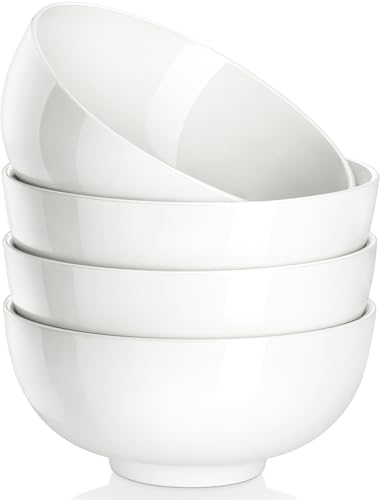
Almost every set in this guide mentions stackability. Tapered shapes that nest neatly help in kitchens with limited cabinet space. The Swlthwen Vintage Speckled Rice Bowls and the BOSILI Light Green Porcelain Bowls both describe a stackable shape that keeps cabinets organized. Buyers with very small cabinets may want to confirm that the bowls nest at the listed diameter and height before ordering.
Care and Cleaning Compatibility
Most modern ceramic rice bowls are designed to be dishwasher and microwave safe. Several sets go further and list oven and freezer compatibility, including the DOWAN 10 oz Ceramic Rice Bowls, the AHX Multicolor Dessert Bowls, and the Batitie Multicolor Porcelain Bowls. The Saikai Pottery Traditional Japanese Rice Bowls do not explicitly list these certifications in the available description, so buyers who need documented dishwasher or microwave use should consider that when comparing.
Final Recommendation
Swlthwen Vintage Speckled Rice Bowls ranks first overall in this specification-based comparison under the published weighted criteria.
The final choice among the best ceramic rice bowls depends on the documented features that match your intended use.
The Swlthwen Vintage Speckled Rice Bowls are the highest-scoring specification-based choice in this guide, with a balanced combination of lead-free and cadmium-free porcelain, a 10.14 ounce capacity at 4.5 inches in diameter, reactive speckled glaze, documented microwave and dishwasher compatibility, and a stackable nesting shape. Among the top ceramic rice bowls, this set combines portion accuracy, material transparency, and storage practicality better than the alternatives. Buyers who prefer a larger stoneware body can consider the Ava Nord Stoneware Cereal Bowls, while those who want a more authentic made-in-Japan build can look at the Saikai Pottery Traditional Japanese Rice Bowls. For households that need more pieces, the eight-bowl DOWAN 10 oz Ceramic Rice Bowls and the ZOOFOX 10 oz Porcelain Bowls are strong secondary options.
Frequently Asked Questions
Among the best ceramic rice bowls, what size ceramic bowl is best for a single serving of rice?
A 10 to 12 ounce bowl at about 4.5 inches in diameter is the most practical size for a typical rice serving. The Swlthwen Vintage Speckled Rice Bowls and the Saikai Pottery Traditional Japanese Rice Bowls are two examples in this guide that match those proportions.
Are ceramic rice bowls safe for microwave and dishwasher use?
Most modern ceramic rice bowls are designed for both. Products such as the DOWAN 10 oz Ceramic Rice Bowls, the AHX Multicolor Dessert Bowls, and the Batitie Multicolor Porcelain Bowls explicitly document microwave and dishwasher compatibility along with freezer and oven use in some cases.
How do I choose between porcelain and stoneware rice bowls?
Porcelain is typically lighter and fired at higher temperatures, which produces a thinner, denser body. Stoneware, used by the Ava Nord Stoneware Cereal Bowls, is heavier and retains heat longer. For everyday rice service either is appropriate, and the choice depends on whether you prioritize weight and heat retention or lighter handling.
Can the same ceramic rice bowl be used for soup, salad, or dessert?
Yes, which is why multi-use versatility is one of the scoring criteria in this guide. Sets such as the ZOOFOX 10 oz Porcelain Bowls, the Whitenesser Retro Floral Rice Bowls, and the BOSILI Light Green Porcelain Bowls all document use beyond rice, including miso soup, cereal, snacks, and side dishes.
Do pattern and color affect how food looks in a ceramic rice bowl?
Pattern and color influence presentation. Busy multicolor patterns, like those on the Batitie Multicolor Porcelain Bowls, can make plain rice feel visually louder, while neutral finishes such as the DOWAN 10 oz Ceramic Rice Bowls or the speckled Swlthwen Vintage Speckled Rice Bowls keep the focus on the food.