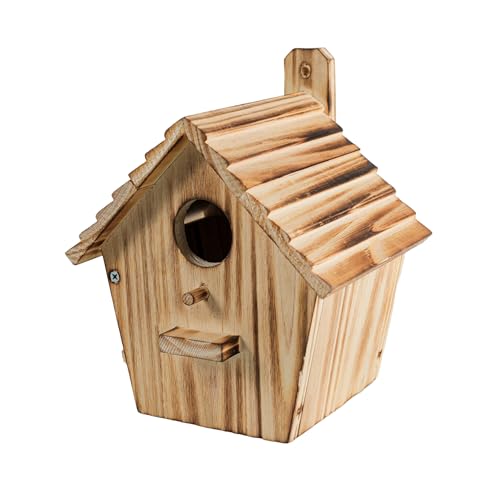
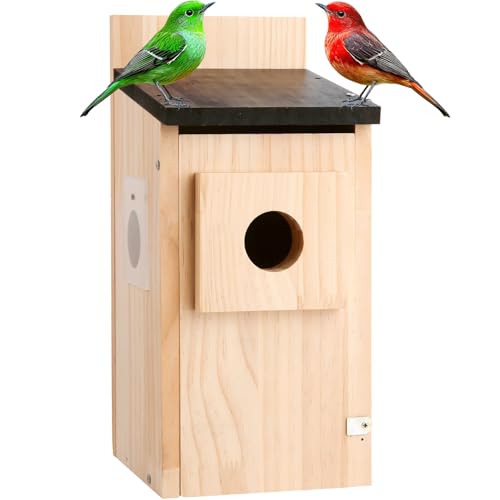
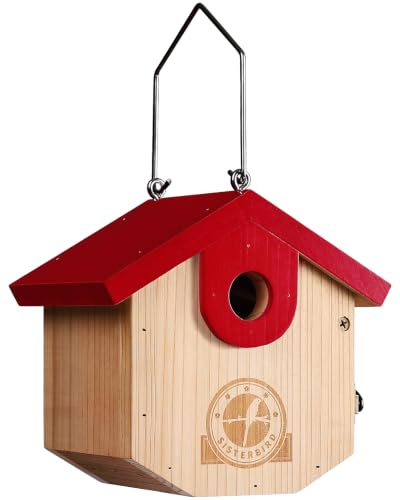
Buying Guide
Choosing the best chickadee birdhouses starts with understanding what black-capped and Carolina chickadees actually look for when they scout a cavity. They prefer snug interiors, modest entry diameters, and a quiet, sheltered spot away from heavy foot traffic. The picks in this guide lean on documented specifications—entry size, interior volume, predator defenses, and materials—rather than impressions, so you can match a box to the conditions of your yard.
H3 Entrance Size And Species Fit
Entry diameter is the single most important number for chickadee-friendly boxes. Most ornithology references put the ideal entry for chickadees between roughly 1-1/8 and 1-1/2 inches. The boxes in this guide document entries of 1.2 inches, 1-1/8 inches, 1.5 inches, 1.57 inches, and up to 1.75 inches on adjustable models. If you want to keep starlings and house sparrows out, stick near the lower end of that range. Multi-species yards may prefer the adjustable WLNYUGS model, which lists three interchangeable entry diameters.
H3 Predator And Weather Protection
Predator defense shows up in two places: guards at the entry and guards at the floor. The WHITEHORSE box documents a stainless-steel entry guard plus a wooden predator baffle and floor drainage holes. The Predimeza box uses a copper entry guard. The Rioychan and WHITEHORSE listings also describe groove or mesh features that help fledglings climb out. For weather, sloped roofs, recessed floors, vent holes, and treated or cedar wood all show up in the documentation. The Camii and WHITEHORSE boxes explicitly cite weather-resistant cedar.
H3 Materials And Durability
Wood choice drives longevity. Cedar is widely used for outdoor birdhouses because it resists warping and decay without heavy treatment. Pine is common, lighter, and easy to paint, but may need sealing for multi-year service. Recycled poly lumber, like the JCs Wildlife Wren Chateau, takes a different approach and is documented as water-resistant. Several products in this guide explicitly name cedar or poly to make the durability story clearer.
H3 Cleaning And Seasonal Reuse
Chickadees reuse boxes year after year only if old nests are removed after the breeding season. Most picks document a hinged or removable panel: the WHITEHORSE box has a bottom-hinged door, the Washlion and Predimeza boxes list front-access doors, the WLNYUGS box has a 180-degree side door, and the JCs Wildlife box has a removable base. Easy access matters more than any decorative feature for long-term success.
H3 Mounting And Placement
Mounting style affects both convenience and protection from predators. Several boxes ship fully assembled (Washlion, Predimeza), while DIY kits (Camii, Rioychan, Nashcom) need a screwdriver. Hanging rope or hooks are common; the Thyle two-pack includes a hemp rope, and the WLNYUGS box lists multiple mounting options including tree, wall, and pole. Yard, garden, or patio use determines whether a lighter pine box or a heavier cedar or poly model fits better.
H3 Multi-Chamber And Decorative Options
These designs broaden decorative appeal while still serving small cavity-nesters when the right entry is documented.
H3 Final Recommendation
Among all the boxes compared, the WHITEHORSE Cedar Birdhouse (NABS-Inspired) stands out as the first overall specification-based choice for anyone searching for the best chickadee birdhouses. Its cedar build, dado joints, 1.5-inch entry, stainless-steel entry guard, floor drainage, and hinged door form the most complete documented package for cavity-nesting songbirds. If you want a more flexible box that can adapt to different cavity-nesters, the WLNYUGS Adjustable-Entry Birdhouse is a strong alternative. For shoppers focused on weatherproof longevity, the Camii Cedar Nest Box and the recycled-poly JCs Wildlife Wren Chateau are well-documented picks. Together they form a solid shortlist of top chickadee birdhouses for 2026.
Final Recommendation
Among the top chickadee birdhouses, the ranked products differ under documented entrance fit for chickadees, predator and weather protection, material and durability, cleaning and seasonal reuse, nesting space and interior design, and mounting and placement flexibility.
The final choice among the best chickadee birdhouses depends on the documented features that match your intended use.
WHITEHORSE Cedar Birdhouse (NABS-Inspired) ranks first overall in this specification-based comparison under the published weighted criteria.
Frequently Asked Questions
What entrance hole size is best for the best chickadee birdhouses?
Most chickadee-focused guides suggest entries between about 1-1/8 and 1-1/2 inches. The picks above document entries at 1.2, 1-1/8, 1.37, and 1.5 inches, which fit chickadees while helping exclude larger starlings and house sparrows.
How high should the best chickadee birdhouses be mounted?
Manufacturer documentation for several picks recommends placing the box at least 5 to 10 feet off the ground, away from prevailing winds and heavy foot traffic. A sheltered orientation near natural cover is a common recommendation for cavity-nesting songbirds.
Which material is most weatherproof for chickadee birdhouses?
Cedar and recycled poly lumber are the most documented weather-resistant choices in this comparison. Pine models like the Washlion, Rioychan, and Nashcom boxes are lighter and easy to customize, but may benefit from sealing for long-term outdoor service.
How often should the best chickadee birdhouses be cleaned?
The picks with hinged, side, or removable doors support cleaning once per breeding season, ideally after fledglings leave. Models like the WHITEHORSE, Washlion, and JCs Wildlife boxes are described for repeated seasonal reuse when cleaned between nest cycles.
Do chickadee birdhouses need predator guards?
Entry and floor protection both help.