Buying Guide
The best commercial sewing thread is not one universal construction. Commercial sewing covers embroidery production, garment seams, serging, upholstery, leather goods, marine covers, and outdoor equipment. Those jobs use different thread weights and materials, so the first step is to identify the stitch and substrate rather than choosing by spool appearance alone.
Match the thread material to the job
Polyester is the most broadly represented material in this comparison. Simthread’s 40 WT spun-polyester cones are listed for serging, overlock work, hemming, seams, upholstery, canvas, and drapery. Ryalan also uses 100% spun polyester in 40S/2, a format positioned for both commercial and domestic machines. These are sensible starting points for general sewing where a moderate thread size and broad machine compatibility matter.
For machine embroidery, filament polyester formats are more appropriate to the documented use. SissewPro lists 120D/2 high-tenacity polyester in 40 WT, while Superpunch, New brothread, and BAI specify 40 WT polyester embroidery thread. These products are aimed at logos, patches, uniforms, apparel decoration, and other designs where stitch definition and color selection are central considerations.
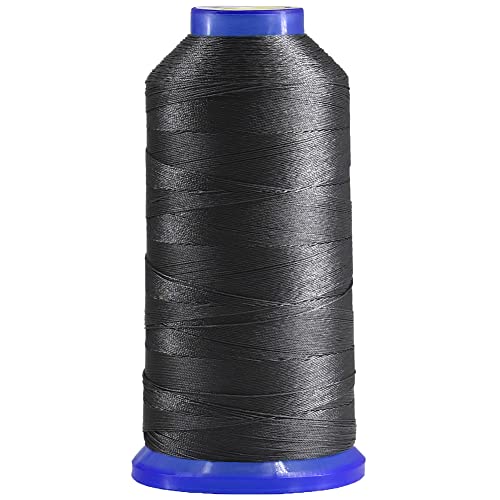
Bonded polyester and bonded nylon serve heavier applications. Simthread’s Tex 69 bonded polyester is explicitly aimed at outdoor upholstery, sails, tents, awnings, and patio materials, with UV resistance included in the listing. Selric’s #69 T70 bonded polyester covers upholstery, leather, canvas, luggage, and other heavy fabrics. Nylon options from Mandala Crafts and Selric document use with leather, marine covers, webbing, footwear, and structural stitching. Bonded construction is described as helping reduce unraveling and friction, but the correct needle, tension, and machine capacity still depend on the equipment.
Read thread size correctly
Embroidery thread is commonly described here as 40 WT, with related denier formats such as 120D/2. General sewing products use 40S/2, while heavy thread listings use Tex, T, denier, and ply labels. A higher heavy-thread designation generally signals a thicker construction within the supplier’s naming system, but the supplied listings do not establish a universal conversion across every numbering method.
For a general-purpose machine or serger, 40S/2 spun polyester from Simthread or Ryalan offers the clearest documented fit. For embroidery, the 40 WT polyester products are more directly aligned with the listed machines and applications. For leather, canvas, marine fabric, and upholstery, the Tex 69, T70, V46, or T90 options provide a heavier specification. Do not assume that a heavy upholstery thread will feed through an embroidery machine simply because both products are called sewing thread.
Check machine compatibility
Compatibility statements vary in specificity. BAI names 15-needle and multi-needle embroidery machines, while New brothread covers home, semi-industrial, industrial, and commercial embroidery machines. SissewPro discusses commercial and home embroidery machines and identifies its 120D/2 construction. These details make the embroidery selections easier to narrow.
For general sewing, Simthread names single-needle, serger, overlock, home, and commercial machines. Ryalan lists all-purpose machines, quilting machines, sergers, overlocks, and hand sewing. Heavy-thread products can also be machine-compatible, but their listings include setup guidance: Simthread’s Tex 69 listing recommends machine needle sizes 16 or 18, and the selected heavy options should be evaluated against the machine manual and the fabric thickness.
Long cones reduce interruptions during extended work. Simthread’s general sewing option lists four 5,000-meter cones, while SissewPro provides two 5,000-meter embroidery spools. Superpunch, New brothread, and BAI each document approximately 5,000-meter or 5,000-yard embroidery formats. These are well suited to repeat work and larger designs.
Heavy outdoor and upholstery thread is often supplied in shorter lengths because the thicker construction uses more material per seam. Simthread’s bonded polyester and Selric’s bonded polyester each list 1,500 yards. Selric’s T90 bonded nylon lists 1,300 yards, and Mandala Crafts lists 2,843 yards. These formats are more specialized than the long embroidery and general-sewing cones.
Account for color and exposure
Color choice is especially important for embroidery and visible upholstery seams. Superpunch documents 175 popular colors, New brothread provides color-conversion information, and BAI’s embroidery listing refers to batch color consistency, which is relevant when repeating a logo or uniform design.
Outdoor work calls for more than a matching shade. Simthread’s bonded polyester, Selric’s bonded polyester, and Mandala Crafts’ bonded nylon all document UV-related protection or outdoor applications. Nylon and polyester are not interchangeable in every project, and the listings do not establish identical behavior across materials. Select the construction that matches the exposure, fabric, and machine setup described by the supplier.
Use a practical selection checklist
Before ordering, confirm the machine type, needle range, thread size, material, spool dimensions, and color. For embroidery, verify that the machine accepts the listed 40 WT or 120D/2 format. For serging and overlock work, confirm that the cone shape and thread path fit the machine. For leather or upholstery, compare the thread’s Tex or T designation with the machine’s documented capacity. Finally, distinguish a single-color production spool from a multi-color repair set: both can be useful, but they support different workflows.
Final Recommendation
SissewPro 40 WT Polyester, 2 x 5000 m ranks first overall in this specification-based comparison under the published weighted criteria.
The final choice among the best commercial sewing thread depends on the documented features that match your intended use.
Simthread 40 WT Spun Polyester, 4 x 5000 m is the first overall specification-based choice because its listing combines broad commercial machine compatibility, 100% spun polyester, long cones, and applications spanning serging, upholstery, canvas, drapery, and general sewing. For embroidery production, SissewPro 40 WT Polyester and BAI Polyester Embroidery Thread provide the clearest high-yardage and multi-needle specifications. Superpunch and New brothread are especially useful when color planning matters.
For outdoor and marine work, Simthread Tex 69 Bonded Polyester and Mandala Crafts V46 Bonded Nylon document the most relevant exposure and heavy-fabric uses. Selric’s #69 polyester and T90 nylon address upholstery, leather, and canvas at different thread sizes. Together, these products represent the top commercial sewing thread formats in the supplied evidence without treating one construction as suitable for every machine or fabric.
Frequently Asked Questions
What is the best commercial sewing thread for general machine work?
Simthread’s 40 WT spun-polyester four-cone set is the most broadly documented option in this comparison. It is listed for single-needle, serger, overlock, home, and commercial machines and for sewing, hemming, upholstery, canvas, drapery, quilting, and regular sewing.
Which thread should I use for commercial embroidery?
Choose a 40 WT polyester embroidery product with a spool format suited to the run. SissewPro documents 120D/2 high-tenacity polyester and two 5,000-meter spools. BAI specifies 15-needle and multi-needle commercial machines, while New brothread covers home through commercial embroidery machines.
Is bonded polyester or bonded nylon better for upholstery?
The supplied evidence supports both, but the application details differ. Simthread Tex 69 bonded polyester and Selric #69 T70 polyester are documented for upholstery, canvas, and outdoor work. Mandala Crafts V46 and Selric T90 bonded nylon are positioned for leather, marine covers, webbing, footwear, and other heavy fabrics. Match the material to exposure, fabric, and machine capacity.
How much thread do I need for long production runs?
Look for the longest spool that fits the machine and matches the job. The selected general and embroidery products include formats from 1,300 yards to 5,000 meters. Longer cones reduce spool changes, while shorter heavy-thread spools are intended for thicker materials and specialized seams.
Can heavy upholstery thread run through any sewing machine?
No universal compatibility should be assumed. The selected heavy-thread listings identify machine use, but they also provide different sizes and needle guidance. Simthread’s Tex 69 listing recommends a size 16 or 18 machine needle, and the T90 nylon is a larger T90 #92 format. Check the machine manual and test setup with the fabric before starting production.