Buying Guide
For shoppers comparing best composite double-bowl kitchen sinks, the most useful starting point is not color or brand recognition. It is the relationship between the sink’s outside dimensions, bowl layout, cabinet requirement, mounting method, and the work you expect it to handle. The products above are specification-based selections from public listing data; they were not hands-on tested, and this guide does not summarize customer opinions.
Match the bowl layout to your routine
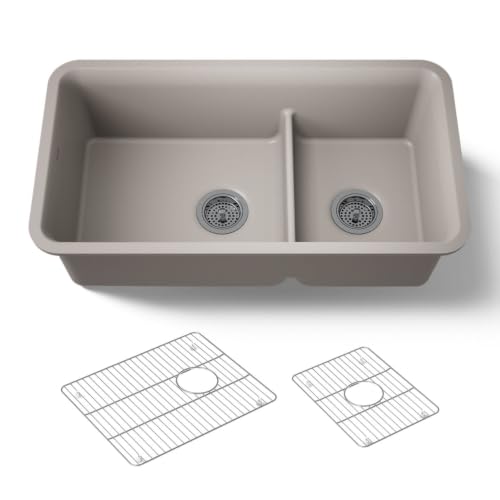
A 50/50 sink gives both bowls similar working space. That is useful when you regularly wash in one side and rinse or soak in the other, or when two people share the sink. The Karran QUWS-880, Karran QU-710, Kraus KGD-433B, Karran QU-810, and BLANCO Diamond 443068 all document equal-bowl arrangements.
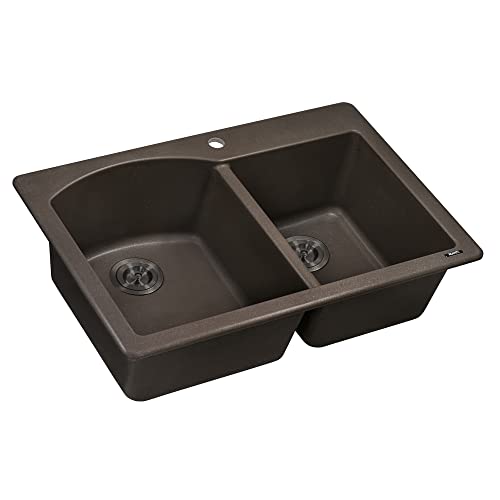
A 60/40 sink gives one basin more room. That arrangement is usually more suitable when large cookware, baking sheets, or stockpots are common. The Karran QU-811, Karran QU-610 family represented by the selected specification set, BLANCO Precis 441129, Ruvati RVG1344ES, and Kraus KGD-442 use unequal bowl formats. The smaller side can be convenient for rinsing or preparation, but it may be less useful for oversized items.
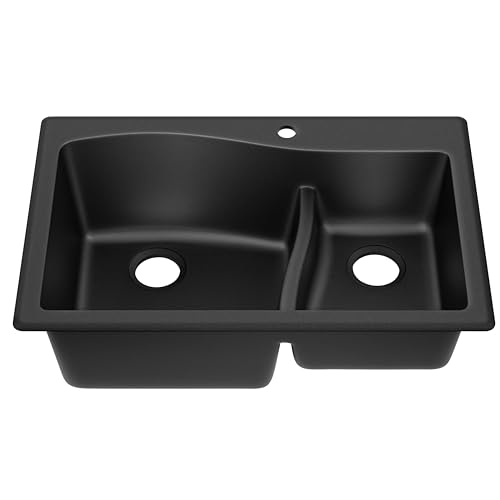
A low divider changes how a double bowl feels in daily use. It retains separate basins while allowing larger objects to extend across the center more easily. The Karran QUWS-880 and QU-811 document low-divide designs, while the Kohler Cairn identifies its lowered divider as Smart Divide. A standard-height divider may provide clearer separation, so choose according to whether cross-basin space or strict separation matters more.
Check mounting style and cabinet space
Undermount sinks sit beneath the countertop and create a continuous edge for wiping debris into the basin. Selected undermount models include the Karran QUWS-880, Karran QU-710, Kohler Cairn, Karran QU-811, Karran QU-810, and both BLANCO models. This format requires compatible countertop materials and accurate cutout planning.
Drop-in or top-mount models rest at the countertop opening and can be practical for replacements or surfaces that are not suited to undermount installation. The Ruvati RVG1344ES is a top-mount design, while the Kraus KGD-433B and KGD-442 document both drop-in and undermount options. Dual-mount flexibility is helpful, but it does not remove the need to verify the actual opening, faucet provisions, and support requirements.
Cabinet size is a critical check. Several 33-inch products specify a 36-inch minimum base cabinet, including the Kohler Cairn, Kraus KGD-433B, Ruvati RVG1344ES, and KGD-442. Measure the cabinet interior and compare it with the manufacturer’s installation documentation before ordering.
Compare composite construction claims
Composite sinks in this selection use quartz, granite, SILGRANIT, Neoroc, or related stone-and-resin terminology. Several Karran listings specify 80% natural quartz, while Ruvati identifies an 80% composite granite formulation. BLANCO describes SILGRANIT as quartz sand-based, and Kohler identifies Neoroc composite construction.
The listings commonly describe non-porous or smooth surfaces, matte finishes, sound absorption, and resistance to scratches, stains, impact, or chipping. These are documented product claims rather than independent test results. Treat them as specification indicators, not guarantees of how a sink will look after installation. Finish and color also affect the visual result: the selected products range from white and soft white to gray, concrete, café, matte taupe, espresso brown, and black.
Consider heat and everyday wear documentation
Heat claims vary. Karran products in this comparison document resistance up to 535°F, while the Kohler Cairn lists up to 750°F. Kraus listings describe heat resistance but also caution that extremely hot items may cause discoloration. That distinction matters: a technical heat statement should not be interpreted as permission to place every hot pan directly on the surface.
For general wear, look for specific documentation about stain, scratch, impact, abrasion, thermal shock, or chip resistance. The Karran, Kohler, Kraus, Ruvati, and BLANCO listings each provide some of these details. Use trivets or protective practices when the manufacturer’s instructions call for them, and check care guidance for dark or matte finishes.
Evaluate what comes in the box
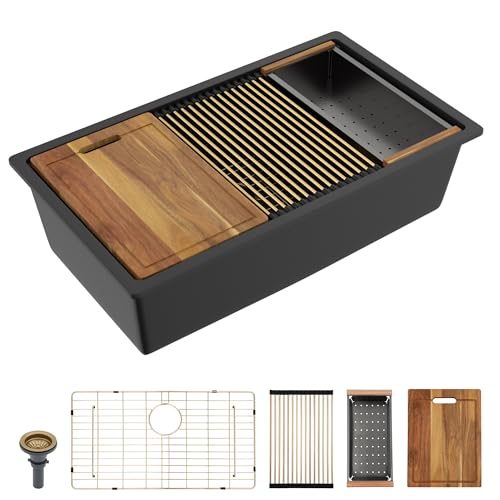
Accessories can change the installation checklist. The Karran QUWS-880 includes a cutting board, drying mat, colander, strainers, and coordinated accessories. The QU-811 and QU-810 include bottom grids and basket strainers, with the QU-811 also listing cleaning oil. Kohler includes bottom racks, templates, and clips. Kraus KGD-433B includes drain assemblies, strainers, hardware, and a template, while Ruvati includes matching basket strainers.
BLANCO’s selected models emphasize optional accessories, and the Diamond listing states that its basket strainer is sold separately. Confirm whether grids, drains, clips, templates, and faucet hardware are included before assuming the package is installation-ready. Accessory color can also matter when the sink includes matching or contrasting drain components.
Use the ranking as a specification screen
The ranking favors complete evidence across material, layout, fit, cleaning, accessories, and documented wear resistance. It does not use customer ratings, review totals, purchase activity, or marketplace labels. A lower-ranked sink may still be the better fit if its mounting method, footprint, bowl ratio, or finish matches your project more closely. Always compare the selected model’s technical sheet with your countertop opening and cabinet measurements.
Final Recommendation
Karran QUWS-880 32.5-inch Workstation Sink ranks first overall in this specification-based comparison under the published weighted criteria.
The Karran QUWS-880 is the first overall specification-based choice among these best composite double-bowl kitchen sinks because it combines a low-divide 50/50 layout, undermount installation, 80% quartz construction, rear drains, heat and wear documentation, and the most complete accessory package. It is especially compelling for a prep-oriented kitchen that can accommodate its dimensions.
The Kohler Cairn is the alternative when the documented heat rating and Smart Divide matter most, provided the 36-inch cabinet requirement works. For a conventional equal-bowl layout, the Karran QU-710 is simpler and well documented. The Karran QU-811 is a strong 60/40 kit, while Kraus KGD-433B is useful when drop-in and undermount flexibility are both important.
Among the top composite double-bowl kitchen sinks, the best final choice depends on the opening already in your countertop. Confirm length, front-to-back depth, bowl depth, drain position, cabinet width, faucet holes, and whether the selected package includes the strainers or grids you need. Those checks are more useful than choosing by finish alone.
Frequently Asked Questions
What should I check before choosing the best composite double-bowl kitchen sinks?
Check the available countertop opening, minimum cabinet width, mounting method, drain position, bowl dimensions, and included hardware. A 33-inch sink may still require a 36-inch cabinet, and an undermount model generally requires a compatible solid-surface countertop. Also verify whether the listing includes strainers, grids, clips, and templates.
Is a 50/50 or 60/40 composite sink better?
Neither layout is universally better. A 50/50 sink offers two similarly sized work areas and suits washing and rinsing in parallel. A 60/40 model gives one larger basin for cookware while retaining a smaller side for prep or rinsing. Low-divide designs add another choice by allowing larger items to extend across the center.
Are composite sinks resistant to hot cookware?
The selected listings document different heat-resistance claims, including 535°F for several Karran models and 750°F for the Kohler Cairn. Kraus also cautions that extremely hot items may cause discoloration. These are product specifications, not independent test results, so follow the manufacturer’s care instructions and use protective accessories when appropriate.
Do composite double-bowl sinks reduce noise?
Several selected listings describe dense quartz or granite composite construction as sound-absorbing or vibration-reducing. That information supports a potential noise-control benefit, but this comparison does not independently test sound levels. Installation, plumbing, water flow, and cabinet construction can also affect the experience.
Which accessories are most useful?
Bottom grids can help keep cookware off the basin floor, while basket strainers support drain use. Cutting boards, colanders, drying racks, and roll-up racks can turn a sink into a more active prep area. The Karran QUWS-880 has the broadest documented workstation package here; BLANCO models offer more optional-accessory flexibility but may require separate purchases.