Buying Guide
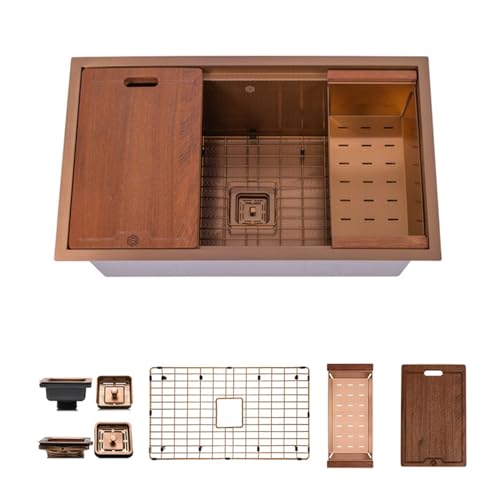
Choosing the best copper single-bowl kitchen sinks starts with separating solid copper from a copper-colored finish. The supplied listings include both types. Sinkology, Signature Hardware, Coppersmith Creations, and Monarch Abode describe their selected models as solid, pure, or 16-gauge copper. The Strictly Sinks workstation is different: its evidence describes T304 16-gauge stainless steel with a copper color. It remains useful in this comparison because its workstation function is well documented, but it should not be treated as a solid-copper sink.
Confirm the material description
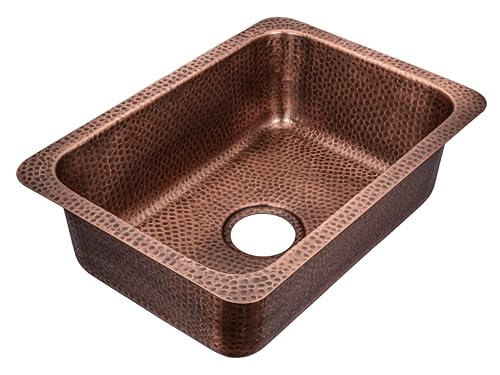
Copper gauge is one useful specification, but it is not the only consideration. The listings identify 16-gauge copper on the Orwell, Coppersmith D-Shape, and round bar sink, while the Angelico, Lange, and Raina models document 17-gauge copper. The gauge information helps distinguish the construction described by each listing, but it does not replace checking the complete product details for the exact finish and installation configuration.
A living copper finish is also part of the buying decision. The Orwell, Angelico, Lange, Coppersmith models, and Monarch Abode sinks describe finishes that develop or change patina with use. That can suit a farmhouse or rustic design, but it means the appearance is intended to evolve rather than remain identical to the initial antique or oil-rubbed presentation. If a consistent factory color is essential, review the care instructions and finish description before ordering.
Match the installation to the cabinet
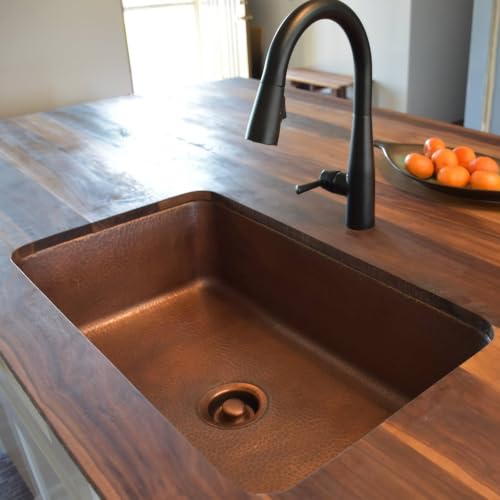
Installation type is a major dividing line among the top copper single-bowl kitchen sinks. Undermount models such as the Orwell and the Coppersmith round sink sit below the countertop and are intended to create a continuous counter edge. The Coppersmith D-Shape model combines undermount installation with a farmhouse apron, so cabinet planning is more involved than with a standard undermount basin.
Drop-in models such as the Angelico are designed to sit in a countertop cutout. The Angelico also lists three pre-drilled faucet holes, which matters when planning the faucet and accessories. Dual-mount models, including the Milan and Atlas, document both drop-in and undermount use. That flexibility can help with a remodel, but the final cutout, support structure, and faucet arrangement still need to match the selected installation.
Apron-front choices require the most attention to cabinetry. The Lange listing specifies a 36-inch base cabinet and says it is intended for new countertop and cabinet installations rather than drop-in retrofits. Both Raina models are identified as farmhouse installations requiring special cabinets with an exposed front. Measure the cabinet opening, countertop depth, apron clearance, and sink height rather than relying only on the nominal width in the product title.
Choose basin size for the work you do
A single bowl removes the divider between basins, giving one continuous area for cookware and food preparation. The largest selected formats are the Angelico at 33 inches, the Coppersmith D-Shape at 33 inches, the Lange at 32 inches, and the Raina models. The Orwell’s 30-by-18-by-8-inch basin is a more moderate everyday format while still being documented for stockpots, sheet pans, and oversized cutting boards.
Compact sinks serve a different purpose. The Milan measures 21 inches wide, the Atlas 15 inches, and the round Coppersmith model 14 inches in diameter. Their evidence emphasizes wet bars, beverage stations, islands, prep areas, and secondary kitchens. They are not direct substitutes for the larger farmhouse or main-kitchen basins. Choose one when counter space is limited or when the sink is supporting a specific prep zone.
Depth also affects usability. The Lange and Orwell list 8-inch depths, the D-Shape lists 9 inches, and the workstation lists a 10-inch height or depth in its supplied dimensions. The smaller Atlas lists a 6.25-inch height. Deeper bowls can provide more room for soaking, but cabinet clearance, plumbing position, and user reach should be checked during planning.
Decide whether workstation accessories matter
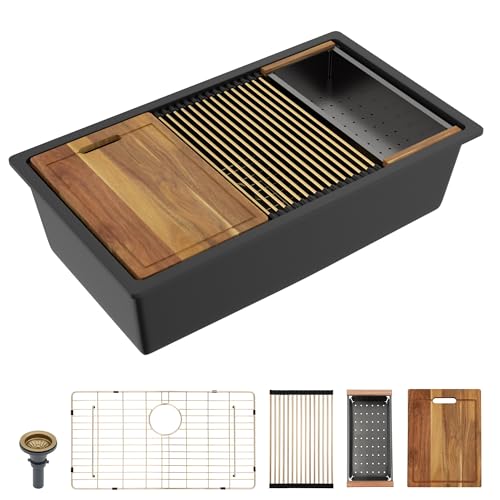
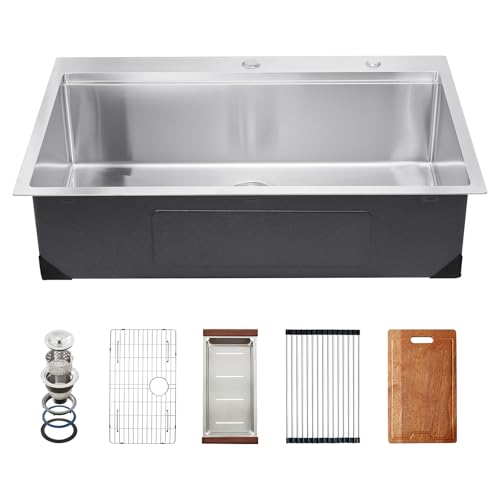
The Strictly Sinks 32-inch workstation is the most accessory-focused selection. Its package lists a wooden cutting board, colander, sink grate, disposal adapter, and strainer drain, while ledges create a track for the components. This format can turn the sink area into a prep surface, but accessories also need somewhere to be stored when the basin is being used normally.
The Orwell also documents a cutting board, colander, sink grate, disposal adapter, and strainer drain. The Milan, Atlas, and round Coppersmith models emphasize the basin and installation rather than a broad accessory package; the Milan and Atlas specifically note that drain and faucet components are not included. Confirm what is in the box before comparing otherwise similar sinks.
Consider sound and care details
Several selected listings document sound-dampening pads or undercoating. The Orwell, Lange, Strictly Sinks workstation, D-Shape, and round Coppersmith models specifically describe noise-reduction components or related undercoating. These are documented construction features, not a hands-on performance rating, so use them as specification differences rather than guarantees of a quieter kitchen.
Copper care should be considered alongside the finish. The supplied descriptions repeatedly present patina as a normal part of the material’s appearance. Monarch Abode also advises avoiding unspecified harsh care practices in the truncated listing evidence, so consult the complete care guidance for the exact model. A sink with hammered texture, a decorative apron, or a living finish may need a different cleaning approach from a plain stainless basin.
Final recommendation
Sinkology Orwell 30-inch Copper Undermount Sink ranks first overall in this specification-based comparison under the published weighted criteria.
Sinkology Orwell is the highest-scoring returned product and the first overall specification-based choice among the best copper single-bowl kitchen sinks. Its documented 16-gauge copper construction, practical 30-inch undermount format, sound-dampening pads, and drain compatibility give it the broadest everyday fit in this comparison.
Choose the Angelico when a large drop-in basin and three-hole faucet layout suit the countertop. The Lange, Raina 30-inch, Raina 36-inch, and Coppersmith D-Shape are better matched to farmhouse projects where apron-front styling and cabinet preparation are central. For smaller spaces, the Milan offers a more usable compact footprint than the Atlas or round bar sink, while the Atlas is the most space-constrained option.
The top copper single-bowl kitchen sinks are not interchangeable by size or installation. Verify whether the listing describes solid copper or copper-colored stainless steel, then confirm the cutout, minimum cabinet dimensions, faucet holes, drain components, and finish-care requirements for the exact model.
Frequently Asked Questions
What should I check first when choosing the best copper single-bowl kitchen sinks?
Check the material description and installation type first. The selected products include solid or pure copper models as well as a copper-colored T304 stainless-steel workstation. Then compare cabinet requirements, countertop cutout dimensions, bowl size, and whether the required drain or faucet components are included.
Are copper single-bowl sinks suitable for a farmhouse kitchen?
Yes, several selected products document farmhouse or apron-front designs. The Lange, both Raina models, and the Coppersmith D-Shape sink are examples. These formats require more cabinet planning than a standard drop-in sink, and the Lange specifically lists a 36-inch base cabinet requirement.
Is a 14- or 15-inch copper sink large enough for a main kitchen?
The supplied evidence positions the 14-inch round Coppersmith sink and 15-inch Atlas as prep, bar, beverage, island, or secondary-kitchen sinks. Their compact bowls may not provide the same cookware capacity as the 30- to 33-inch models. Use the smaller formats when space or task specialization is the priority.
Do copper sinks keep the same color over time?
Not necessarily. Multiple selected listings describe a living finish that develops patina with use. That evolving appearance is part of the documented design for models such as the Orwell, Lange, Angelico, Coppersmith, Milan, and Atlas. Review the model-specific care information if finish consistency is important.
What makes a workstation sink different?
A workstation sink uses ledges or tracks to support components over the bowl. The Strictly Sinks 32-inch model lists a cutting board, colander, grate, disposal adapter, and strainer drain. This can add prep functionality, but it also means checking accessory storage, ledge clearance, and the distinction between copper color and solid copper construction.