Buying Guide
Cork trekking poles have become a quiet upgrade for hikers who want better grip comfort on long days. Cork handles absorb sweat, conform to your hand shape over time, and reduce vibration on rocky terrain, which is why so many of the best cork trekking poles pair cork with a secondary EVA foam extension for choke-up grip on climbs. The result is a grip system that stays cool in summer, stays usable when wet, and works well for both short day hikes and multi-day backpacking trips. This guide walks through the practical specs and design choices that matter when comparing the top cork trekking poles, then ends with a final recommendation and frequently asked questions.
Matching Shaft Material to Your Terrain
The first spec to check is the shaft material, because it drives both weight and stiffness. Carbon fiber shafts, found on the Hiker Hunger 3K Carbon Fiber, Black Diamond Alpine Carbon Cork, Foxelli Carbon Fiber, and Trekology 3K Carbon Fiber poles, are noticeably lighter and absorb more vibration. If your priority is shaving grams on long-distance routes, carbon fiber is the better choice. If you frequently brush against rocks or pack your poles tightly, aluminum is the safer pick.
Locking Mechanism and Adjustability
Lock style is the next practical detail. External lever locks, such as the Speed Lock Plus on LEKI poles, the FlickLock on Black Diamond poles, and the metal flip locks on Hiker Hunger, Foxelli, and Trekology poles, are usually faster to adjust with gloves and easier to tighten over time. Internal lever locks and twist locks exist, but the cork poles in this comparison almost universally use an external lever or flip lock. Pay attention to the length range as well. The Hiker Hunger 3K Carbon Fiber and Black Diamond Trail Cork offer the widest ranges in the field, which helps if multiple family members share the poles or if you switch between steep descents and flat trail sections.
Weight, Pack Size, and Travel Use
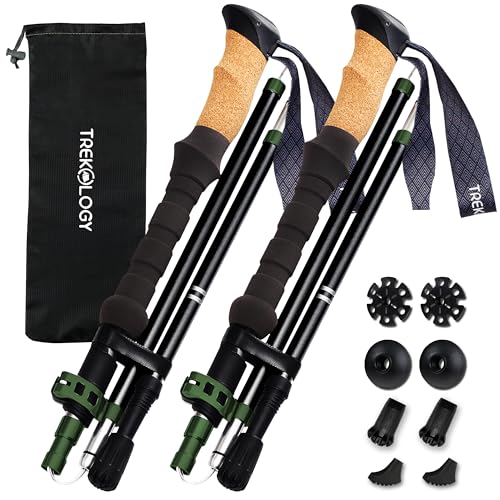
For backpackers and travelers, per-pole weight and collapsed length are real-world factors. The Fizan Compact 3 is the lightest at 5.6 oz per pole, while the Trekology 3K Carbon Fiber and the carbon Foxelli pole are around 7.4 to 7.6 oz. If you fly with your poles, a folding design like the TREKOLOGY Trek-Z collapses to about 15 inches, which is easier to fit in luggage than a typical 24 to 25 inch telescoping pole. Ultralight users should also check whether the pole is sold as a pair or as a single unit, since some listings in this category list a unit count of one.
Grip, Strap, and Choke-Up Comfort
Cork grip design is the headline feature, but the strap and extension matter just as much. The best cork trekking poles in this list pair the cork grip with an EVA foam extension, so you can choke up on sidehill traverses and switchbacks without changing pole length. Padded or wide wrist straps, like those on the Hiker Hunger, Foxelli Carbon, and LEKI poles, reduce fatigue on long downhills. The Black Diamond Trail Cork and Alpine Carbon Cork add dual-density grip tops and foam sleeves, which give a softer feel right where the palm rests.
Tip, Basket, and All-Season Versatility
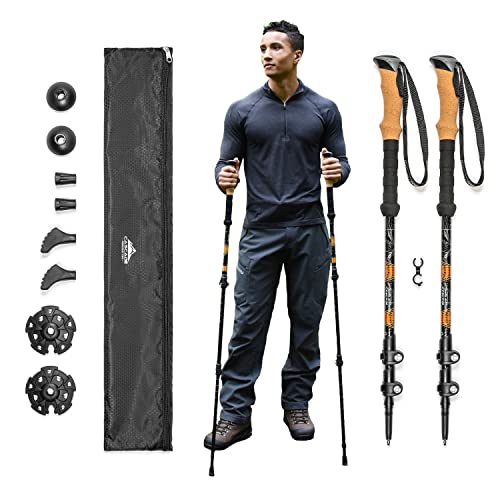
Most trekking poles ship with carbide tips and at least one basket set, but the accessory package varies. Black Diamond, Cascade Mountain Tech, and Trekology include multiple tip and basket options for rock, mud, and snow. LEKI pairs the poles with trekking and tour baskets sized for the shaft. For four-season use, look for interchangeable carbide Tech Tips and rubber feet so the poles can move between summer trails and winter snowshoes. The Foxelli and Trekology carbon fiber poles ship with the broadest accessory kits in the field.
Fit and Sizing
Trekking poles are usually sized to a 90 degree elbow angle at your normal walking height. Most poles in this comparison cover that range across different sizes, but the Hiker Hunger Premium Foldable offers two specific size ranges for people under and over 5'9". Always check the collapsed length if you plan to strap the poles to a backpack, and aim for the longest length to be at least a few inches taller than your height for steep sections.
Final Recommendation
Hiker Hunger 3K Carbon Fiber Trekking Poles ranks first overall in this specification-based comparison under the published weighted criteria.
The final choice among the best cork trekking poles depends on the documented features that match your intended use.
Among the top cork trekking poles in this comparison, the Hiker Hunger 3K Carbon Fiber Trekking Poles stand out as the first overall specification-based choice, thanks to a 3K carbon fiber shaft at 7.6 oz per pole, a cork plus EVA foam grip system, metal flip locks, and a 24 to 55 inch length range. The Black Diamond Alpine Carbon Cork and Foxelli Carbon Fiber are the next most specification-aligned options for hikers who want a complete carbon setup with a more elaborate accessory kit, and the LEKI Makalu Cork Lite is the pick for users who prefer aluminum with Speed Lock Plus levers. If pack size matters most, the TREKOLOGY Trek-Z folds to 15 inches for travel, while the Fizan Compact 3 is the lightest at 5.6 oz per pole. Together, these picks represent the cork trekking poles for hiking, backpacking, and alpine travel available in this category.
Frequently Asked Questions
Among the best cork trekking poles, are cork trekking poles better than foam or rubber grips?
Cork handles absorb sweat and conform to your hand shape, which keeps the grip comfortable on long, hot days. Foam grips are softer but wear out faster, and plain rubber grips can feel slippery when wet. The best cork trekking poles pair the cork with an EVA foam extension, so you get moisture management plus a softer choke-up grip on climbs.
What is the best cork trekking pole for thru-hiking?
For thru-hiking, weight is the priority, and the Fizan Compact 3 at 5.6 oz per pole and the Trekology 3K Carbon Fiber at about 7.4 oz per pole are the lightest options in this comparison. Pair that weight with a telescoping or folding design that fits your pack, and you have the main specs to focus on.
How do I choose between carbon fiber and aluminum cork trekking poles?
Carbon fiber is lighter and absorbs more vibration, which is ideal for long-distance and fastpacking routes. Aluminum is heavier but more durable when poles are stored on packs or bumped against rocks, which is why aluminum models like the Black Diamond Trail Cork and Cascade Mountain Tech are popular for rugged day hikes. If you want a balance of both, the LEKI Makalu Cork Lite uses aluminum with a refined Speed Lock Plus lever.
Are cork handles durable enough for multi-day use?
Cork is a natural material that wears slowly with normal use and can outlast foam grips. The cork grips on the Black Diamond Alpine Carbon Cork, Hiker Hunger 3K Carbon Fiber, and LEKI Makalu Cork Lite are paired with foam extensions, which protect the cork from heavy choke-up use. Treated with reasonable care, cork handles on trekking poles typically hold up across many seasons of hiking.
Which cork trekking poles pack smallest for travel?
The TREKOLOGY Trek-Z folds down to about 15 inches, while the Fizan Compact 3 collapses to a short three-section length for stashing in pack pockets. Telescoping cork poles like the Trekology 3K Carbon Fiber and Cascade Mountain Tech are tougher to pack small, so travelers often prefer a folding cork pole for flights and luggage.