Buying Guide
The best dirt bike powersports sprockets are selected by compatibility first, not by appearance. A sprocket is only useful when its chain pitch, tooth profile, shaft or hub dimensions, and drive position match the motorcycle. The listings in this comparison cover front and rear designs, with most of the detailed small-bike choices using 420 chain. One selected front option uses 428 chain, while the JT front examples include a 525-pitch specification or leave pitch unstated.
Start with chain pitch
Chain designation is the first filter. The CQSPMOTO, AuryngMD, EATAKWARD, YD-PS001, and ZTDZZH listings identify 420 applications. The Saihisday product identifies 428, and the JT JTF1370.16 identifies 525 pitch. These designations should not be treated as interchangeable.
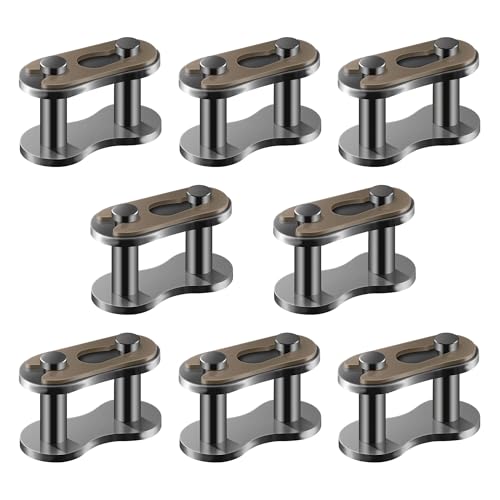
The EATAKWARD set is the only selected complete kit that explicitly includes a chain with front and rear sprockets. That can help keep the chain and sprocket pitch aligned, but the listing does not state the front-sprocket tooth count. For an individual replacement, the CQSPMOTO and Saihisday listings make the chain specification and front position easier to identify.
Confirm front or rear position
Front sprockets mount at the engine or countershaft and are usually described by tooth count plus inner-bore or shaft dimensions. CQSPMOTO is a 14-tooth front sprocket with a 17mm inner bore. Saihisday is a 12-tooth front sprocket with a 17mm inner diameter. The Supersprox listing identifies a 14-tooth front sprocket for KTM EGS applications, while the JT models provide 13- and 16-tooth front formats.
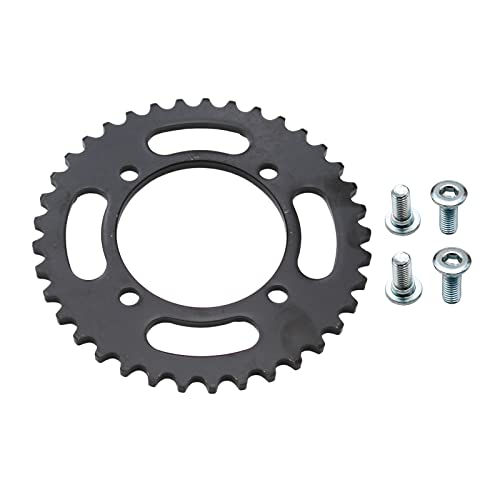
Rear sprockets use a hub-side mounting pattern. AuryngMD lists 41 teeth, a 76mm inner diameter, 92mm center spacing, four mounting holes, and 9mm bolt holes. YD-PS001 lists 37 teeth, an approximately 76mm center hole, and approximately 65mm mounting-hole spacing. ZTDZZH lists 60 teeth, a 76mm inside diameter, 92mm center spacing, and 8.5mm mounting holes. Compare these measurements with the original component rather than relying only on engine displacement or brand names.
Treat tooth count as a gearing choice
Tooth count changes the relationship between the front and rear sprockets. This comparison does not claim a particular acceleration, speed, or riding result, because the supplied evidence does not include testing. Instead, use the original tooth counts as a reference and verify any intended change against the motorcycle’s chain length and adjustment range.
The selected rear options range from 37 teeth on the YD-PS001 to 60 teeth on the ZTDZZH. AuryngMD lists 41 teeth, while JT lists 50 teeth. The front options range from 12 teeth on Saihisday to 16 teeth on JT JTF1370.16. These numbers show why a correct pitch alone is insufficient: two 420 sprockets can still differ substantially in tooth count and physical fit.
Compare material and construction claims
Material descriptions vary considerably. CQSPMOTO specifies heat-treated #45 high-strength steel. AuryngMD, YD-PS001, and the EATAKWARD set identify steel or heat-treated construction without providing a steel grade.
Supersprox documents additional design features: an ultra-hard surface layer, radial holes, and grooved teeth for off-road applications. These are listing specifications, not independently verified performance results. They are useful for comparing stated construction approaches, but they should not be read as a guarantee of service life or chain behavior.
Check dimensions before ordering
The most detailed listings still require a final comparison with the motorcycle. For a front sprocket, check chain pitch, tooth count, shaft or bore diameter, thickness, retainer style, and bolt spacing where applicable. CQSPMOTO provides all of those categories except a vehicle-specific guarantee. For a rear sprocket, compare inside diameter, outer diameter, center-to-center spacing, number of mounting holes, and bolt-hole diameter. AuryngMD and ZTDZZH provide the clearest rear measurements.
Also check whether the listing describes a complete set or a single component. EATAKWARD includes multiple components, while most other selected products are single front or rear sprockets. The package contents matter when replacing related parts, but they do not replace measuring the existing assembly.
Match the application range
Fitment language is helpful but should be treated as a starting point. Supersprox names KTM EGS models from 125cc through 380cc. CQSPMOTO and AuryngMD list broad small-bike ranges, and Saihisday names 50cc through 160cc applications. YD-PS001 lists several Chinese pit-bike and ATV brands. JT’s listings are more model- and part-number-focused, so the exact motorcycle record is especially important for those products.
Final Recommendation
CQSPMOTO 420 14T 17mm Front Sprocket ranks first overall in this specification-based comparison under the published weighted criteria.
CQSPMOTO 420 14T 17mm Front Sprocket is the highest-scoring returned product and the first overall specification-based choice. For shoppers comparing the best dirt bike powersports sprockets, it provides the most complete combination of 420-chain identification, tooth count, bore, thickness, bolt spacing, material, and included retention hardware.
Supersprox is the more specialized documented option for the listed KTM EGS applications, particularly where grooved teeth and radial lightening holes are relevant design distinctions. AuryngMD is the clearest measured rear option, while YD-PS001 provides a straightforward 37-tooth 420 replacement with useful approximate dimensions. EATAKWARD is the practical complete-set format, but buyers should confirm the front-sprocket details before ordering.
The top dirt bike powersports sprockets in this list are not universal parts. Select by chain pitch and drive position first, then compare tooth count, bore or hub measurements, mounting geometry, and the exact vehicle application. The listing evidence supports comparison, but final fitment remains the buyer’s responsibility.
Frequently Asked Questions
What should I verify before choosing the best dirt bike powersports sprockets?
Verify whether the part is front or rear, confirm chain pitch, count the teeth, and measure the shaft bore or rear mounting pattern. For rear parts, compare inside diameter, center spacing, bolt-hole diameter, and the number of holes. For front parts, check bore, thickness, retainer arrangement, and bolt spacing when listed.
Are 420 and 428 sprockets interchangeable?
No. The selected listings identify 420 and 428 as different chain formats. CQSPMOTO, AuryngMD, EATAKWARD, YD-PS001, and ZTDZZH are listed for 420 applications, while Saihisday is listed for 428. Confirm the chain designation and sprocket thickness against the motorcycle before installation.
Which selected sprockets provide the clearest dimensions?
CQSPMOTO gives detailed front dimensions, including a 17mm bore, 6mm thickness, and 30mm bolt spacing. AuryngMD supplies several rear dimensions, including 76mm inner diameter, 169mm outer diameter, 92mm center spacing, and 9mm bolt holes. ZTDZZH also lists 76mm inside diameter, 92mm center spacing, and 8.5mm mounting holes.
Is a complete sprocket set better than a single replacement?
A complete set can align the listed chain and sprocket format because the EATAKWARD kit includes a 420 chain, front and rear sprockets, plates, and screws. However, the kit’s exact front tooth count is not stated. A single replacement may be more appropriate when only one sprocket is being changed, provided its dimensions and tooth count match the existing setup.
What is the difference between front and rear tooth counts?
Front and rear sprockets perform different positions in the drive system, so their tooth counts should be compared with the motorcycle’s original configuration rather than treated as interchangeable. The selected listings show front counts from 12 to 16 teeth and rear counts from 37 to 60 teeth. Any change should be checked against chain length, adjustment range, and the intended motorcycle fitment.