Buying Guide
Choosing among the best dpdt pushbutton switches starts with the circuit, not the button shape. DPDT means double-pole, double-throw: the device can route two separate circuits between two outputs. That description alone does not tell you whether the switch is momentary or maintained, how it mounts, or what load it can handle. The listings in this comparison cover all of those differences, so check each specification against the project before ordering.
Look for explicit DPDT, 2P2T, 2NO 2NC, and six-pin language. DIYhz identifies its switch as standard 2P2T and non-shorting, while ZGSZJHF specifies 2NO and 2NC contacts. Those details are more useful than relying only on a title that says “six pin.” A six-pin layout can still require a wiring diagram or continuity check before installation, especially when a listing describes multiple contact options.
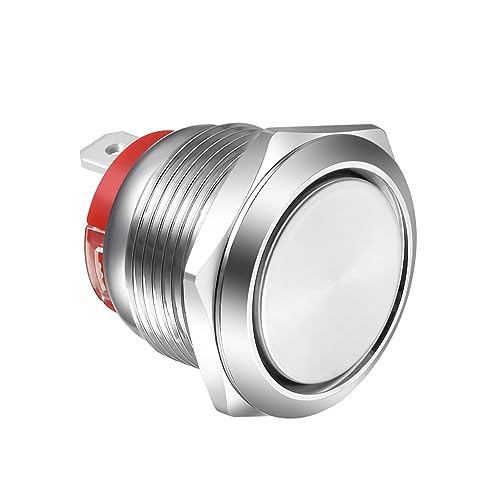
The 22mm uxcell listing goes further by identifying DPDT, 2NO, 2NC, and a common contact. That makes it easier to compare with a circuit diagram. The ZJWZJH listing needs closer attention because it describes the default contact as SPDT and says a supplied contact can be added for 2NO 2NC DPDT operation. Treat the actual contact arrangement included with the package as part of the buying decision.
Choose momentary or latching action
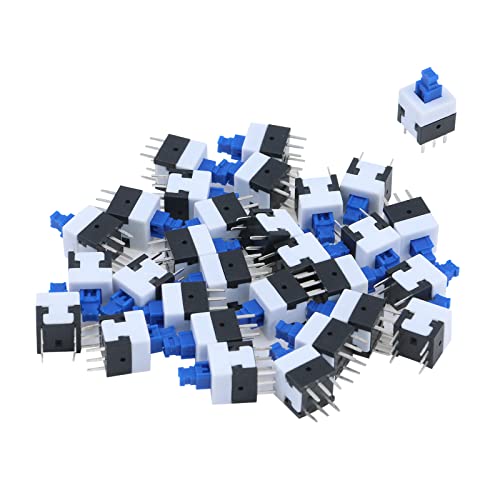
Action type determines how the circuit behaves after you release the button. A momentary switch changes state only while pressed. Cylewet and the 7mm uxcell pack are documented as momentary, making them appropriate for temporary inputs, jog controls, or trigger-style circuits. A latching or self-locking switch stays in its new state after a press. The DIYhz, ZGSZJHF, XINGYHENG, Antrader, and 22mm uxcell products document maintained operation.
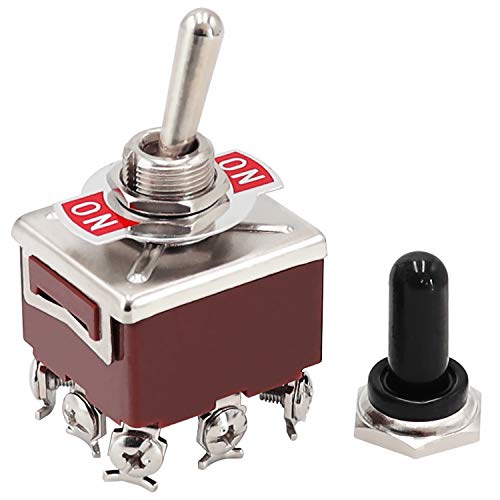
The ESUPPORT stomp switch is also latching, but it is actuated by foot and intended for effects pedals. Do not substitute it for a miniature PCB component simply because both products are DPDT. If the circuit needs a temporary reverse, start, or jog command, choose a momentary design. If it needs a maintained on/off state, choose latching action.
Match the electrical rating
A DPDT switch should be rated for the voltage and current in the circuit. The documented options vary considerably. DIYhz states DC 12V and 3A. ZGSZJHF states DC 30V and 0.5A. The 22mm uxcell lists 250V and 5A, while ESUPPORT lists 250V AC at 2A and 125V AC at 4A. These are not interchangeable figures: AC and DC ratings may differ, and a rating stated for one load type should not automatically be applied to another.
Several miniature products, including XINGYHENG, Antrader, and the 30-piece uxcell pack, do not provide a voltage or current figure in the supplied evidence. That does not prove they are unsuitable, but it means the available listing data cannot establish a safe load match. For those products, verify the manufacturer’s complete datasheet or use them only where the circuit requirements are already known and appropriate.
Plan the mounting method and available space
Miniature switches are not automatically interchangeable. The ZGSZJHF part has a 5.8mm body and upright through-hole PCB mounting. DIYhz is intended for PCB soldering and electronic repairs. The XINGYHENG and Antrader products use compact 8mm-class bodies, while the Cylewet product identifies a 6mm thread diameter. Measure the board footprint, pin pitch, hole spacing, and available height before choosing a replacement.
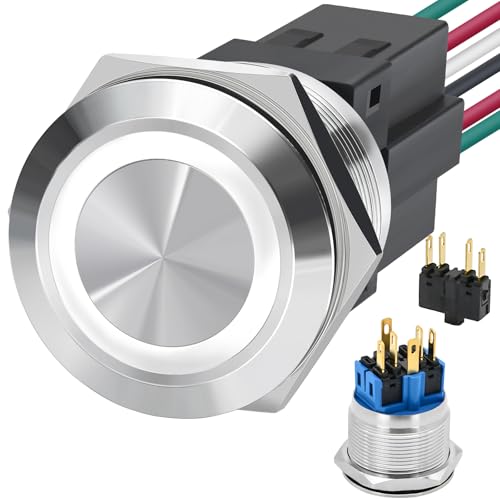
Panel switches use a different installation approach. The 22mm uxcell requires a 22mm mounting hole, and the ZJWZJH product requires a 25mm opening. Both are much larger than the micro switches. The ZJWZJH switch also includes a wire socket and wires, which may simplify panel wiring, but its listing says the default contact is SPDT and that a black contact is added for DPDT operation. Review the supplied contact arrangement carefully before connecting power.
Consider environmental protection and construction
For exposed control panels, the ZJWZJH switch has the clearest environmental specification: IP67 protection and a 304 stainless-steel shell. The 22mm uxcell listing says its housing is waterproof and suitable for wet or dusty environments, although it does not provide an IP code. These claims are useful distinctions, but they should not be generalized to the miniature plastic-and-metal PCB switches.
Micro switches are generally selected for footprint and circuit-board integration rather than enclosure sealing. The Cylewet, DIYhz, uxcell miniature, XINGYHENG, Antrader, and ZGSZJHF listings emphasize compact construction, pins, caps, or electronic applications. If the switch will be exposed to dust, spray, or outdoor conditions, use a product with documented protection and design the surrounding enclosure accordingly.
Evaluate the package size
Package quantity matters when a project needs spares or repeated assembly. XINGYHENG offers 100 pieces, the 7mm momentary uxcell pack offers 55, and several others provide 25 to 30 pieces. These sets can suit prototyping, repair stock, classroom work, or production batches. Cylewet and ESUPPORT offer smaller multipacks, which may be more practical when only a few switches are needed.
A large package is not automatically better. Confirm that the action, dimensions, and rating fit the actual design. Included caps can also matter: DIYhz includes black caps, while ZGSZJHF includes two cap sizes. Those additions may help with assembly, but they do not replace checking the switch body, pin geometry, and electrical limits.
Wiring and fit checks before installation
Disconnect power before wiring. Identify the common, normally open, and normally closed terminals from the product diagram or a continuity check. For panel parts, compare the hole diameter, body depth, head shape, and connector clearance. For PCB parts, compare pin pitch, pin length, orientation, and whether the switch is momentary or self-locking. When the listing contains conflicting or conditional configuration language, such as the ZJWZJH contact note, treat the physical contact supplied with the package as part of the selection decision.
Final Recommendation
DIYhz PS-22F02-NF DPDT PCB Switches ranks first overall in this specification-based comparison under the published weighted criteria.
DIYhz PS-22F02-NF DPDT PCB Switches is the highest-scoring returned product and the first overall specification-based choice among the best dpdt pushbutton switches. Its documented 2P2T six-pin design, 12V DC 3A rating, non-shorting action, operating-temperature range, and included caps make the evidence unusually complete. It is especially suitable for bulk PCB work rather than a weather-exposed panel.
For illuminated panel controls, the 22mm uxcell is the more focused option because it documents DPDT 2NO 2NC contacts, a 24V blue LED, latching action, and a 22mm mounting hole. ZJWZJH is the better fit when IP67 protection and a stainless-steel shell are priorities, but its default-contact wording means the buyer should verify the DPDT setup before wiring.
For compact electronics, ZGSZJHF, XINGYHENG, Antrader, and the miniature uxcell products offer different package quantities and body sizes. The best choice depends on whether you need momentary or maintained action and whether the circuit’s load is documented. Cylewet provides a useful middle ground with a 6mm threaded format and momentary DPDT action. For a pedal, ESUPPORT is the most purpose-specific option because its latching stomp design is intended for foot operation.
These are the top dpdt pushbutton switches in this comparison based on supplied specifications, not hands-on testing. Before purchase, confirm the wiring diagram, electrical rating, mounting dimensions, and whether the product’s stated contact arrangement matches the intended circuit.
Frequently Asked Questions
A DPDT switch controls two poles and provides two throws for each pole, allowing two circuits or a polarity-reversing arrangement to be routed. An SPDT switch controls one pole with two throws. The product listing should identify the configuration clearly; six pins alone are not sufficient evidence without a contact description or diagram.
Choose momentary action when the circuit should operate only while the button is pressed. Choose latching or self-locking action when one press should maintain the state until a second press. Cylewet and the 7mm momentary uxcell are documented momentary examples. DIYhz, XINGYHENG, Antrader, and the 22mm uxcell are documented latching examples.
Are the best dpdt pushbutton switches suitable for mains voltage?
Not automatically. Some selected products state AC ratings, including the 22mm uxcell, ZJWZJH, and ESUPPORT. Several miniature products do not provide a complete electrical rating in the supplied evidence. Match the voltage, current, AC or DC type, load behavior, insulation, and enclosure requirements before using any switch in a hazardous circuit. Consult a qualified electrician for mains applications.
Start with the board footprint and pin geometry. ZGSZJHF documents a 5.8mm upright through-hole format, while the miniature uxcell, XINGYHENG, and Antrader products use approximately 7mm to 8mm bodies. Check pitch, pin length, orientation, and body height rather than comparing nominal button diameter alone.
Only if you want illumination. The 22mm uxcell and ZJWZJH products include documented 24V LED features, but the LED circuit still needs a compatible supply and correct wiring. A switch can perform its DPDT function without using the lamp, provided the terminals and contact configuration are wired according to the product documentation.