Buying Guide
The best eco-friendly incense holders are not defined by one material alone. A useful comparison should consider construction, ash management, incense compatibility, placement, and cleanup. The products above include small ceramic rests, long wood or bamboo trays, decorative ceramic dishes, and suspended glass catchers. These formats address different needs, so the right choice depends on how you burn incense.
Start with the material
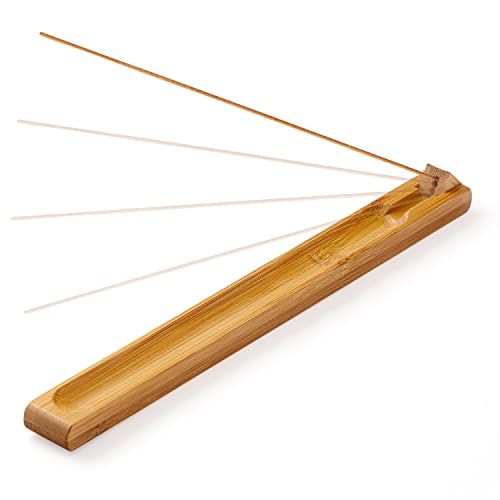
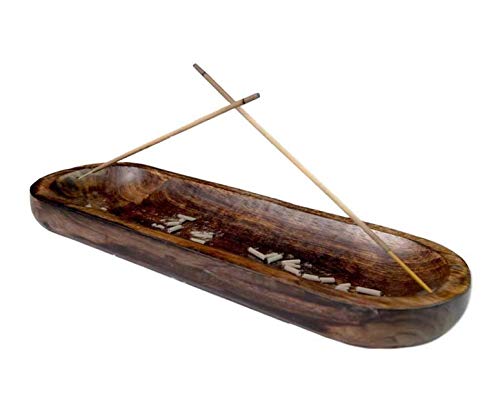
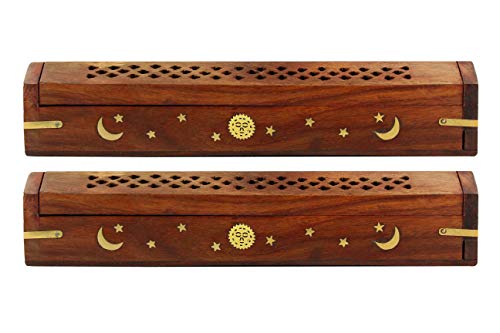
Natural wood and bamboo are prominent in this group. Cacukap and SIGZKK use bamboo, while ZYNTIX, raajsee, VANIYA CRAFTS, and GARMOLY document wood components. Mango wood appears in the ZYNTIX tray, and GARMOLY pairs a wooden base with brass and glass. These materials suit buyers seeking a natural look, but a wood holder should still be placed on a heat-resistant surface and kept away from flammable objects. The supplied listings do not establish that any wood product is fireproof.
Ceramic and stoneware provide a different visual and practical profile. Murphy’s Naturals documents natural ceramic, while Pinehaven and RGBDOT describe ceramic bodies with decorative finishes. The Asayu Japan set uses a ceramic blend containing magnesium compounds, natural persimmon tannin, and trace dyes from coffee grounds, rice husks, and onion skins. RGBDOT also documents packaging made from recycled materials. These details may matter to shoppers considering both product construction and packaging.
Check compatibility before choosing a design. Asayu Japan is explicitly for stick-type incense. The bamboo and long wooden trays are also primarily stick holders, even when their descriptions discuss meditation, yoga, or outdoor use. Murphy’s Naturals is likewise documented for incense sticks, with compatible sticks sold separately.
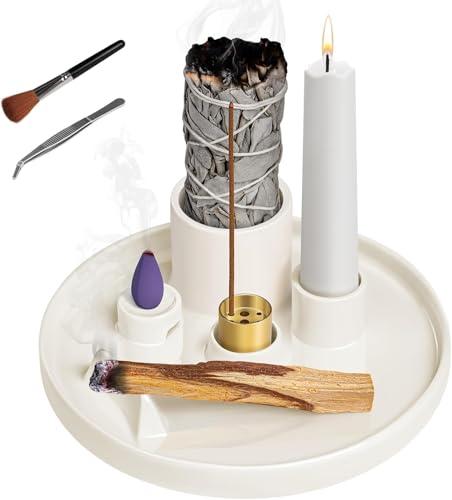
Pinehaven and RGBDOT offer broader documented compatibility. Pinehaven lists sticks, cones, sage, and Palo Santo, and its removable brass insert has nine holes in graduated sizes. RGBDOT lists sticks, cones, sage, and Palo Santo as well. GARMOLY is designed around suspended sticks rather than a general-purpose bowl. Do not assume multi-fuel support unless the listing states it.
Think about ash containment
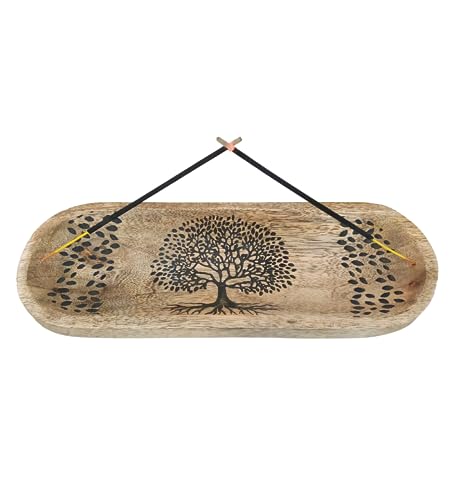
A simple stick rest leaves ash exposed on a tray or dish. Long troughs such as ZYNTIX, raajsee, and VANIYA CRAFTS provide a broad path beneath the stick. VANIYA CRAFTS specifically describes a deep trough, while ZYNTIX describes an 11-inch tray that catches ash from two angled sticks. These shapes work well when you want a low, horizontal display.
Bowls and dishes provide another approach. Murphy’s Naturals documents a 4.5-inch diameter, and Pinehaven describes a deep dish with a 1.14-inch interior depth. These options can be easier to position in a central location, although they may occupy more tabletop area than a narrow stick rest. GARMOLY uses a more enclosed approach: the stick hangs inside a glass bottle so falling ash collects within the detachable catcher. This may help where loose ash is a concern, but it adds assembly and glass-handling considerations.
Evaluate stability and placement
Base design matters because incense should not be left unattended. Pinehaven documents a weighted ceramic base, while RGBDOT describes a weighted base and heat-resistant, lead-free ceramic. Murphy’s Naturals is a lower stoneware dish intended to help prevent burning near outdoor surfaces. These statements describe design intent, not a guarantee of safe use.
For wood and bamboo, follow the supplied cautions and use a heat-resistant surface. Asayu Japan specifically advises keeping its small pieces away from flammable objects. GARMOLY uses a wooden base and brass rod, so the support rod must be inserted according to the listing. Holders with clips, rods, or inserts generally require more setup than a single tray, but they can offer more controlled positioning.
Consider cleanup and storage
Removable components can simplify cleanup. Pinehaven’s brass insert lifts out, and GARMOLY’s glass catcher is detachable and described as easy to clean. Long wood trays are straightforward in concept because ash sits in an open trough, though the supplied evidence does not specify a particular cleaning method. Ceramic dishes may offer a smooth ash-catching surface, but the product descriptions do not provide test results or cleaning guarantees.
Storage is another differentiator. SIGZKK’s two-piece bamboo format and Asayu Japan’s three-piece mini set can support multiple locations. GARMOLY is more specialized, while ZYNTIX and VANIYA CRAFTS are long trays that may be less convenient to store in a crowded drawer. Measure the intended surface before ordering, especially for the 11-inch and taller designs.
Final recommendation
Pinehaven Ceramic Lotus Incense Holder ranks first overall in this specification-based comparison under the published weighted criteria.
Pinehaven Ceramic Lotus Incense Holder is the highest-scoring returned product and the first overall specification-based choice. Its documented ceramic construction, weighted base, deep dish, removable brass insert, and compatibility with sticks, cones, sage, and Palo Santo give it a broad balance of utility in this comparison. It is a practical starting point for shoppers seeking the best eco-friendly incense holders without limiting themselves to one incense format.
The top eco-friendly incense holders also include specialized choices. Choose RGBDOT for handcrafted ceramic décor and recycled-material packaging, Murphy’s Naturals for a simpler outdoor-oriented stoneware dish, or Asayu Japan for a compact three-piece stick-only set. Cacukap and SIGZKK are bamboo picks, while ZYNTIX, raajsee, and VANIYA CRAFTS suit buyers who prefer long wooden troughs. For contained ash collection, GARMOLY’s glass catcher is a focused alternative.
Whichever design you choose, use the holder on a heat-resistant surface, keep it away from flammable objects, and never leave burning incense unattended. The supplied listings support these precautions, but they do not establish universal fireproof performance for any product.
Frequently Asked Questions
What makes the best eco-friendly incense holders different from ordinary holders?
The most specification-aligned candidates in this comparison document natural, renewable, or mineral-based materials and pair them with ash-management features. Examples include bamboo trays, mango-wood holders, ceramic dishes, and a ceramic product with recycled-material packaging. Eco-friendly wording alone is not enough; shoppers should also check construction details, intended fuel, and safe-use instructions.
Are bamboo and wooden incense holders safe to use?
The supplied evidence describes bamboo and wood holders as incense products, but it does not establish that they are fireproof. Use them on a heat-resistant surface, keep them away from flammable materials, and follow the product’s instructions. A deep tray or ash catcher can manage falling ash, but it does not remove the need for supervision.
Which selected holder is best for cones as well as sticks?
Pinehaven and RGBDOT explicitly document compatibility with sticks and cones. Pinehaven also includes a brass insert and a deep ceramic dish, while RGBDOT describes a ceramic burner with a weighted base. The other selected products should not be assumed to support cones unless their listing specifically says so.
Which design is easiest to clean?
GARMOLY documents a detachable glass ash catcher that can be cleaned, and Pinehaven documents a removable brass insert. Open wooden trays may also be convenient because ash remains visible in the trough, but the supplied listings do not specify a cleaning process. Let all ash cool completely before handling any holder.
Should I choose a tray, bowl, or suspended glass catcher?
Choose a tray if you want a long, low profile for stick incense. Choose a bowl when you want a central dish with a deeper ash-catching area or a decorative presence. Choose a suspended glass catcher when containing ash is the main priority and you are comfortable assembling a rod, clip, base, and glass component. The best format depends on your incense type, available space, and cleanup preferences.