Buying Guide
Shopping for the best electronic sensors books can feel overwhelming because the category spans hobbyist primers, engineering handbooks, and specialist field guides. The right pick depends on how you plan to use sensors, which platforms you favor, and how much theory you want alongside your builds. Below is a practical framework for narrowing the field.
Most sensor books assume a hardware ecosystem. Make: Sensors and Getting Started with Sensors both lean on Arduino and Raspberry Pi examples, which makes them approachable if you already own those boards. Learn Electronics with Arduino extends that same ecosystem with a stronger foundation in electronics concepts. Industrial Sensors focuses on field installations rather than development boards.
Decide Between Project-Driven and Reference-Driven
Project-driven titles such as Make: Sensors, Make: More Electronics, and Electronics Sensors for the Evil Genius are ideal when you learn by building. Each provides schematics, wiring diagrams, and code or circuit examples you can replicate. Reference-driven titles such as Encyclopedia of Electronic Components Volume 3 and the Handbook of Modern Sensors emphasize breadth, theory, and lookup utility. A well-rounded library often includes one of each style.
Consider Depth of Sensor Taxonomy
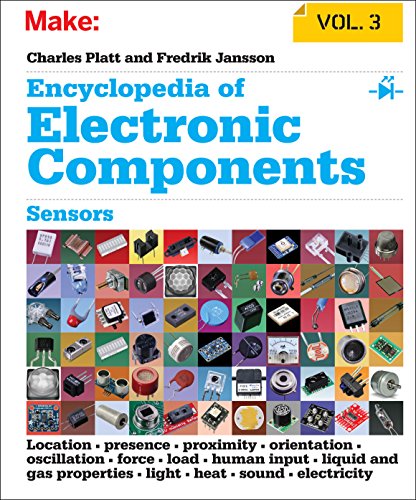
The Encyclopedia of Electronic Components Volume 3 stands out for covering sensors for location, presence, proximity, orientation, oscillation, force, load, human input, liquid, light, heat, sound, and electricity. If you need a single volume that explains how a wide range of physical phenomena become electrical signals, that breadth is hard to beat. The Handbook of Modern Sensors adds engineering depth on physics and design choices, which suits advanced study.
Look for Strong Diagrams and Tables
Sensor data is dense, so clarity matters. Encyclopedia of Electronic Components Volume 3 includes illustrations for each component family, while Make: Wearable Electronics uses diagrams to support interactive garment projects that rely on sensor inputs. If you learn visually, prioritize titles with consistent illustration standards and labeled pinouts.
Print paperbacks such as Make: Sensors, Getting Started with Sensors, and the Handbook of Modern Sensors sit comfortably on a workbench. Kindle Edition entries like Sensor and Timer Projects for Practical Electronics travel well in a tablet but can be harder to read at a cluttered bench. Independently published paperbacks such as Engine Sensors & OBD-II Codes Explained and Industrial Sensors often arrive in larger formats that suit flowcharts and diagnostic tables.
Plan Around Specialist Use Cases
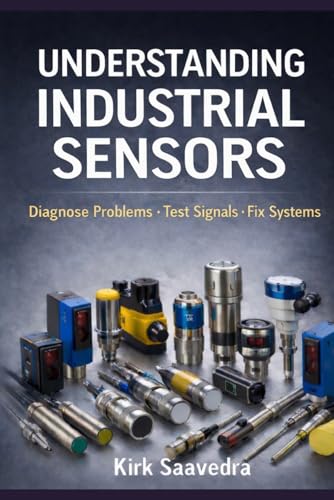
Some readers need specialist depth. Engine Sensors & OBD-II Codes Explained targets automotive diagnostics with MAF, MAP, O2, TPS, ECT, and fuel-related sensors, along with symptoms and live data patterns. Industrial Sensors is written for electricians and technicians choosing sensors for field installations. Sensor and Timer Projects for Practical Electronics focuses on detection, delay, control, and automation circuits. Pairing a specialist title with a broader reference often yields the most complete coverage.
Balance Recency with Proven References
Newer releases such as Sensor and Timer Projects for Practical Electronics reflect recent component practice, while established titles such as Make: Sensors and the Encyclopedia series have years of community examples behind them. For a primary textbook, proven references are usually safer; for project variety, a newer title can refresh your bench.
Final Recommendation
Make: Sensors: A Hands-On Primer ranks first overall in this specification-based comparison under the published weighted criteria.
Encyclopedia of Electronic Components Volume 3 is the first overall specification-based choice because it delivers the widest sensor taxonomy, clear illustrations, and reliable reference utility in a single illustrated paperback. Readers who want hands-on builds can pair it with Make: Sensors, and those needing engineering depth can add the Handbook of Modern Sensors. Together, these three titles cover the best electronic sensors books and top electronic sensors books across reference, project, and theory needs.
Frequently Asked Questions
Which of the best electronic sensors books should I buy first?
If you want one book that introduces the broadest range of sensor categories with clear illustrations, Encyclopedia of Electronic Components Volume 3 is a strong starting point. It works as both a learning aid and a long-term reference, which makes it a practical first purchase.
What is the best electronic sensors books pick for Arduino or Raspberry Pi projects?
Make: Sensors is written specifically around Arduino and Raspberry Pi, with projects that measure temperature, motion, light, and other environmental signals. Getting Started with Sensors offers a shorter companion that pairs sensor theory with example sketches for the same boards.
Are there good electronic sensors books for engineering-level study?
Yes. The Handbook of Modern Sensors covers sensor physics, design considerations, and applications at an engineering level.
Which titles focus on automotive or industrial sensors?
Engine Sensors & OBD-II Codes Explained covers automotive engine sensors, OBD-II trouble codes, and diagnostic flowcharts. Industrial Sensors addresses application, selection, and troubleshooting for electricians and technicians working with real-world industrial systems.
How do I keep up with newer sensor circuits and components?
Sensor and Timer Projects for Practical Electronics is a recent release covering detection, delay, control, and automation circuits. Pairing it with an established reference such as Encyclopedia of Electronic Components Volume 3 gives you fresh project ideas alongside proven component documentation.