Buying Guide
This guide compares the best solid state electrical engineering books using documented semiconductor physics depth, device coverage breadth, pedagogical clarity, author and publisher credibility, reference and course utility, and format and accessibility.
How to choose among the best solid state electrical engineering books
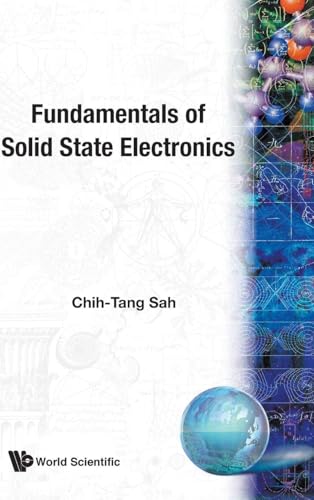
The best solid state electrical engineering books fall into a few recognizable families, and identifying your study stage is the first step. Core textbooks such as Solid State Electronic Devices (Hardcover), its 7th Edition paperback sibling, the Kindle release of the same 7e content, and Semiconductor Physics and Devices: Basic Principles build the canonical semiconductor-to-device arc used across most US electrical engineering programs. The Oxford-published Understanding Semiconductor Devices and the Holt, Rinehart and Winston physical principles title reinforce the physics-heavy side of the field, while Pearson’s Modular Series on Solid State Devices — including Semiconductor Fundamentals: Volume 1 and The Bipolar Junction Transistor: Volume III — break the same material into shorter, topic-focused volumes. The World Scientific Fundamentals of Solid State Electronics consolidates core topics into a single reference, and the Texas Instrument Learning Center’s Understanding Solid-State Electronics offers an accessible primer for first encounters.
Match the title to your study level
Beginners benefit from compact primers that explain semiconductor behavior before introducing device equations. Understanding Solid-State Electronics and the Volume 1 modular paperback fit that role well, with short formats that make early concepts easier to revisit. Intermediate readers benefit from the Solid State Electronic Devices family, where the hardcover, paperback, and Kindle editions deliver the same content in different formats, allowing learners to pick between shelf presence, portability, and searchable digital text. Advanced readers and graduate students typically need the principles-first depth of Semiconductor Physics and Devices: Basic Principles, the Oxford Series treatment in Understanding Semiconductor Devices, or the consolidated reference style of Fundamentals of Solid State Electronics.
Format choice affects how often you actually open the book. A hardcover edition such as Solid State Electronic Devices (Hardcover), Semiconductor Physics and Devices: Basic Principles, Understanding Semiconductor Devices, or Fundamentals of Solid State Electronics tends to stay on a desk and serves well as a long-term reference. Paperback editions — Solid State Electronic Devices, 7th Edition, Volume 1, and Volume III — are easier to carry between classes. The Kindle edition of Solid State Electronic Devices 7e supports keyword search across chapters, which is helpful when you need to locate a specific derivation or device definition quickly.
Look at the publisher and series context
Publisher context signals how a book is positioned within the field. Pearson’s involvement with Solid State Electronic Devices and the Modular Series indicates alignment with mainstream course adoption, while McGraw-Hill’s imprint on Semiconductor Physics and Devices suggests a comparable classroom anchor. Oxford University Press’s Understanding Semiconductor Devices adds academic editorial framing, and World Scientific’s Fundamentals of Solid State Electronics leans toward a consolidated reference style. The Holt, Rinehart and Winston series on electrical engineering, electronics, and systems gives the Physical Principles of Solid State Devices title a strong classical pedigree, and the Texas Instrument Learning Center imprint on Understanding Solid-State Electronics connects that primer to industry-oriented learning material.
Use modular volumes to fill specific gaps
If you already own a core textbook and want to deepen a specific area, the Modular Series on Solid State Devices offers targeted coverage. Semiconductor Fundamentals: Volume 1 strengthens the semiconductor physics base, while The Bipolar Junction Transistor: Volume III dedicates space to BJT operating regions, small-signal modeling, and circuit use cases. These short paperbacks work well as supplements when a single chapter in a larger textbook feels insufficient.
Build a balanced solid state library
A practical starting library for solid state study pairs one broad textbook with one focused reference. For example, Solid State Electronic Devices (Hardcover) or Semiconductor Physics and Devices: Basic Principles can anchor the collection, while Understanding Semiconductor Devices or Fundamentals of Solid State Electronics supplies an alternative perspective on the same topics. Adding Volume 1 or Volume III from the Modular Series lets you revisit semiconductor fundamentals or transistor behavior in concentrated form.
Final recommendation
Solid State Electronic Devices (Hardcover) ranks first overall in this specification-based comparison under the published weighted criteria.
The final choice among the best solid state electrical engineering books depends on the documented features that match your intended use.
If you need a single specification-based choice for a rigorous device course, Solid State Electronic Devices (Hardcover) is the first overall specification-based choice, with its broad device coverage, semiconductor physics depth, and Pearson hardcover format that suits long-term reference. Among the top solid state electrical engineering books compared here, it anchors a study plan that can be extended with a paperback or Kindle sibling of the same title, the principles-first treatment in Semiconductor Physics and Devices: Basic Principles, and a modular volume from the Pearson Modular Series on Solid State Devices for targeted review. This combination supports progression from introductory concepts through advanced device modeling within the top solid state electrical engineering books covered in this guide.
Frequently Asked Questions
Among the best solid state electrical engineering books, what is the best solid state electrical engineering book for a first course?
For a first course, Solid State Electronic Devices (Hardcover) or the 7th Edition paperback provides a balanced introduction to semiconductor physics and devices, while Understanding Solid-State Electronics works as a lighter primer before the main textbook.
Should I choose the hardcover, paperback, or Kindle edition of Solid State Electronic Devices?
The hardcover suits long-term reference and shelf use, the paperback offers portability for classroom carry, and the Kindle edition supports keyword search across semiconductor chapters on a reading device or app.
How do the Pearson Modular Series volumes fit into a study plan?
Semiconductor Fundamentals: Volume 1 reinforces the physics base that underpins device study, and The Bipolar Junction Transistor: Volume III drills into a single key device. Using them alongside a core textbook lets you revisit topics in concentrated form.
Is a principles-first textbook better than a devices-first textbook for solid state study?
A principles-first textbook such as Semiconductor Physics and Devices: Basic Principles builds semiconductor intuition from crystal properties and carrier statistics, while devices-first titles such as Solid State Electronic Devices move from physics into operating characteristics. Your choice depends on whether you prefer to derive behavior before seeing devices or to study devices and then return to the underlying physics.
Can the Oxford Series and World Scientific titles stand in for a main textbook?
Understanding Semiconductor Devices from the Oxford Series in Electrical and Computer Engineering and Fundamentals of Solid State Electronics from World Scientific both cover core solid state topics and can serve as primary references, particularly for readers who value academic or research-oriented framing of the material.