Buying Guide
Choosing among the best fiber optic archery sights starts with matching the sight’s architecture to the bow and the way you aim. The products in this comparison are not hands-on tested; the recommendations are based on supplied public listing features and specifications. That means a documented adjustment, pin size, or compatibility claim is useful for comparison, but it should not be treated as a measured field result.
Start with bow compatibility
First identify whether the sight is intended for a compound bow, a recurve bow, or a broader range of bows. The POEARCUS, Perogen, SHARROW, Smsyhgh, Trophy Ridge Fix, Gem, Fatal, and LWANO listings are framed primarily around compound-bow use. The POEARCUS, Perogen, Gem, Fatal, and LWANO listings specifically document compatibility with both right- and left-handed shooters, while the SHARROW and Trophy Ridge Fix listings do not provide that same claim.
The SAS model has the broadest stated bow coverage: its listing names compound, recurve, takedown, and traditional bows and also says it suits right- and left-handed bows. The POEARCUS recurve-oriented aperture sight is a different style, with a fiber optic strand around an aperture head and a removable crosshair insert. Do not assume that a compound sight or aperture will fit your bow without checking the mounting arrangement.
Choose one pin or multiple pins
A single-pin sight presents one primary aiming reference. The Perogen and SHARROW models use single 0.019-inch fiber optic pins, while the POEARCUS recurve aperture sight also centers on a single fiber optic aiming point. Single-pin designs can make the sight picture less crowded, but the supplied listings do not establish how quickly any model can be moved between distances in actual use.
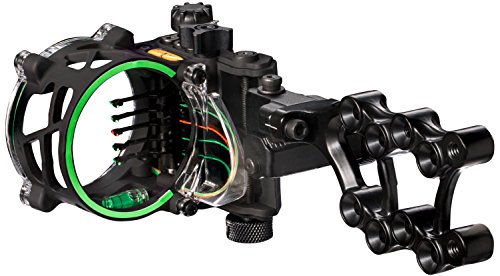
Multi-pin sights provide several preset aiming references in one housing. The POEARCUS and Trophy Ridge Fix use five pins, as do the Smsyhgh and LWANO models. The Gem, Fatal, and SAS sights use three-pin layouts. More pins may provide more reference points, while fewer pins may present a simpler aiming picture; the right choice depends on the distances and setup you intend to use.
Compare fiber diameter and visibility features
Most selected products use 0.019-inch fiber optic pins. That diameter appears in the POEARCUS, Trophy Ridge Fix, Perogen, SHARROW, Smsyhgh, Gem, Fatal, LWANO, and recurve aperture listings. The SAS sight uses.029-inch fibers instead. Fiber diameter is a documented specification, not a guarantee of brightness or accuracy, so compare it with the rest of the sight’s visibility system.
Several models add brightness-related features. The Trophy Ridge Fix and Perogen listings identify rheostat lights. The Fix includes a pre-charged light battery, while the Gem is described for various lighting conditions and the POEARCUS listing emphasizes fiber visibility. The Fatal and Gem use yellow hood accents, and the Smsyhgh listing describes a flared frame intended to filter inner-wall reflection and create a rounded visual circle.
Examine adjustment systems
Adjustment hardware can affect how much setup control a sight offers. The POEARCUS provides tool-less windage and elevation micro-adjustment. The Trophy Ridge Fix has micro-adjustable pins and second-axis adjustment. Perogen documents four-way movement, a tool-free target locking device, a blank scale tape, and an adjustable bubble. SHARROW uses a quickset vertical lever and separate horizontal fine-tuning.
The Smsyhgh sight documents four-way adjustment and a locking micro-adjustment structure. Other models emphasize mounting flexibility rather than detailed micro-adjustment. The Gem and Fatal list multiple orientation or mounting features, while LWANO provides multiple mounting holes. The SAS listing identifies a level but supplies fewer adjustment details. When comparing the top fiber optic archery sights, distinguish between a sight that moves quickly and one that offers fine locked calibration; the supplied evidence does not show that these functions are identical.
Consider housing, level, and lens options
A level can help with alignment during setup. It is listed for Perogen, SHARROW, Smsyhgh, Gem, Fatal, and LWANO, while the SAS model lists a level with two vertical bars. The POEARCUS listing does not specifically identify a bubble level, but it does offer two bar lengths and interchangeable lenses.
Lens options are concentrated in the POEARCUS and Smsyhgh designs. POEARCUS includes 4X, 6X, and 8X lens kits and offers short and long bars. Smsyhgh includes an adapter for a 2X lens. The recurve aperture sight instead provides a removable crosshair insert and mounting washers for optional filter lenses. These are different approaches: magnification kits change the sighting setup, while an insert changes the reticle format.
Check installation and orientation details
Mounting hardware and instructions are specifically listed with POEARCUS, and the Trophy Ridge Fix includes mounting hardware plus an onboard pin adjustment tool. The Gem, Fatal, and LWANO listings identify reversible or multiple-hole mounting features. Perogen includes a pre-installed scale tape, while the recurve aperture includes mounting washers.
Before ordering, confirm mounting-hole spacing, hand orientation, housing clearance, and whether any lens or light is included. A listing can document broad compatibility without specifying every bow model. Also note that the selected products are complete sight designs; replacement fiber rods and replacement optic materials were excluded because they do not independently provide a bow-sight housing and aiming system.
Match the sight to your priorities
For the broadest documented feature set, POEARCUS is the leading specification-based choice. For multi-axis tuning, Trophy Ridge Fix is more specifically equipped. Perogen and SHARROW focus on single-pin adjustment, while Gem and Fatal emphasize reversible three-pin formats. LWANO offers five pins and a stated larger housing field of view. SAS is the clearest choice for broad bow-type compatibility and.029-inch fibers. The recurve aperture is best considered when that sight format, rather than a conventional compound housing, is what you need.
Final Recommendation
POEARCUS 5-Pin Compound Bow Sight ranks first overall in this specification-based comparison under the published weighted criteria.
POEARCUS 5-Pin Compound Bow Sight is the first overall specification-based choice among these best fiber optic archery sights. Its five 0.019-inch pins, tool-less windage and elevation micro-adjustment, interchangeable 4X/6X/8X lenses, two bar options, and right- and left-hand compatibility give it the broadest documented configuration in this comparison.
Trophy Ridge Fix is the most specification-aligned alternative for shoppers prioritizing second-axis adjustment and five micro-adjustable pins. Perogen and SHARROW make more focused sense for single-pin setups, with different approaches to tool-free or quick positioning. For three-pin ambidextrous designs, Trophy Ridge Gem and Fatal are the clearest options. LWANO adds a five-pin layout and a stated larger field of view, while SAS is the most broadly described across bow types. The recurve aperture sight is the specialist choice for an aperture-style aiming format.
These are the top fiber optic archery sights by supplied specifications, not verified field-performance winners. Confirm fit, mounting, hand orientation, and included components before choosing.
Frequently Asked Questions
What are the best fiber optic archery sights for a compound bow?
POEARCUS is the most specification-aligned specification-based starting point because it combines five 0.019-inch pins, tool-less micro-adjustment, lens choices, and ambidextrous mounting. Trophy Ridge Fix, Perogen, SHARROW, Smsyhgh, Gem, Fatal, and LWANO are also listed around compound-bow use, but each emphasizes a different configuration or adjustment approach.
Is a single-pin or multi-pin fiber optic sight better?
The supplied evidence does not establish a universal winner. Single-pin models such as Perogen and SHARROW provide one 0.019-inch aiming point, while multi-pin models such as POEARCUS, Trophy Ridge Fix, Smsyhgh, and LWANO provide three or five references. Choose based on whether you prefer a simpler single point or several preset references.
Which selected sight works with left- and right-handed bows?
POEARCUS, Perogen, Gem, Fatal, LWANO, and SAS explicitly document right- and left-hand compatibility or reversible mounting. The listings for Trophy Ridge Fix, SHARROW, Smsyhgh, and the recurve aperture sight do not provide the same explicit compatibility statement, so verify fit before ordering.
Do fiber optic sights include replacement fiber rods?
The selected products are complete bow-sight designs, not replacement rods. The excluded candidates are replacement fiber materials intended to repair or modify an existing sight. Check the product contents if replacement parts, a sight light, or a lens are important to your setup.
What should I verify before buying a fiber optic sight?
Verify bow type, mounting pattern, hand orientation, pin count, fiber diameter, adjustment method, level availability, and whether lenses or lights are included. These details vary substantially across the selected models, and public listing data may not specify compatibility with every individual bow.