Buying Guide
This guide compares the best fluorescent safety tape using documented visibility method and fluorescent contrast, adhesion and surface compatibility, weather resistance and material durability, roll format and documented coverage, and application flexibility.
Fluorescent safety tape is not one uniform product type. The supplied listings describe three different visibility approaches: reflective tape that returns light from headlights or flashlights, photoluminescent tape that stores light and glows after illumination, and fluorescent flagging that is primarily intended to stand out by color. Start by deciding whether the marking must be visible in daylight, in reflected vehicle light, or after the surrounding lights are switched off. That decision narrows the field more effectively than color alone.
Choose reflective, glow, or flagging tape
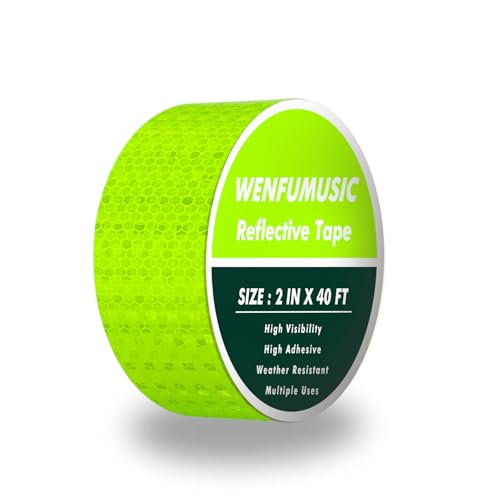
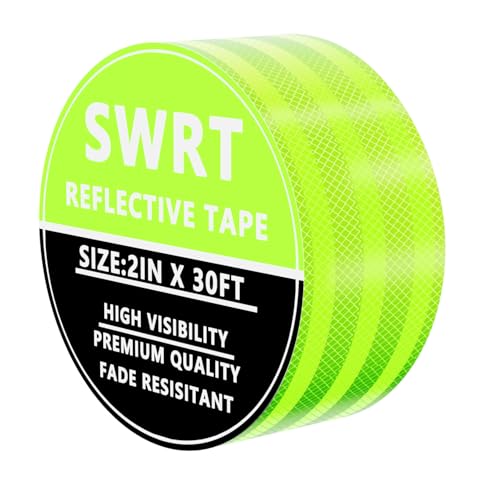
Reflective adhesive tape is the most represented design in this comparison. WENFUMUSIC, SWRT, KALIONE, Gralux, and Quacc listings describe prismatic or honeycomb surfaces that reflect an external light source. This makes them relevant for trailers, trucks, bicycles, helmets, posts, mailboxes, and equipment. They do not create light independently, so a completely dark environment without headlights or another light source is a different use case.
Photoluminescent products such as Pro Tapes PRO GLOW, DCSGK, and SWRT Glow in the Dark Tape require charging from ambient or artificial light. They are suited to stairs, walls, exit paths, signs, and selected gear where a visible line should remain after lights are turned off. Check the charging instruction before installation: the listings describe required exposure periods, and the stated glow duration varies by product. Glow tape is therefore not interchangeable with reflective vehicle-conspicuity tape.
IRWIN Strait-Line Glo-Pink is a separate flagging format. Its fluorescent plastic roll is intended for high-visibility field marking and professional trade use, but the supplied specifications do not identify adhesive backing or reflective performance. It is a better fit for temporary identification than for permanently marking a trailer or stair edge.
Match width and length to the job
Width affects both appearance and placement. The 0.4-inch KALIONE and Quacc rolls suit narrow trim, bicycle rims, pet collars, scooter parts, and compact equipment. They can be cut to length, but their slim profile may be less noticeable across a large trailer or warehouse boundary. One-inch products such as Gralux and SWRT Glow offer a middle ground for vehicle outlines, barriers, stair edges, and general-purpose marking.
Two-inch rolls from WENFUMUSIC and SWRT create broader visual bands for trailers, trucks, and other large surfaces. They also cover more area per strip, although a wide roll can be awkward around tight curves or small accessories. Measure the target surface before buying and account for gaps, corners, and overlaps rather than assuming the stated roll length will all become usable marking.
For extensive worksite identification, IRWIN’s 150-foot format is the coverage leader in this group. WENFUMUSIC’s eight-color set provides a different kind of coverage: multiple shorter rolls can support color coding on clothing edges, bicycles, vehicles, and emergency areas. A single long roll is simpler when every mark should look the same; a multi-roll set is more flexible when colors have separate purposes.
Inspect the surface before applying adhesive tape
The listings consistently make surface preparation important. Clean, dry, smooth, and grease-free surfaces are the most suitable documented starting point. Gralux specifically says it is not suitable for gray and rough surfaces such as cement, lime, or wood. Do not generalize a product’s claimed compatibility with metal, plastic, nylon, or glass to every surface condition.
Curves also deserve attention. SWRT Glow is described as conforming to curved surfaces and corners, while DCSGK glow tape is listed for walls, metal, and fabrics. By contrast, Gralux recommends marking vehicles, trailers, bicycles, safety equipment, and barriers but cautions about rough surfaces. If a helmet or rounded accessory is involved, a narrow strip or small cut sections may fit more reliably than one wide unbroken band.
Adhesive claims vary from premium or industrial-strength backing to simple self-adhesive application. Some listings also describe quick removal or minimal residue, but removal instructions are not identical. DCSGK advises gently heating edges, and the reflective rolls emphasize clean application. Treat repositioning as a product-specific feature rather than assuming every safety tape can be moved without affecting adhesion.
Consider outdoor exposure and material construction
For outdoor use, prioritize listings that explicitly mention waterproofing, weather resistance, temperature tolerance, or resistance to fading. WENFUMUSIC identifies waterproof PVC and PET and resistance to dirt, oil, rain, and fading. SWRT reflective tape describes waterproof adhesive, fade resistance, and tolerance of extreme cold and heat. DCSGK glow tape lists waterproof, weather-resistant PET for moderate outdoor conditions. These statements support outdoor consideration, but they are listing claims rather than independent test results.
Material also influences handling. Reflective products commonly identify PVC, PET, prism patterns, or honeycomb films. Pro Tapes PRO GLOW is described as flexible vinyl film, while IRWIN uses extruded plastic flagging. Photoluminescent tape has an additional charging requirement, and reflective tape has an external-light requirement. Read those functional differences alongside the weather language instead of selecting only by fluorescent color.
Practical selection checklist
Before choosing the best fluorescent safety tape for a project, confirm five points: the visibility method, required width, total coverage, surface type, and exposure conditions. For vehicle or trailer work, a fluorescent reflective roll with documented waterproof adhesive is the logical starting point. For indoor stairs or exit routes, a glow product with a stated charging process is more appropriate. For narrow accessories, 0.4-inch tape can be easier to place. For professional field identification, fluorescent flagging may provide the required format without adhesive.
The best fluorescent safety tape is the one whose documented design matches the actual visibility problem. Avoid treating reflective, glow, and flagging products as direct substitutes, and do not infer a formal certification or performance level unless the listing expressly provides it.
Final recommendation
WENFUMUSIC 2-Inch x 40-Foot Reflective Tape ranks first overall in this specification-based comparison under the published weighted criteria.
The final choice among the best fluorescent safety tape depends on the documented features that match your intended use.
Pro Tapes PRO GLOW is the highest-scoring returned product and the first overall specification-based choice. Its photoluminescent film, flexible vinyl construction, professional-grade adhesive, and stated use for indoor safety and egress markings give it the most specification-aligned documented fit for indoor low-light guidance. For a top fluorescent safety tape designed for broad outdoor vehicle marking, WENFUMUSIC’s two-inch roll offers a wider fluorescent reflective format, industrial-strength adhesive, and 40 feet of stated coverage. DCSGK’s 40-foot glow roll is the better alternative when a continuous photoluminescent line is needed, while IRWIN is the practical choice for long temporary field marking.
Frequently Asked Questions
Is fluorescent safety tape reflective or glow-in-the-dark?
It can be either. KALIONE, Quacc, Gralux, SWRT reflective tape, and WENFUMUSIC use reflective designs that need headlights, flashlights, or another external light source. Pro Tapes PRO GLOW, DCSGK glow tape, and SWRT Glow use photoluminescent materials that charge under light and then glow. IRWIN Glo-Pink is fluorescent flagging tape, and its supplied listing does not state reflective or glow-in-the-dark performance.
What is the best fluorescent safety tape for a trailer?
A wide reflective adhesive roll is the most directly documented fit among these selections. WENFUMUSIC’s two-inch by 40-foot tape is listed for trucks and trailers and describes waterproof PVC and PET, industrial-strength adhesive, and resistance to dirt, oil, rain, and fading. SWRT’s two-inch by 30-foot fluorescent green roll is another suitable specification-based option. Prepare the surface carefully and follow the product’s own application guidance.
Can glow tape be used on stairs or exit routes?
Yes, several selected listings specifically identify stairs, walls, emergency exits, or egress markings. Pro Tapes PRO GLOW is described for indoor safety and egress markings, while DCSGK and SWRT Glow list stairs and exit-related uses. Glow products need exposure to light before the surrounding area becomes dark. Confirm the charging instructions and avoid assuming that a glow product provides the same function as reflective vehicle tape.
What surface works best for adhesive safety tape?
The most specification-aligned common guidance is to use a clean, dry, smooth, grease-free surface. Quacc states this preparation requirement, and Gralux warns that rough surfaces are unsuitable. Product-specific listings mention metal, plastic, nylon, glass, wood, walls, fabrics, or concrete, but compatibility varies. Test placement on an inconspicuous area when the surface is painted, textured, curved, or delicate, and follow any removal instructions supplied for that product.
How much tape width should I choose?
Use narrow 0.4-inch tape for trim, rims, collars, helmets, and compact equipment. One-inch tape is a middle option for bicycles, barriers, vehicle outlines, and stair edges. Two-inch tape creates a broader band for trucks and trailers. A 1-3/16-inch flagging roll such as IRWIN is intended for fluorescent field identification rather than adhesive surface marking. Measure the area and choose the narrowest width that remains conspicuous for the intended setting.