Buying Guide
The best reflective safety tape should be matched to the surface, the amount of marking required, and the conditions in which the marking will be seen. Public listing data can identify useful specifications, but it cannot replace checking the tape against your vehicle, equipment, workplace policy, or applicable regulations.
Start with the application
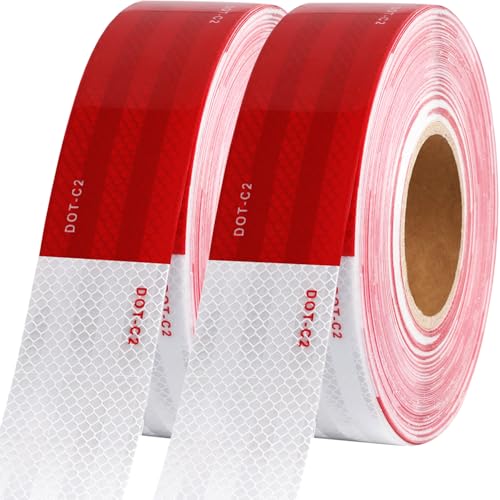
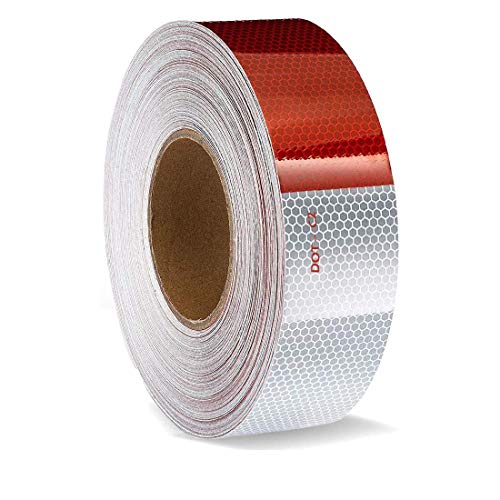
For trailers, trucks, boats, and other large vehicles, a 2-inch roll is the dominant format in this comparison. Long options such as SEVEN SPARTA, WAENLIR, and SWRT provide 160 to 200 feet of stated coverage, which is more suitable for repeated strips or multiple sides. Shorter 30-foot rolls from AISEY, SWRT, and UIOCSSC are better aligned with targeted marking, signs, barriers, mailboxes, and limited vehicle sections.
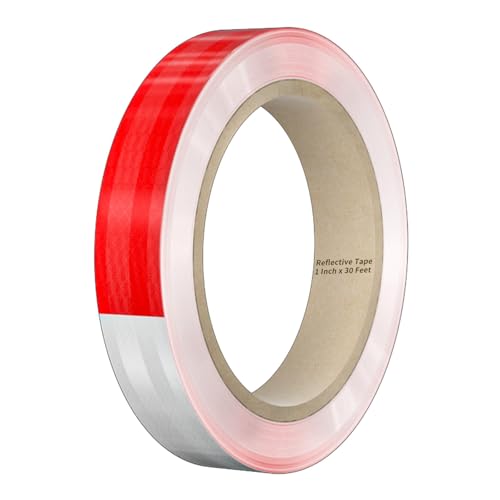
Small objects may call for a different format. Duccinp uses a 1-inch-wide roll, making it a narrower choice for bikes, helmets, strollers, and other areas where a wider strip may be difficult to position. Byllstore uses individual compact pieces, which can be placed separately on hard hats, bumpers, mailboxes, and equipment. The best reflective safety tape is not always the longest roll; it is the format that fits the available surface without excessive trimming or overlap.
Compare the visual pattern
Color and pattern affect how the marking communicates. Red-and-white DOT-C2-style layouts appear throughout the selection and are positioned in listings for vehicles, trailers, boats, and signs. Diamond or rhombus patterns are also common and are described as prismatic or reflective designs. These choices are useful when a conventional conspicuity appearance is preferred.
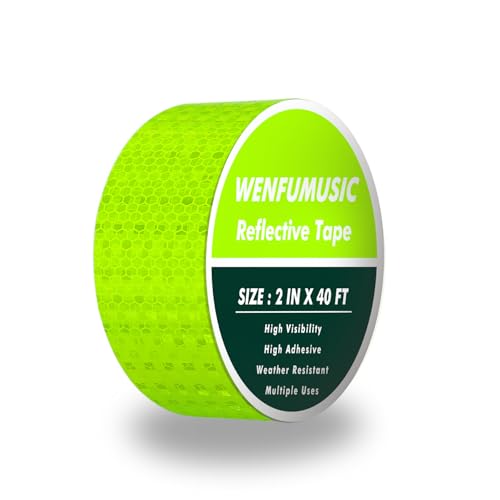
Red-and-yellow arrow designs provide a different visual signal. Tough Tape and AISEY use arrow-oriented patterns, while SWRT offers fluorescent yellow with red. These formats may be useful for hazard zones, barriers, directional emphasis, or caution areas where a standard red-and-white appearance is not the only requirement. Byllstore’s yellow-green pieces are a separate compact marking option.
Check outdoor resistance claims
Outdoor use exposes adhesive tape to rain, sun, dirt, grease, temperature changes, and vehicle grime. Several selected listings describe waterproof or weather-resistant construction. Among selected products, AISEY, UIOCSSC, and Byllstore also document outdoor-oriented durability claims.
These statements are specifications from public listings, not independent test results. Before applying tape, inspect the surface requirements and follow the manufacturer’s preparation directions. Clean, dry, smooth surfaces are a recurring practical consideration, and the Byllstore listing specifically advises applying its pieces to clean, dry surfaces.
Evaluate adhesion and removal
Adhesive descriptions vary from durable or strong adhesive to industrial-strength or commercial-grade adhesive. WAENLIR identifies compatibility with metal, wood, plastic, and nylon. SWRT gives similar surface examples and also describes easy removal without residue. AISEY describes durable adhesive for indoor and outdoor use, while UIOCSSC states that its tape can adhere to metal, wood, plastic, and nylon.
Do not assume that all strong adhesives remove in the same way. If the marking may need repositioning, SWRT’s stated removal characteristic is relevant. If long-term attachment is more important, a product listing that emphasizes commercial-grade or industrial-strength adhesive may be more appropriate. Surface preparation, curvature, paint condition, and cleaning products can affect the result, so the supplied specifications should be treated as selection guidance rather than a guarantee.
Match coverage to the job
Coverage is one of the clearest differences between these products. The 200-foot rolls are intended for larger marking projects, while the 160-foot WAENLIR roll offers a slightly smaller extended format. A 100-foot arrow roll can be a practical middle ground when a directional pattern matters. Thirty-foot rolls are easier to allocate to a single vehicle section, sign, barrier, or work area, but they may require another roll for a larger project.
Also check whether the stated length is supplied as one roll or multiple rolls. SEVEN SPARTA describes two 100-foot rolls, and WAENLIR describes two 100-foot rolls for its 200-foot format. That can make handling and storage different from using one continuous roll. Byllstore’s individual pieces are easiest to distribute across separate objects but are not a substitute for continuous strip coverage.
Treat compliance language carefully
Several listings state DOT-C2 approval, certification, or compliance. Those claims appear in the product evidence and are included here as listing information. If your vehicle, fleet, workplace, or jurisdiction requires a particular marking standard, verify the applicable rule and the product documentation before purchase. A color pattern that looks similar is not automatically interchangeable with a required specification.
Final Recommendation
WAENLIR DOT Reflective Tape 200 Feet ranks first overall in this specification-based comparison under the published weighted criteria.
The final choice among the best reflective safety tape depends on the documented features that match your intended use.
Tough Tape DOT C2 Arrow Reflective Tape is the first overall specification-based choice among these ten products. It combines a documented arrow pattern, a useful 100-foot length, outdoor positioning, and a stated DOT C2 certification claim. For large projects, SEVEN SPARTA DOT-C2 Reflective Tape 200 Feet and WAENLIR DOT Reflective Tape 200 Feet offer the most specification-aligned coverage-oriented specifications. SWRT’s 200-foot roll is another practical extended-length option.
For targeted hazard marking, AISEY’s honeycomb red-and-yellow roll and SWRT’s fluorescent yellow-and-red tape provide distinctive color and pattern choices. UIOCSSC is a compact red-and-white option, while Duccinp is the better format match when a 1-inch strip is preferable. Byllstore is the specialized pick for compact pieces on helmets, mailboxes, hard hats, and equipment.
The top reflective safety tape for your project should therefore be selected by width, length, color pattern, adhesive description, and stated outdoor resistance—not by a single headline claim. Confirm the surface, coverage plan, and any required compliance standard before ordering.
Frequently Asked Questions
What is the best reflective safety tape for a trailer?
Tough Tape is the first specification-based choice in this comparison because its listing combines a red-and-yellow arrow pattern, 100 feet of length, weatherproof construction, and a stated DOT C2 certification claim. For extensive trailer coverage, the 200-foot SEVEN SPARTA, WAENLIR, or SWRT options may be more suitable.
Is red-and-white tape the only useful pattern?
No. Red-and-white diamond or rhombus patterns are common in the selected vehicle-oriented products, but AISEY and Tough Tape document red-and-yellow arrow designs, and SWRT offers fluorescent yellow with red. The appropriate color and pattern depend on the intended warning, directional, vehicle, or workplace application.
How much reflective tape do I need?
Measure the surfaces you plan to mark and add allowance for corners, gaps, trimming, or replacement sections. Thirty-foot rolls fit smaller projects, 100-foot rolls support broader marking, and 160- to 200-foot formats are intended for larger or repeated runs. Remember that a stated total may be divided between two rolls.
Can reflective tape be applied to curved surfaces?
The selected listings document different formats and surface guidance. Byllstore says its compact pieces can be cut into smaller sections for curved areas such as hard hats. Duccinp describes a flexible roll for smooth and textured surfaces. Always check the product’s application instructions and prepare the surface as directed.
Does reflective tape glow in complete darkness?
The supplied evidence describes reflection when external light reaches the material; it does not describe self-luminescence. Reflective tape is intended to return light from headlights, flashlights, or another source, so it should not be treated as a self-powered light.