Buying Guide
Choosing among the best frost-free outdoor faucets starts with the installation location, not the handle style. A wall-mounted sillcock passes through an exterior wall, with its shutoff positioned inside the heated portion of the structure or far enough back to drain after closing. A freestanding yard hydrant uses a buried standpipe and drainage arrangement below grade. These are different projects, so first decide whether the outlet belongs on the building or in the yard.
Match the faucet type to the site
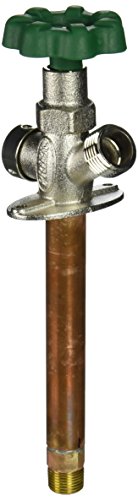
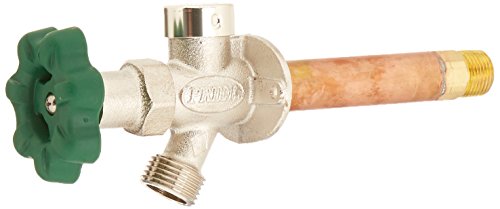
Traditional wall sillcocks such as the Prier P-164D04 and Prier P-164D06 use quarter-turn control and provide clearly identified plumbing connections. They are useful when replacing a conventional outdoor faucet and when the wall cavity can accommodate the selected length. The Prier 4-inch version is compact, while the 6-inch model offers a middle-ground reach. Neither should be chosen solely by nominal length; the connection must also match the pipe arrangement and the valve must be installed so the line can drain.
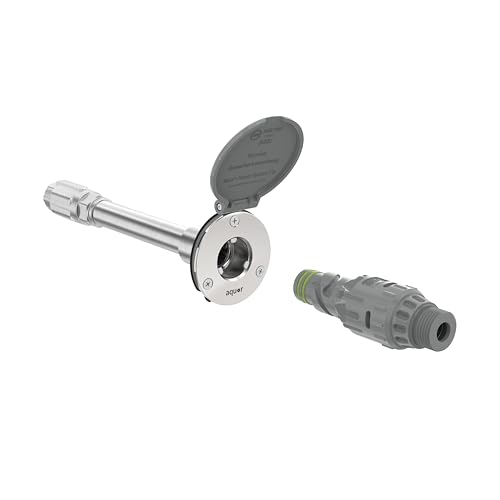
Aquor House Hydrant models use a flush-wall approach with a quick-connect hose interface. The Aquor House Hydrant V2+ has a 4-inch stem and a listed 5-9/16-inch installation depth, while the Aquor House Hydrant V1+ uses an 8-inch stem and a listed 9-3/4-inch installation depth. Those dimensions make wall-depth measurement important. Quick connection can reduce repeated threading of hoses and accessories, but the intended connector system must be part of the installation plan.
For water access away from a building, the DU-MOST 4-Foot Frost-Free Yard Hydrant is the relevant design in this selection. Its galvanized steel standpipe, automatic drainage, and lockable head are aimed at outdoor utility use. A yard hydrant involves digging, a suitable buried connection, and local frost-line considerations. It is not a simple replacement for a wall-mounted hose bib.
Check stem length and available depth
Longer stems can place the shutoff farther inside a wall, but they also consume more cavity space. The selected listings cover 4-, 6-, 8-, and 12-inch wall-faucet lengths. Hromee, Solimeta, and Watflow use 12-inch designs; these may suit deeper assemblies but can be difficult to fit in a shallow wall. Boltigen and Himaweek provide 8-inch alternatives, while the Prier and Aquor options cover shorter formats.
Do not infer complete installation depth from stem length alone. The Aquor listings provide explicit installation-depth figures, while several other products do not. Flanges, inlets, insulation, framing, and the interior pipe route all affect fit. Measure from the exterior mounting surface to the intended connection point, then compare that space with the manufacturer’s installation information.
Select the correct connection
Connection type is one of the most important differences among the top frost-free outdoor faucets. Connection details for Prier P-164D04 and Prier P-164D06 list 1/2-inch MIP by 1/2-inch SWT connections. Boltigen lists a 1/2-inch PEX end, and Himaweek lists an integrated 1/2-inch PEX end designed for quick connection to PEX and PE-RT. Hromee describes a push-to-connect inlet with broad pipe compatibility.
Solimeta is unusual in this group because its listing describes a removable push-fit connector that can convert to a 1/2-inch NPT male thread. Watflow lists a 1/2-inch NPT connection. Threaded fittings may suit a threaded replacement, while push-fit fittings can be useful where the pipe type and preparation requirements are compatible. Confirm pipe diameter, material, insertion depth, support, and local plumbing requirements.
Verify freeze and backflow features
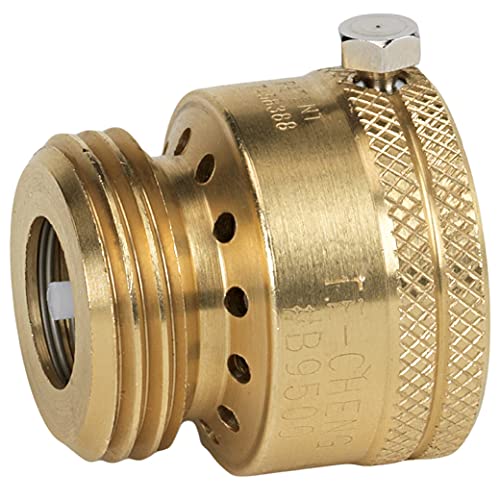
A frost-free label is useful, but installation design is the key evidence. Look for a long stem, an inlet-side shutoff, automatic drainage, or a stated connection into the heated portion of a structure. Hromee, Himaweek, Solimeta, and Watflow describe anti-siphon or backflow-prevention features. The Aquor models list anti-siphon valves, while Prier documents a vacuum breaker.
A longer stem does not by itself guarantee freeze protection. The faucet must be installed with the correct slope and drainage arrangement where required, and hoses or attachments may need to be removed so trapped water does not remain in the valve. Follow the product instructions and local requirements. A listed protection feature cannot compensate for unsuitable installation or exposed piping.
Compare body materials and maintenance
Material information helps distinguish intended use. The selected wall faucets identify lead-free brass, chrome-plated brass, stainless steel, or polymer construction. Aquor V1+ specifies 316L stainless steel and polymer, while Aquor V2+ lists lead-free stainless steel and polymer with Viton O-rings. Prier describes heavy-duty construction, and DU-MOST specifies galvanized steel, cast iron, and corrosion-resistant components.
Maintenance access also varies. DU-MOST specifically describes replacement of the rod, plunger, and linkage without digging when using its referenced repair kit. Wall faucets usually require access to the interior connection or valve assembly according to their design. Before closing a wall, confirm whether the selected product is approved for a behind-the-wall installation without an access panel. Hromee and Himaweek provide relevant behind-the-wall statements in the supplied evidence.
Watflow lists a 120 PSI maximum working pressure and an ASME B16.34 reference, which can help when comparing documented specifications. Hromee lists ANSI/NSF-61 and ASSE 1061 references for its stated potable-water and hydronic-water applications. These details are not substitutes for checking complete product documentation, local code, or system pressure.
The best frost-free outdoor faucets are the ones whose dimensions, connection, drainage path, and material specifications fit the actual project. A compact Prier or Aquor model may be more appropriate than a 12-inch sillcock when space is limited. Conversely, a long-stem Hromee, Solimeta, or Watflow model may better suit a deeper wall. For a remote garden outlet, use a purpose-built yard hydrant such as DU-MOST rather than adapting a wall faucet.
Installation checklist
Before ordering, record the wall thickness or required burial depth, pipe material, pipe diameter, connection style, hose-thread size, and clearance around the mounting flange. Confirm whether the product includes the connector or mounting hardware you need. Plan for drainage and remove hose attachments during freezing weather when the instructions require it. After installation, check the connection and valve operation before closing the wall or backfilling the trench.
Final Recommendation
Aquor House Hydrant V1+ 8-Inch ranks first overall in this specification-based comparison under the published weighted criteria.
Aquor House Hydrant V1+ 8-Inch is the highest-scoring returned product and the first overall specification-based choice among the best frost-free outdoor faucets. Its documented 8-inch stem, automatic draining and sealing design, anti-siphon protection, quick-connect operation, 316L stainless steel and polymer construction, and included installation components create the most complete profile in this comparison.
The Aquor House Hydrant V2+ is the better compact alternative when its shorter installation depth fits the wall. For conventional plumbing, the Prier P-164D06 balances length and straightforward quarter-turn operation, while the Prier P-164D04 is the compact choice. Hromee, Solimeta, and Watflow provide longer 12-inch options with push-fit or threaded approaches. Boltigen and Himaweek are focused choices for compatible PEX installations. If the outlet must stand in the yard rather than on the house, DU-MOST is the appropriate design type.
These are specification-based rankings, not hands-on test results. Confirm installation instructions, connection dimensions, local requirements, and freeze-protection conditions before purchase. The top frost-free outdoor faucets still depend on correct drainage, suitable placement, and proper plumbing work.
Frequently Asked Questions
How do the best frost-free outdoor faucets help prevent freezing?
A frost-free faucet places its shutoff farther inside the wall or below ground and is designed to drain water from the exposed section after closing. Products differ in stem length, drainage method, and installation requirements. The faucet must be installed correctly, and attached hoses may need to be removed so water is not trapped.
Is an 8-inch or 12-inch sillcock better?
Neither length is universally better. An 8-inch model such as Boltigen, Himaweek, or Aquor House Hydrant V1+ may fit a moderately deep wall, while a 12-inch model such as Hromee, Solimeta, or Watflow may suit a deeper assembly. Measure the available space and compare the connection location before choosing.
Can I replace a threaded faucet with a push-to-connect model?
Only when the pipe material, diameter, insertion requirements, and available space are compatible. Push-to-connect products in this comparison are described for specific piping systems, while Prier and Watflow provide threaded or mixed connection specifications. A plumbing professional can confirm whether the proposed connection is suitable.
Are yard hydrants the same as wall-mounted frost-free faucets?
No. A yard hydrant, such as DU-MOST, uses a freestanding buried standpipe and drainage system. A wall-mounted sillcock attaches to a building and routes through the wall. The two designs serve different locations and require different installation work.
Do anti-siphon and frost-free features do the same thing?
No. Frost-free design addresses water remaining in the exposed valve or stem during freezing conditions. Anti-siphon or vacuum-breaker features address backflow into the water supply. Some products include both, but each feature serves a different plumbing purpose and should be evaluated separately.