Buying Guide
The best yard hydrants are not selected by overall length alone. Start with the underground burial depth, then confirm how the valve drains when closed, what materials contact the water, and which pipe or hose connections are included. Public listing data can identify useful design differences, but it cannot replace checking local frost conditions, plumbing requirements, or installation instructions.
Match burial depth to the frost line
A freezeless or frost-proof hydrant is intended to shut off below ground and drain the standpipe when closed. That principle only works as intended when the buried valve is installed at a suitable depth and the drain outlet remains unobstructed. The Merrill CNL7504 and DU-MOST models list 4-foot configurations, while the Simmons 905 lists a 60-inch size. These longer designs may suit locations requiring deeper installation, but the local frost line should determine the choice.
The VEVOR models document a 48-inch bury depth. Yariwiz specifies 2 feet, and both Solimeta and MEASUREMAN specify 12 inches. A shallow-bury hydrant can be practical where local conditions allow it, but it should not be assumed to provide the same cold-weather margin as a deeper model. Confirm whether the stated measurement refers to bury depth, total length, or product size before digging.
Check drainage details
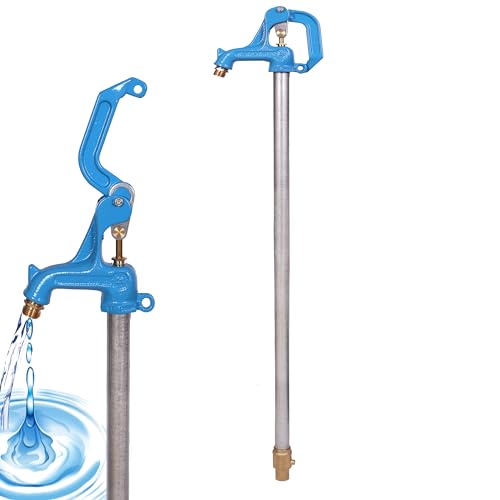
Drainage is central to freeze protection. The Merrill CNL7504 lists a plunger that positively opens the drain and closes even at slow flow rates. The VEVOR models describe bypass valves that drain residual water through a bottom hole. Yariwiz, Solimeta, and MEASUREMAN each warn that the drain hole must remain clear. Soil or debris blocking the outlet may interfere with the intended drainage path.
The Woodford Y34-1-HC describes a one-piece plunger, cushioned seal, and rod guide. Woodford R34-3 is also described as freezeless, but the supplied listing gives less installation detail. When comparing models, prioritize a clearly described drain mechanism and make sure the finished installation will not bury or obstruct the drain opening.
Compare construction materials
Outdoor hydrants commonly combine several materials. Merrill lists a heavy cast iron head, stainless steel operating rod, and galvanized or stainless pipe options. The Woodford Y34-1-HC and R34-3 list brass valve bodies. VEVOR uses cast iron, copper, and galvanized steel in the documented designs. Solimeta, MEASUREMAN, and Yariwiz describe cast iron heads, zinc-plated tubing, and brass valve components.
These material descriptions help identify corrosion-resistance and durability considerations, but they are not hands-on performance results. Pay attention to the part most exposed to weather, the buried standpipe, and the valve or plunger assembly. No-lead claims are specifically documented for the VEVOR 6.22-foot model and Yariwiz; the VEVOR listing also states that its model is not recommended for drinking.
Verify pipe and hose connections
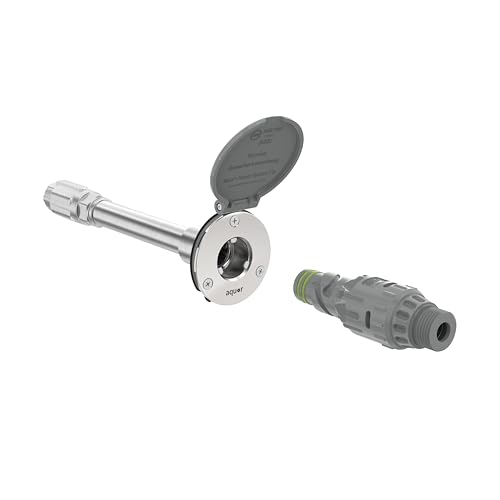
A connection mismatch can turn a straightforward installation into an adapter project. The VEVOR 6.25-foot model lists both a 3/4-inch NPT pipe connection and a 3/4-inch NH hose coupling. The 6.22-foot version lists the same connection pairing. Solimeta and MEASUREMAN list 3/4-inch FNPT inlets and 3/4-inch GHT outlets, while Yariwiz lists a 3/4-inch FNPT connection.
The Merrill CNL7504 specifies a 3/4-inch pipe connection, but several other models do not provide complete connection details in the supplied evidence. For those products, confirm inlet thread, hose outlet, and any required adapters before purchase. Do not infer potable-water suitability from a general yard or irrigation description.
Choose the operating control you need
A basic lever may be sufficient for filling containers or watering a garden. Adjustable levers can help manage flow for different tasks. Merrill describes cam-principle lever operation with variable flow. The Woodford Y34-1-HC lists a flow finder, adjustable link, and lock. VEVOR’s 6.22-foot model combines a lever with a handwheel that can lock the output, while the other VEVOR model lists an adjustable handle.
Security may matter for shared or unattended locations. Woodford R34-3 and DU-MOST document lockable heads or closed-position security features. A lock can limit unauthorized use, but it does not replace proper shutoff, winterization, or maintenance.
Plan for maintenance access
Even a freezeless hydrant needs an installation that preserves drainage and allows inspection. Solimeta, MEASUREMAN, and Yariwiz specifically call for keeping the bottom drain clear. DU-MOST offers a distinctive service claim: its rod, plunger, and linkage can be replaced without digging. Merrill describes a stainless operating rod and a double-seal plunger, while Woodford lists adjustable packing or linkage features depending on model.
Before installation, review whether the product requires gravel around the drain, a clear outlet, or a particular backfill arrangement. The VEVOR 6.25-foot listing describes using gravel to help protect the hydrant from freezing damage. Follow the supplied product instructions and local plumbing practices rather than treating any single listing description as a complete installation specification.
Final Recommendation
VEVOR 6.22-Foot No-Lead Yard Hydrant ranks first overall in this specification-based comparison under the published weighted criteria.
Merrill CNL7504 is the first overall specification-based choice among these top yard hydrants.
The final choice among the best yard hydrants depends on the documented features that match your intended use. Merrill’s documented 4-foot bury depth, stainless operating rod, double-seal plunger, positive drain action, and heavy cast iron head provide a detailed technical case for a deep, cold-weather installation.
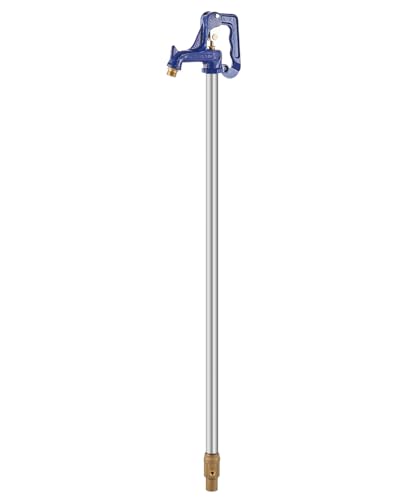
Choose the VEVOR 6.22-Foot No-Lead Yard Hydrant when documented connections, a 48-inch bury depth, no-lead materials, and a locking handwheel matter. The 6.25-foot VEVOR model emphasizes dual-bypass drainage and a four-step installation outline. Woodford Y34-1-HC suits users who value flow-finder functionality, an adjustable link, and a rod guide, while Woodford R34-3 is suitable when a lockable head is important.
Simmons 905 is worth considering for a long-reach, frost-proof configuration, while DU-MOST focuses on serviceability because the listing describes replacement of key parts without digging. Solimeta and MEASUREMAN are compact 12-inch-bury options, and Yariwiz supplies a middle ground with a 2-foot bury depth. In every case, confirm the frost line, connection sizes, drainage path, and intended water use before installation.
Frequently Asked Questions
How do I choose the best yard hydrants for a cold climate?
Compare the documented bury depth with the local frost line, not merely the total hydrant length. Merrill and DU-MOST list 4-foot configurations, Simmons lists a 60-inch size, and both VEVOR models specify 48-inch burial. Also verify that the valve drains residual water and that the bottom outlet can remain clear after backfilling.
What connection size is common on these yard hydrants?
Several selected models use 3/4-inch connections. VEVOR lists 3/4-inch NPT pipe and 3/4-inch NH hose connections, while Solimeta and MEASUREMAN list 3/4-inch FNPT and 3/4-inch GHT connections. Yariwiz lists a 3/4-inch FNPT connection. Always compare the exact inlet and outlet terminology with your existing plumbing before ordering.
Are all frost-proof hydrants suitable for drinking water?
No. The supplied evidence does not establish drinking-water suitability for every model. The VEVOR 6.22-foot listing specifically says it is not recommended for drinking. Yariwiz and one 4.25-foot listing mention drinking among applications, but those statements should still be checked against applicable plumbing and water-safety requirements.
Why must the drain hole stay clear?
A freezeless hydrant relies on draining water from the standpipe after shutoff. Solimeta, MEASUREMAN, and Yariwiz specifically instruct users to keep the drain hole clear. If soil or debris blocks it, residual water may remain in the pipe and undermine the intended freeze-protection design.
Which selected model emphasizes easier repairs?
DU-MOST is the clearest serviceability choice because its listing says the rod, plunger, and linkage can be replaced without digging. Merrill and Woodford also document component or adjustment details, but the supplied evidence does not make the same dig-free replacement claim for them.