Buying Guide
Choosing among the best fruit zesters starts with identifying how you will use the tool. A fine rasp is usually the most flexible format for citrus peel, Parmesan, ginger, garlic, chocolate, and whole spices. A compact citrus tool with holes and a channel knife is more specialized for garnish strips and twists. A container-based model can be useful when you want to catch zest instead of working directly over a bowl or plate.
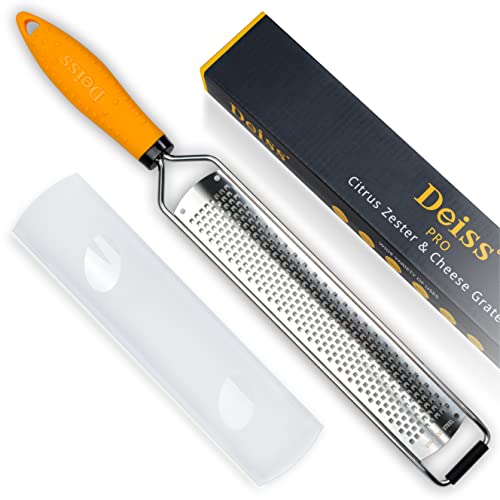
Most products in this comparison are handheld fine graters. Microplane, VOVOLY, Cambom, Orblue, Deiss, AdeptChef, MasterChef, and Grace & Grind all document use with citrus fruit and additional ingredients. Their listed designs vary: Microplane and VOVOLY emphasize etched or photo-etched blade construction, while Grace & Grind emphasizes angled micro-teeth and a curved blade. Deiss and AdeptChef describe rigid curved bodies that can support pressure when grating harder ingredients.
A rasp is the better fit when one tool needs to cover multiple jobs. It can be used over a mixing bowl, plate, pan, or cutting board, depending on the recipe. The evidence supplied here describes these products for ingredients such as lemon, lime, orange, Parmesan, ginger, garlic, nutmeg, cinnamon, chocolate, and vegetables. That does not establish identical results across models, so compare the specific features rather than assuming every fine grater performs the same way.
Match working size to storage
Longer zesters offer more listed body or blade area. Grace & Grind is described as 15 inches tall, Deiss as 15.2 inches long, and TIYOORTA as 6.54 inches long. A longer rasp may be easier to position over a large bowl, while a shorter tool can be simpler to store in a drawer. The supplied listings do not provide standardized working-area measurements for every product, so body length should be treated as a storage and handling reference rather than a performance guarantee.
If drawer space matters, look for compact dimensions or a hanging option. Covers or sheaths also matter because many of these tools use sharp blades. Orblue lists a protective plastic cover, VOVOLY lists a protective sheath, and Cambom lists a protective shell.
Prioritize grip and stability
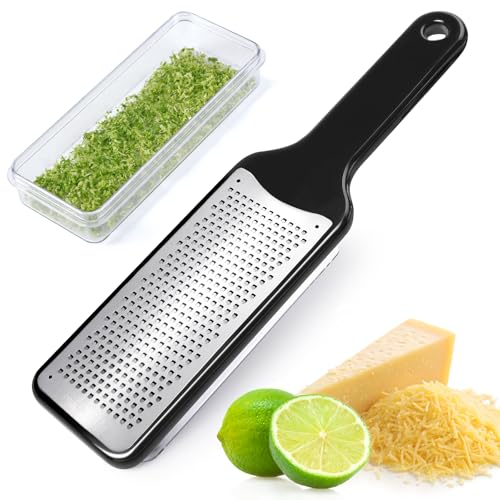
A non-slip or ergonomic handle can help keep the tool positioned as you move fruit across the blade. Grace & Grind adds a thumb divot, while LHS pairs a widened handle with an anti-slip base on its collection container.
Stability is particularly relevant when zesting directly over a bowl or board. The listed anti-slip features are design claims, not the results of a comparative safety test. For a tool with a collection box, check whether the added base and container suit your preferred preparation position. LHS is the selected example that most clearly documents a container-based setup.
Consider cleanup before buying
Fine blades can retain small particles, so cleaning information is a useful differentiator. Microplane also lists dishwasher compatibility and recommends rinsing promptly or using a kitchen brush.
A protective cover can help with storage but may need separate washing. A container can catch ingredients but creates another component to clean. If you prefer the simplest setup, a slim rasp with a hanging hole may be more convenient than a box-style design. Always follow the product’s supplied care instructions and use caution around sharp blades.
Decide whether versatility is important
The most versatile candidates document use beyond fruit. Microplane lists hard spices, aromatics, chocolate, and cork-related use; Deiss and AdeptChef describe cheese, vegetables, ginger, garlic, and spices; Orblue covers citrus, hard cheese, aromatics, chocolate, and vegetables. MasterChef also lists coconut and nuts. These claims make such products suitable for cooks who want one fine grater for several preparation tasks.
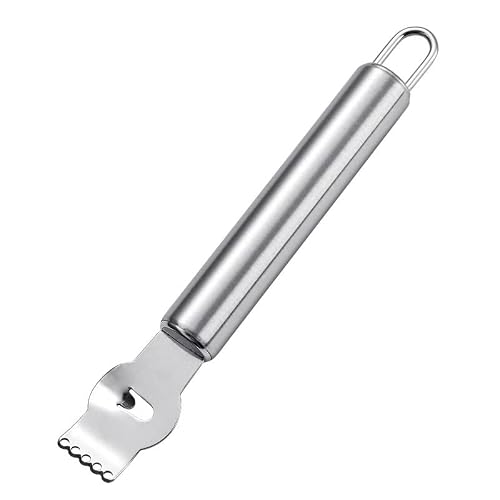
A garnish tool serves a narrower purpose. TIYOORTA combines five zesting holes with a channel knife for citrus strips and twists, making it a strong choice for drinks and decorative plating. It is not the same design as a full rasp and is not ranked for broad cheese or spice use. Select it when garnish work is central, not when you need one tool for every fine-grating task.
How this comparison was scored
The editorial score uses five category-specific criteria: zest precision and blade design, blade material and durability claims, grip and stability, cleaning and storage, and documented ingredient versatility. The weights favor the core zesting function while still recognizing material, handling, maintenance, and secondary uses. Scores are based only on supplied listing features and specifications. This is not a hands-on test, and marketplace ratings, review activity, purchase activity, prices, and labels were not used as public scoring criteria.
Final Recommendation
Microplane Zester Grater Dusty Rose ranks first overall in this specification-based comparison under the published weighted criteria.
Microplane Zester Grater Dusty Rose is the highest-scoring returned product and the first overall specification-based choice. Its listed tooth design, photo-etched surgical-grade stainless steel blade, dishwasher-safe construction, and broad fine-grating uses give it the most specification-aligned evidence profile among these best fruit zesters.
Grace & Grind Premium Lemon Zester Grater is a compelling alternative when a long body, angled teeth, and thumb control matter. Deiss PRO Lemon Zester and Heavy-Duty Grater and AdeptChef Citrus Lemon Zester and Cheese Grater are strong multi-use options with rigid curved bodies and non-slip handles. For easier collection, LHS Citrus Zester Grater with Container adds an anti-slip base and transparent box. For cocktails, TIYOORTA’s channel knife makes it the most specialized of the top fruit zesters.
Frequently Asked Questions
What should I look for in the best fruit zesters?
Look for a clearly described fine blade, food-contact stainless steel, a comfortable or non-slip handle, and cleaning instructions that fit your routine. If you grate cheese, ginger, garlic, chocolate, or spices as well as citrus, choose a model whose listing documents those uses. A cover, sheath, or hanging hole can also improve storage.
Is a rasp-style zester better for citrus than a channel knife?
They serve different purposes. Rasp-style tools such as Microplane Zester Grater Dusty Rose are documented for fine citrus zest and other fine-grating tasks. TIYOORTA Stainless Steel Citrus Zester with Channel Knife is documented for five-hole zesting plus strips and twists. Choose the rasp for general kitchen preparation and the channel knife for garnish-focused work.
Are these fruit zesters dishwasher safe?
Several selected listings explicitly say they are dishwasher safe, including Microplane Zester Grater Dusty Rose, Orblue Lemon Zester and Cheese Grater, VOVOLY Professional Fine Zester Grater, Cambom Lemon and Citrus Zester, LHS Citrus Zester Grater with Container, and TIYOORTA Stainless Steel Citrus Zester with Channel Knife. Other listings recommend rinsing or hand cleaning, so check the specific product instructions.
Do I need a collection container?
Not necessarily. Most selected products are handheld rasps designed to work over a bowl, plate, or other surface. LHS Citrus Zester Grater with Container is the clearest container-based option and includes an anti-slip base. A container can help catch zest, but it also adds bulk and another part to clean.
Which selected zester is most suitable for cocktails?
TIYOORTA Stainless Steel Citrus Zester with Channel Knife is the most specialized choice because its listing documents both five zesting holes and a built-in channel knife for citrus strips or twists. It is more focused on garnish preparation than the rasp-style products in this comparison.